





Refine Your Results
Statehouse Press2026-05-09T16:53:27-05:00

About this Collection

Statehouse Press contains interviews that explore the role of the press in Kansas policymaking.  The role has been that of a key actor that in iterations informs the public, enables an informed electorate to interject itself into the dialogue of the Statehouse, and reports on the resulting interaction. The Kansas press corps has served as a watchdog, chronicler of legislative actions, and a projector of the state’s political dynamics to its citizens. In the voices of members of the Press Corps, editors, columnists, and press secretaries, the Statehouse Press collection, provides a glimpse into the evolution of the role of the “fourth estate” in Kansas from the 1960s through the first quarter of the 21st Century.  In these interviews we see a shift from an interconnected, “small-town” under the dome to a fragmented, digital landscape of Statehouse news.  KOHP published a preview including an extended summary of the collection in April.

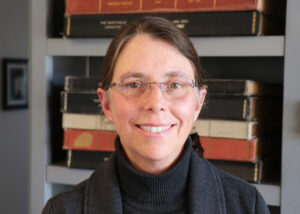
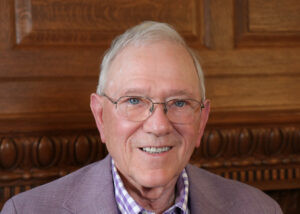
Photo of Beverley Olson Buller

Interview of Beverley Buller, October 14, 2025

Interviewed by Jim McLean
In her 2025 interview, conducted at Red Rocks, the historic former home of William Allen White (b. 1868, d. 1944) in Emporia, Kansas, Beverley Buller reflects on her career as an educator, librarian, and author. A lifelong Kansan, Buller describes her transition from a classroom teacher to a school librarian, a role that deepened her commitment to literacy and state heritage. She shares her research on White, the "Sage of Emporia" that informed her books. She emphasizes White’s national significance as a journalist and political observer who remained rooted in small-town Kansas Show Morevalues. Buller describes how White started in the newspaper business, his purchase of the Emporia Gazette, and the influence of some of his famous essays. She also talks about the William Allen White Children’s Book Award, highlighting the award’s role in fostering a love of reading. She describes the award not just as a literary prize, but as a living tribute to White’s belief in the power of the written word.

Highlight -- short excerpt from the interview

Show Less

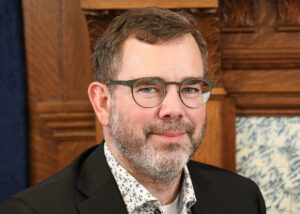
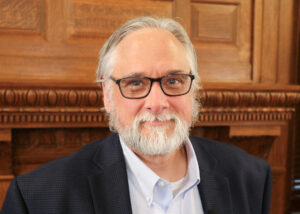
Photo of Tim Carpenter

Interview of Tim Carpenter, August 4, 2025

Interviewed by Jim McLean
In this 2025 interview, Tim Carpenter described how reporting from the Statehouse evolved over his almost 40-year career. The setting for the interview was the historic site, Red Rocks, which was the Emporia, KS home of renowned journalist William Allen White. Carpenter recalls that early in his career, reporters were given time for investigative reporting that informed the public about important issues. Today, due to drastic staff cuts, reporters often only are able to write about legislation after it has become law. He observed that that there has been a loss of an Show Moreopen leadership style and collegiality in the Statehouse, with some elected officials closing themselves off from the press and refusing to share information with the public -- while complaining about press coverage. Carpenter shared his concern that people only want “echo chambers” that tell them what they want to hear, and don’t distinguish between opinion pieces and factual reporting. In Carpenter’s words, “Now people are so combative they don’t even want to listen to other people’s ideas, and that’s to the detriment of all Kansans.”

Highlights -- short excerpts from the interview

Show Less
Dale Goter

Interview of Dale Goter, January 6, 2026

Interviewed by McLean Jim
In this 2026 oral history interview, Dale Goter looked back at the evolving landscapes of Kansas journalism and state politics. Goter, a veteran journalist who later became the lobbyist for the City of Wichita, offered a unique perspective on how the relationship between the press and elected officials shifted over several decades. He described a "golden age" of Statehouse news coverage when major news organizations maintained fully staffed bureaus in Topeka. That presence allowed for rigorous, daily coverage of the Kansas Legislature, which Goter characterized as essential for maintaining public accountability. He expressed concern over the subsequent decline of coverage, Show Morenoting that the loss of dedicated statehouse reporters left a void sometimes filled by partisan messaging rather than objective reporting. Goter stated that as a journalist, “You’re always going after the power structure because that’s where the power is, and that’s where the abuse of power is.” Journalists are "conditioned to look for controversy. You’re looking for conflict, controversy, and corruption. That puts you at odds with government all of the time. You’re perceived as a liberal because you’re going against government.” Goter shared his thoughts on changes in the Statehouse culture. He points out that there used to be a “level of oratory that took place on the Senate floor, people like Ed Reilly, . . . Frank Gaines, and Tom Rehorn. They could get up. They were stem winders." Goter transitioned from the press gallery to a role as lobbyist for Wichita in 2006. He described the nuances of lobbying for the city from a ‘public good’ perspective not commonly found among the ranks of lobbyists. Goter explained that effective lobbying relies on building long-term relationships and providing credible information to lawmakers, a process that became increasingly difficult due to rising political polarization.

Highlights -- short excerpts from the interview

Show Less
John Hanna

Interview of John Hanna, December 19, 2025

Interviewed by Jim McLean
John Hanna recalled his long career as one of the top journalists in Kansas in this 2025 interview with Jim McLean. Hanna described how covering the Kansas legislature has changed from the years when several reporters were able to cover multiple committees each day to now where a single reporter has “to tell big, broad stories to the largest audience possible.” He observed that there is “still a need for good journalism to help organize and make sense of what’s going on and to write about patterns and trends and context.” Hanna acknowledged the difficulty of maintaining Show Morethe AP style of balancing every story and giving each side equal coverage when you know one of the sides is demonstrably not true. He observed that there is an organized campaign by national groups that are getting legislatures to act and that it is “important for the reader to understand—where it’s coming from, how money is being spent, who benefits, who doesn’t.”

Highlights -- short excerpts from the interview

Show Less
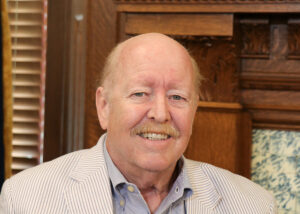
Photo of Martin Hawver

Interview of Martin Hawver, August 13, 2025

Interviewed by Jim McLean
In this 2025 interview, Martin Hawver discussed his career in journalism, focusing on his years reporting from the Kansas Statehouse. Hawver’s interview examined the role that his Hawver’s Capitol Report played in providing news and insider analysis about Kansas politics and government for three decades. Hawver reported Statehouse news and described how the issues being debated would affect Kansans. He had a reputation for asking the questions no one else would ask, often in a signature quirky manner. Hawver focused on what people needed to know, and delivered the news in a unique style. His goal was to Show Morewrite “what people think is interesting, what they ought to know, what they wish they know, what they hope other people don’t know.”

Highlights -- short excerpts from the interview

Show Less
Go to Top