
Refine Your Results
Notable Kansans2026-10-11T13:40:13-05:00

Notable Kansans

About this Collection

Notable Kansans is a collection of interviews of people who have served in a variety of roles, elected officials or  related to the development or administration of public policy, or community service. Generally, these persons had long public service careers. Their impact on government or life in Kansas is unmistakable and positive.
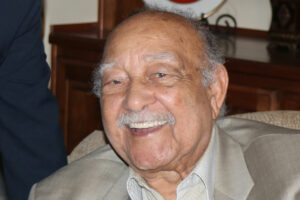
 
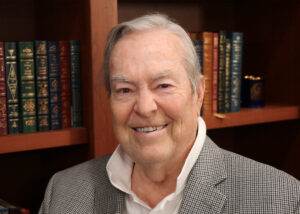
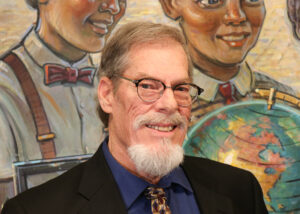
Jack Alexander, Topeka Water Commissioner

Interview of Jack Alexander, October 26, 2020

Interviewed by Michael (Mike) Lennen
In this 2020 oral history interview, Jack Alexander reflected on his early life growing up in Topeka, Kansas in the 1930s and 1940s, and his extensive public service career beginning with enlistment in the U.S. Navy. Alexander describes serving in various roles both in local government, particularly as Water Commissioner for the City of Topeka, and in state government, including appointment to the Kansas Corporation Commission. He also described his contributions to local volunteer organizations. Alexander’s recollections create a portrait of an individual committed to public service based on a solid foundation in family and community and a sincere appreciation Show Moreof and concern for others.

Highlight -- short excerpt from the interview

Show Less
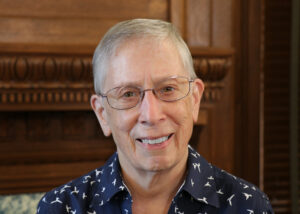
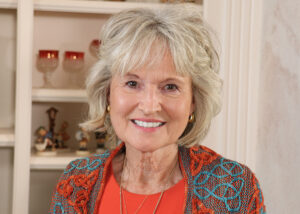
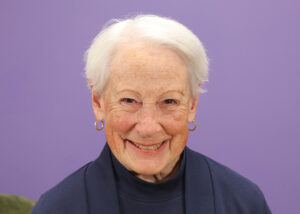
Photo of Sister Therese Bangert

Interview of Sr. Therese Bangert, August 26, 2026

Interviewed by Jim McLean
In this 2026 interview, Sister Therese Bangert, longtime advocate at the Kansas Statehouse, described how a calling from God has led her to a life of service to members of society with the greatest needs and her work lobbying for a variety of social justice-related causes. She states that her voice is for the workers and their families and for their communities, noting that “We want the work of their hands [but] we don’t necessarily want their humanity sometimes.” Sister Therese recalls her 20 years of service as a police chaplain for the Kansas City, Kansas police department, and how Show Moreshe has learned to work with legislators. She says that she has a “love/hate relationship with politics” but believes in “the importance of policy and what an impact it has on everyone’s life, especially the life of people who are struggling and the poor.”

Highlights -- short excerpts from the interview

Show Less
John Carlin

Interview of John Carlin, June 30, 2026

Interviewed by Jim McLean
In this 2026 oral history interview, former Governor John Carlin shares his experiences with Jim McLean regarding his almost 10 years as Archivist of the United States in Washington, D.C. Carlin emphasizes that the National Archives are more than just an exhibit in the Rotunda in D.C. The Archives include the presidential libraries, regional archive record centers, regional archives and major storage facilities for records. He credits his experience raising registered Holstein cattle and keeping accurate records on them with preparing him for the position at the Archives and understanding the importance of keeping excellent records. Show MoreHe discusses the many challenges he faced in getting nominated to the position, maintaining agency funding, gaining support for additional funding to expand facilities, and implementing a plan to prepare for changes in technology. Carlin also discusses the difficult and laborious process of editing the Nixon tapes, which began under his tenure. Carlin is very proud of the team he worked with at the National Archives and the changes that occurred under his direction including improving the way people interact with the Charters of Freedom display. “We want people to get a sense of history” and truly understand it. Toward the end of the interview, McLean asked Carlin what he accomplished as Archivist of the United States. Carlin replied, "Very few things are done successfully at the local, state, and federal level without somebody at the top that understands what the leader’s role is, and then with a team, things get done...because the team represents different aspects of the agency, different particular skills, and you've got to mold them together for a bigger look at what we need to do to accomplish the goals we want to achieve." Show Less
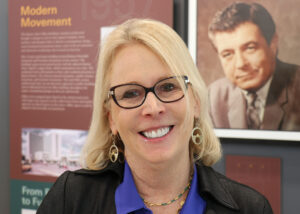
Picture of Jill Docking

Interview of Jill Docking, April 1, 2026

Interviewed by Chris Courtwright
This very thorough and comprehensive interview of Jill Docking, took place on the third floor of the reconfigured Docking State Office Building in Topeka under the portrait of her father-in-law, Governor Robert Docking. The interviewer, Chris Courtright, takes her through a number of significant milestones in Kansas political history, having married into one of Kansas' most prominent political families. She has run for office herself, in 1996 for the U.S. Senate, and again in 2014 as the Lt. Governor candidate with Paul Davis at the head of the ticket. She was a tireless advocate for higher education Show Moreas a member of the Kansas Board of Regents. She serves on numerous boards such as the Kansas Health Foundation and promotes health, financial fitness and philanthropy. The stories she tells are entertaining, but they also illuminate important events in Kansas history. As the interview moves to its conclusion, Docking talks about gaps in the health care system and comments on the divisiveness in our political system as being "a cancer in this country." She sees the number of people running for public office as a positive swing and she is still engaged, supporting numerous candidates. She is still working, and not retiring!

Highlights -- short excerpts from the interview

Show Less
Photo of Sheila Frahm

Interview of Sheila Frahm, September 17, 2004

Interviewed by Bob Beatty
During a 2004 interview former Lt. Governor and US Senator Sheila Frahm describes to Dr. Bob Beatty her recollections of serving as Lieutenant Governor with Governor Bill Graves. Frahm explores the collaborative partnership she had with Graves, recalling the process of creating an executive team and the patience required to work with a slow-moving legislature. She recalled Graves’ personal leadership style, noting that a successful governor must balance approachability and willingness to collaborate with the more solitary responsibility of making independent decisions for the state’s benefit. Frahm compared the leadership styles of other former governors whom she had Show Moreobserved. The interview paints a picture of the political culture of Kansas during the late 20th Century and the personal sacrifices inherent in a live of public service.

____________________________________

Dr. Bob Beatty of Washburn University generously granted the Kansas Oral History Project (KOHP) permission to house this transcript of his oral history interview of Sheila Frahm. The KOHP Board is grateful to Dr. Beatty for making this transcript available.

A 2020 interview of Sheila Frahm is included in the KOHP Women, Then and Now Project collection on this site. Show Less

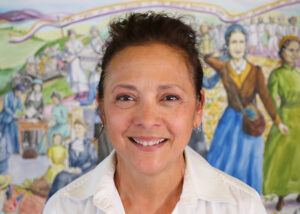
Picture of Phyllis Garibay-Coon

Interview of Phyllis Garibay-Coon, May 13, 2025

Interviewed by Linda Utoff
Phyllis Garibay-Coon, the artist who created Rebel Women, the most recent mural installed in the Kansas Statehouse, describes her journey as an artist including the importance of the support she found in the Manhattan, KS community. Garibay-Coon is the first woman to have her mural installed in the Statehouse. She is interviewed by Linda Uthoff, League of Women Voters of Manhattan/Riley County. During the interview, conducted a few months after the mural was unveiled on the 2025 anniversary of Kansas becoming a state, Garibay-Coon describes the Kansas suffragists who are the most prominent figures in Show Morethe painting. She also describes how the state and local historical societies and families of those suffragists contributed to how she imagined the mural. Garibay-Coon credits the League of Women Voters of Kansas, the AAUW of Kansas, and generous individual donors who made this public art possible.

Highlights -- short excerpts from the interview

Show Less

Interview of Nancy Landon Kassebaum Baker, October 17, 2022

Interviewed by Deanell Reece Tacha
Nancy Landon Kassebaum Baker, was 90 at the time of this interview. She recalled being a young girl in Topeka growing up with a famous father, Alf Landon. She described her motivation for entering the US Senate race in 1978 and turning to friends and the League of Women Voters in Wichita for help with that highly contested primary race. Kassebaum had a "special relationship" with the other Kansas Senator, Bob Dole. Her legislative interests in the U.S. Senate were foreign relations, Africa and apartheid, and a major health care bill she worked on with Senator Show MoreTed Kennedy. Toward the end of her senate career she married Tennessee senator Howard Baker. After Baker's death she returned to the ranch in Burdick, Kansas where she followed politics closely. Show Less
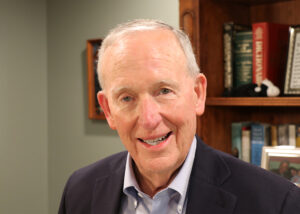
photo of Bill Kurtis

Interview of Bill Kurtis, September 26, 2026

Interviewed by Jim McLean
In this 2026 oral history interview, veteran journalist and native Kansan, Bill Kurtis reflected on his upbringing, his roots in local broadcasting, and his pivotal "take cover" warning during the 1966 Topeka tornado. During the interview, Kurtis and interviewer Jim McLean highlighted Whirlwind, Kurtis's 2025 memoir. Kurtis acknowledged that his voice was an advantage for his broadcasting career but described how his education prepared him to take advantage of opportunities when they arose. Kurtis explained how his Washburn University law degree prepared him to cover historic murder trials, such as those of Richard Speck and Charles Manson, Show Moreand to spearhead an investigative documentary on the health impact of Agent Orange. The conversation also touched on his transition into entertainment and comedy, including his narration in the film Anchorman: The Legend of Ron Burgundy and his long-running role on NPR's Wait, Wait, Don't Tell Me. Show Less

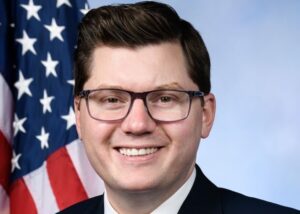
A Conversation with Jake LaTurner, Sunflower State Journal, December 30, 2024

Interviewed by Brad Cooper
In this 30 minute interview with Sunflower State Journal editor, Brad Cooper, then-outgoing Republican Jake LaTurner candidly discussed his decision to leave Congress. He talked about what he liked most about public service (serving in the Kansas Senate) and his disappointment about the legislative process on Capitol Hill. LaTurner returned to Kansas to spend time watching his kids grow up. At the time of this interview, he planed to work for a political consulting firm.
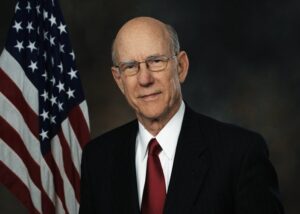
Photo of Pat Roberts

Interview of Pat Roberts, October 14, 2025

Interviewed by Jackie Cottrell and Mike Seyfert
The interviewers were former staffers of the Congressman, and as such, were able to ask the right questions. The anecdotes are interesting and reflect much of the national and world news during his forty year tenure of service. Agriculture was a principal focus, since Roberts chaired the Agriculture committees in both the House and Senate. His anecdote about how the Freedom to Farm legislation came about is interesting, because the suggestion came from a farmer. Roberts also recounts a meeting with President Trump about crop insurance where he was able to convince Trump not to eliminate Show Moreit, which would have been a very negative policy for the President and America's farmers. There is an anecdote where Roberts had to tell President Bush that Saddam Hussein had no weapons of mass destruction. Roberts' role in national intelligence was critical. Roberts had tremendous influence in his 40 years of service. He describes politics this way: "The first thing you’ve got to learn in politics is to listen, and the second thing is there’s no “I” in politics. It’s a “we” thing." Show Less

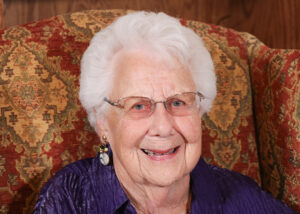
Interview of Eunice Rolfs, August 29, 2024

Interviewed by Joan Wagnon
Eunice Carlson Rolfs is a remarkable Kansan who, at the age of 97, has lived a fascinating life. She is the daughter of Frank Carlson who was a Kansas Legislator, U.S. Congressman, Senator and Governor of the State of Kansas. Her interview is filled with descriptions of growing up on a Concordia farm, where her chores included plucking eggs from underneath laying hens and carrying water from a well to the kitchen. She was surrounded by her family, including her Swedish grandparents and lots of friends. The Swedish Baptist Church of Concordia was a central focus Show Morein their family's life. She describes in great detail her father's unwilling entry into politics, the move to Washington DC upon his election to Congress, her great desire to return to Kansas which was the impetus for Carlson's run for Governor. She met her husband, E.J. Rolfs at Kansas University and they continued their productive lives in Junction City as part of a well-established banking family. Her father, now Senator Carlson, returned to Washington for another 18 years, filled with important legislation that benefitted Kansans and all Americans - Medicare, the Voting Rights Act to name a few. Show Less

Interview of Gary Sherrer, October 15, 2021

Interviewed by Mike Matson
Gary Sherrer was a debater and it changed his life. His reflections on growing up in Topeka, winning a debate scholarship to Kansas State Teachers College and then teaching for eight years are the perfect backdrop to his later achievements. His association with the Graves Trucking Company and soon-to-be-Governor Bill Graves paved the way for him to become Bill Graves' Lt. Governor. Sherrer won the respect of many Kansas leaders, including Henry Bubb and Jordan Haines, two preeminent bankers who recruited him to the banking industry as chief marketing officer, and later, lobbyist when multi-bank holding company Show Morelegislation was pending. His debate skills served him well as a lobbyist, enabling the controversial bill to pass by one vote. He developed the Leadership Kansas model to train leaders. He knew how to solve community problems and displayed those skills as Secretary of Commerce for Governor Graves. One of his proudest accomplishments was the STAR bonds project in Wyandotte County, with Mayor Carol Marinovich. The interview is replete with examples of programs he developed or guided to fruition. It is interesting to read all the anecdotes about the political scene. Show Less
Bob Stephan, Kansas

Interview of Bob Stephan, October 21, 2020

Interviewed by Michael (Mike) Matson
Former Attorney General Robert T. Stephan, in this 2020 oral history interview, recalls the highlights of his years serving the State of Kansas as Attorney General (1979 to 1995). Stephan's career as a champion of children as well as victims of crime and discrimination was shaped by his upbringing in Wichita and his strong sense of what it right. Stephan laments the increasingly partisan atmosphere of the National Association of Attorneys General, an organization to which he belonged during his time in state service.

Interview of Carla Stovall Steckline, April 28, 2026

Interviewed by Dale Goter

This 2026 interview of former Kansas Attorney General Carla Stovall Steckline highlights the importance of her two terms in office as the first and only woman elected to the office of Attorney General in Kansas. She started her career as the county attorney in Crawford County, Kansas. Her predecessor in that office told her "Crawford County juries are not ready for women in the courtroom yet." So, she ran against him and defeated him. What she found was "so much child sexual abuse there that I would never have imagined existed." Governor Hayden appointed her Show Moreto the state Parole Board and she became more visible in Republican politics while learning about the problems with sexually violent predators. Former Attorney General Bob Stephan noticed her and she had lots of interaction with his office. When Stephan announced his retirement, he backed Stovall as his successor. During the campaign a young college student at Pittsburg State University (located in Crawford County) was murdered violently and that case became a campaign issue. Stovall proposed the Sexuallly Violent Predator Law that became the biggest issue in her campaign. After the election, several other heinous crimes occurred which propelled the proposed law. Stovall defended the law before the U.S. Supreme Court.

During her second term as AG she pursued litigation against the tobacco companies. She won $1.6 billion dollars from the tobacco companies. The legislature allocated that money to children's programs and established the Children's Cabinet to administer the fund.

At the end of her second term, she was persuaded to run for Governor, but withdrew from the race because her heart wasn't in it. She had met and married Larry Steckline and left the political world behind. Turning to the non-profit sector, she started a charity to help victims of domestic violence and sexual assault which she was operating at the time of this interview.

Show Less

Interview of Michael Young, February 28, 2025

Interviewed by Linda Jeffrey
This oral history of artist Michael Young was conducted in front of a live audience in the Kansas Statehouse while viewing the mural he painted depicting the U.S. Supreme Court decision, Brown v Board of Education. A short program preceded the interview which was followed by a question and answer session with the artist. The attached transcript includes the Q/A session but not the preliminary remarks by Senator Jeff Klemp, Senator Ty Masterson, Rep. Dave Buehler and Governor Laura Kelly. They were widely quoted in the press about the event. Two of the press accounts from Show MoreBryan Richardson, Hawvers Capitol Report/State Affairs and WIBW TV are also attached. To see the video of the introductory remarks, go to NEWS. Show Less
Go to Top