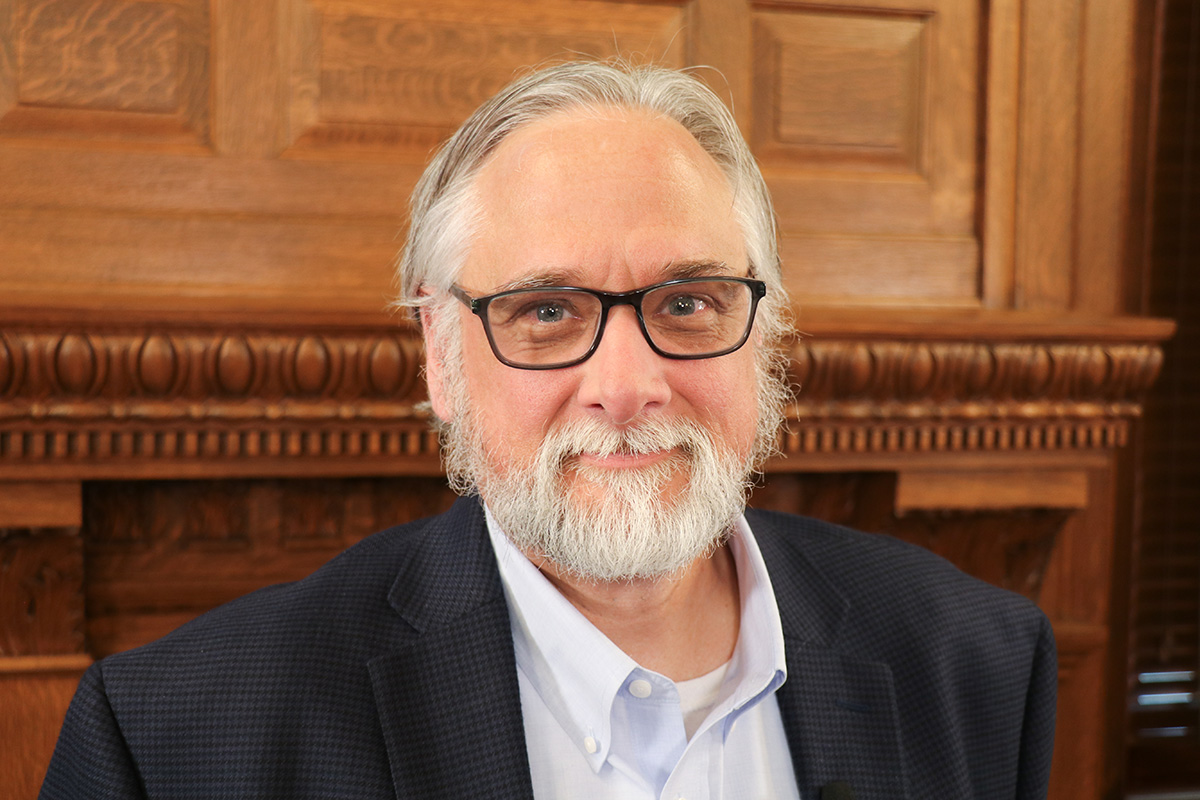
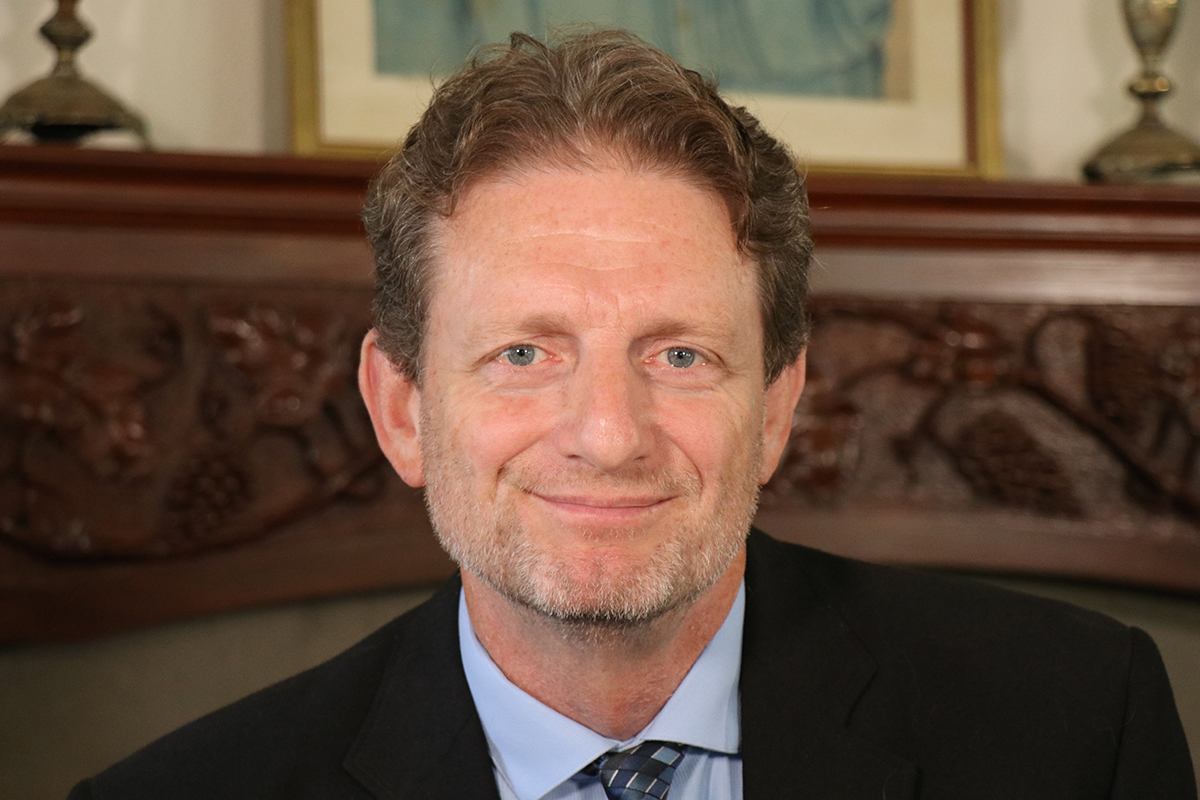
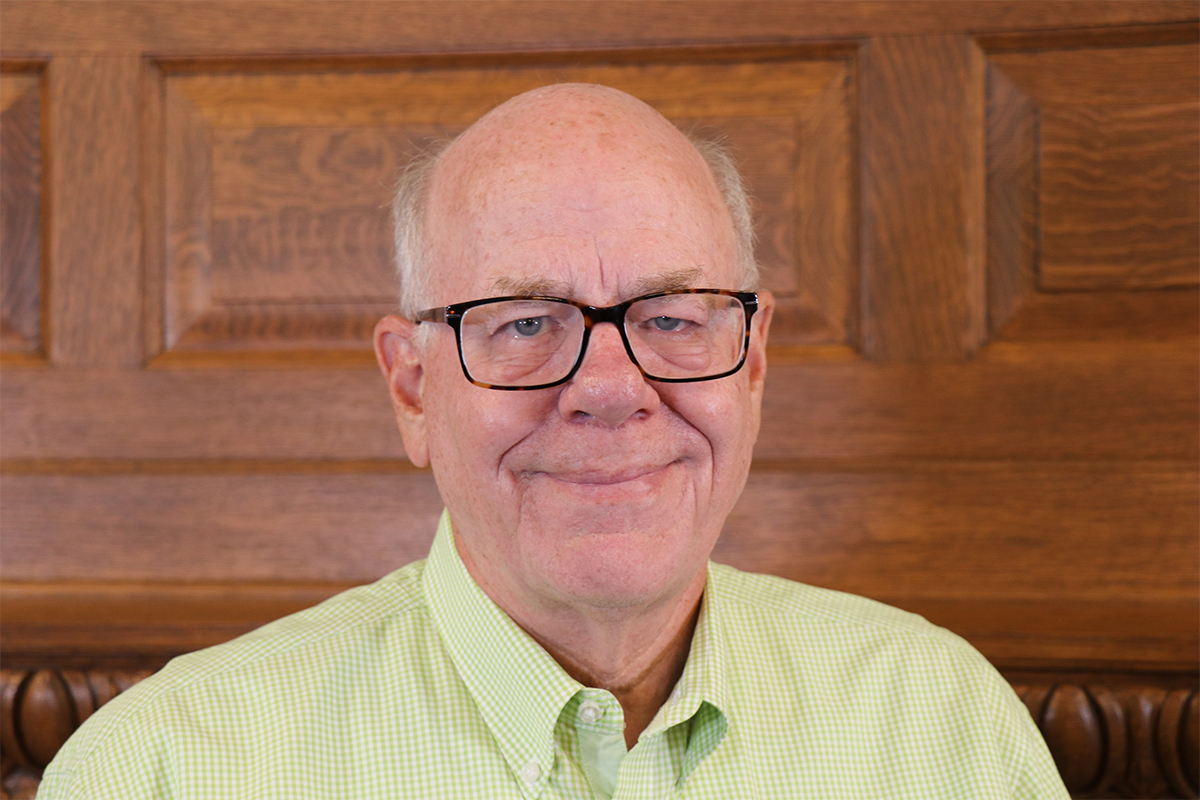

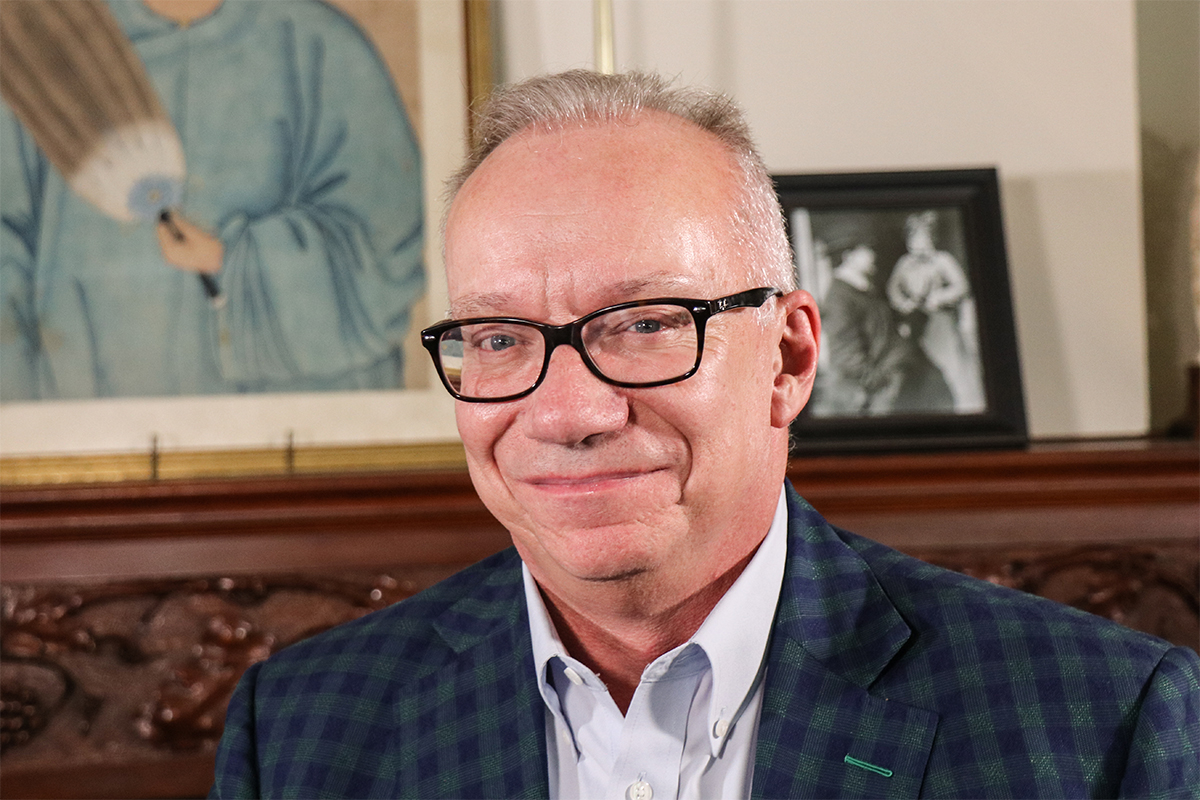
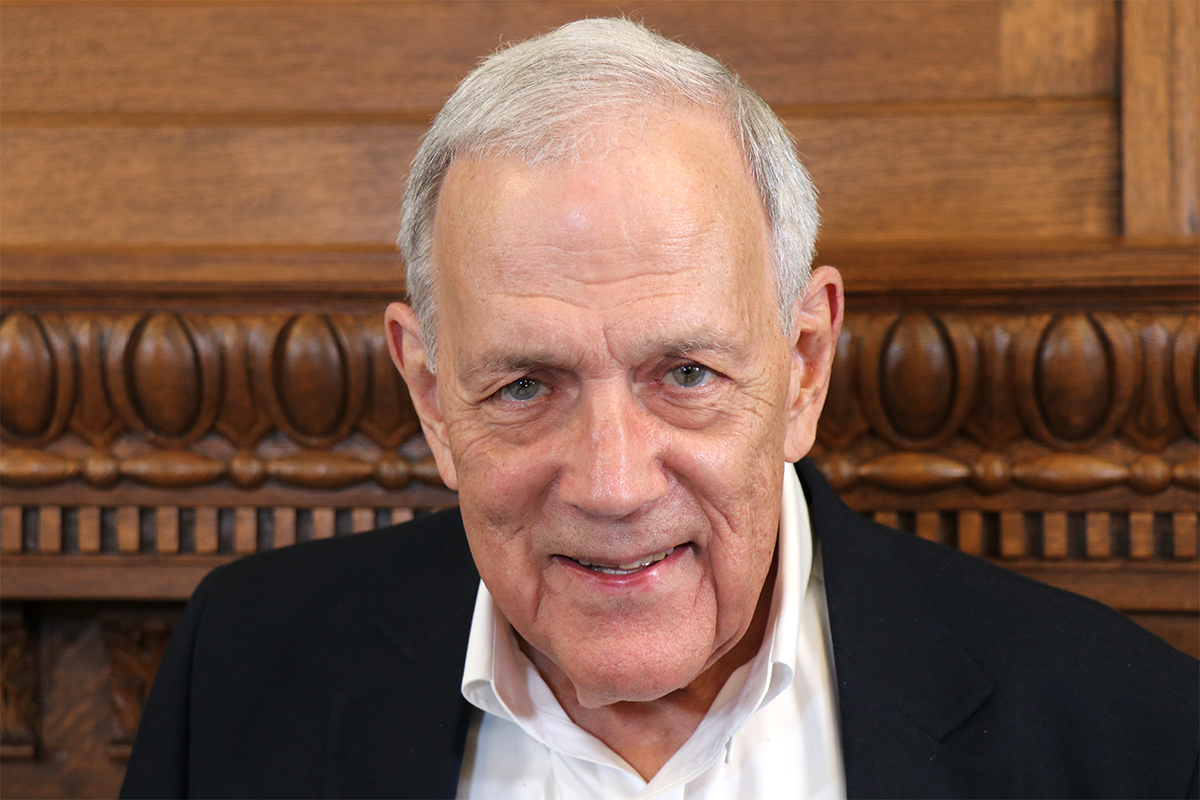
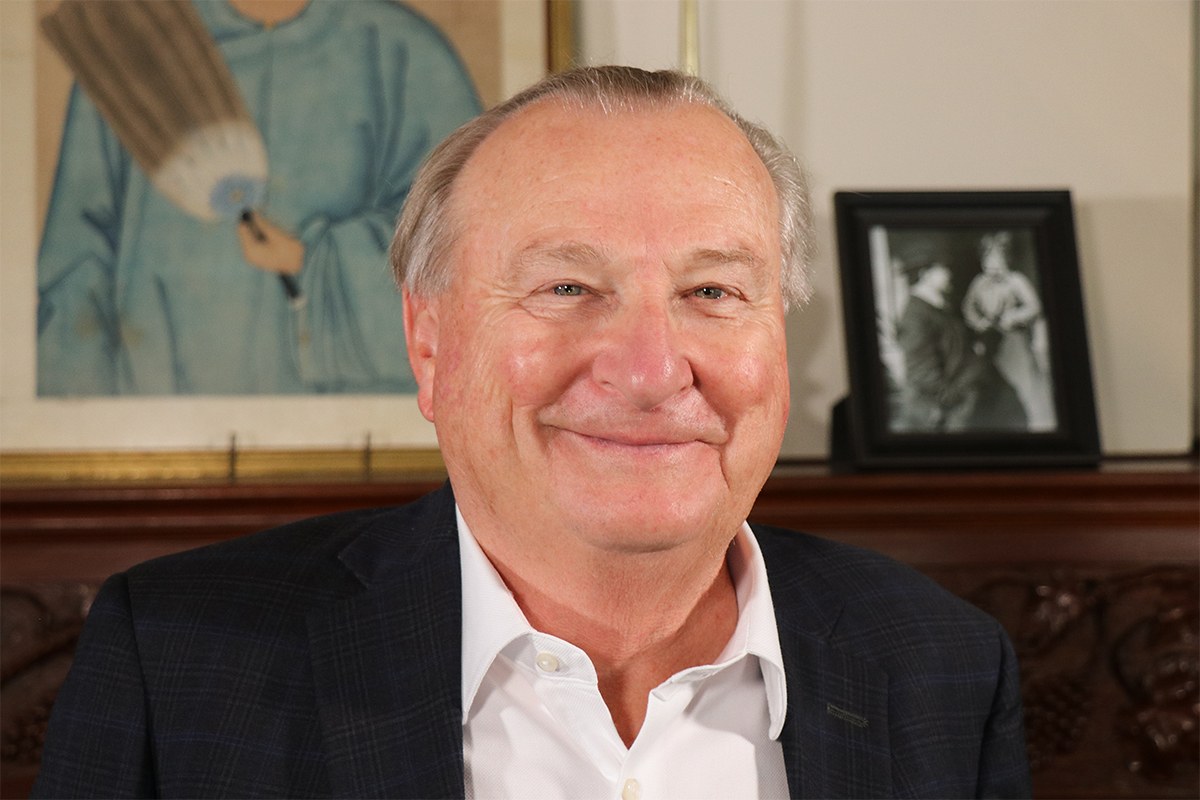
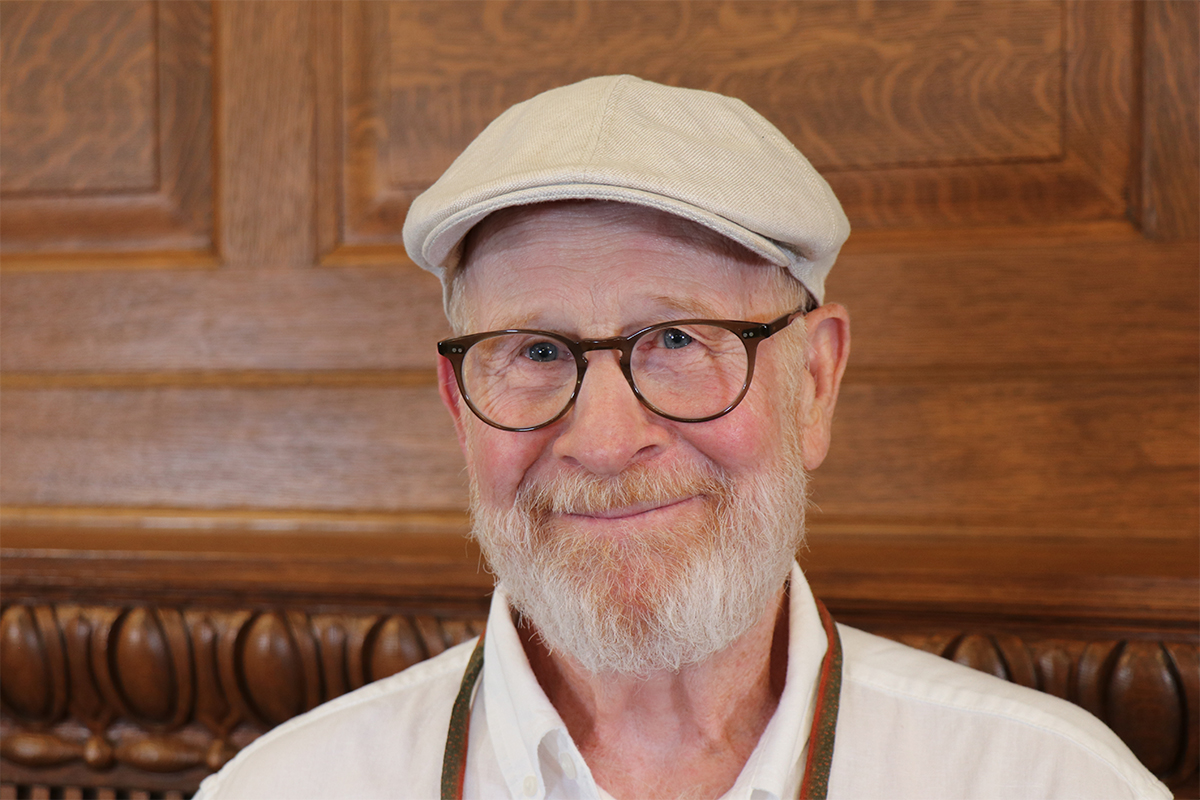
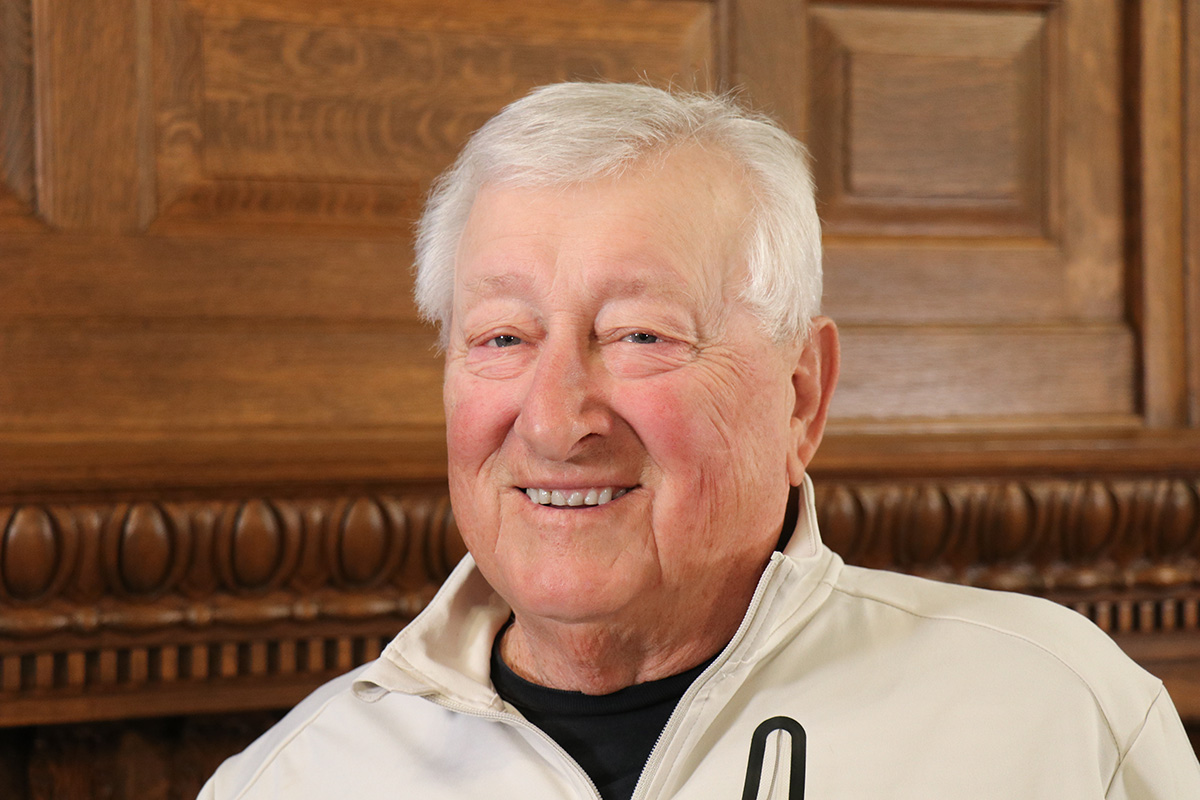
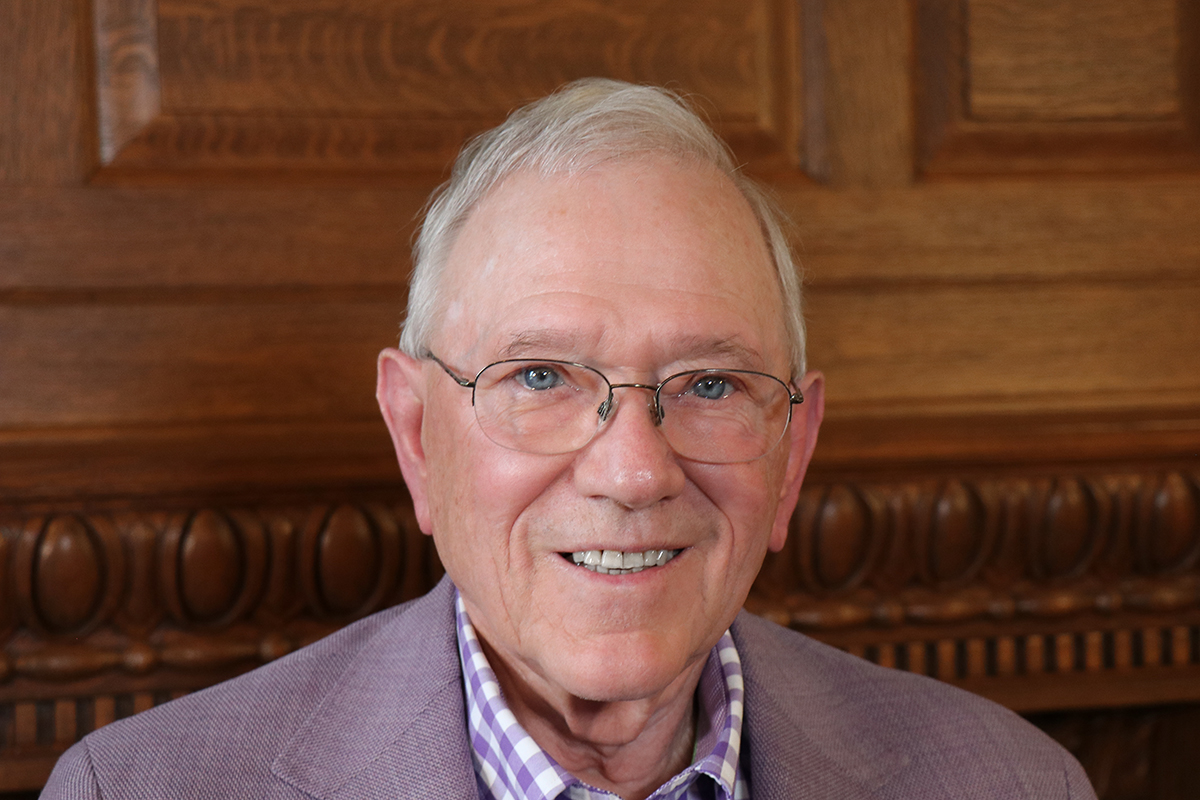
Jim McLean
by Mary Galligan
April 15, 2026
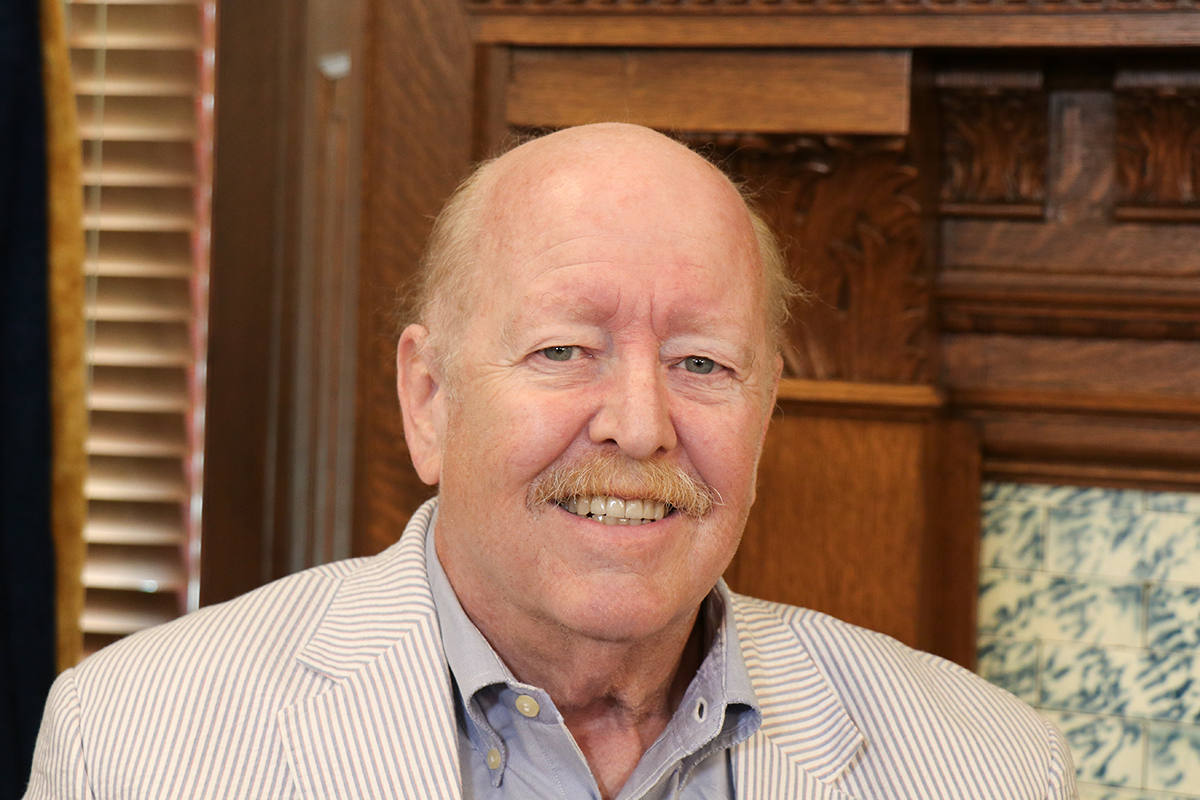
The Statehouse Press collection, which will be published on KsOralHistory.org this spring, offers a first-person view into the workings of the Statehouse press corps during a time when the atmosphere under the dome was in flux. The interviews are conducted by Jim McLean, a member of the Kansas Oral History Project Board of Directors who covered the Statehouse for more than 40 years as a reporter for Kansas newspapers and public radio stations. This month we provide a pre-publication peek into the collection recognizing that there are more stories to be told. The collection will continue to grow in the weeks and months ahead.
The role of the press corps in Kansas policymaking is described as that of an actor who in iterations informed the public, enabled an informed electorate to take part in the dialogue of the Statehouse, and reported on the resulting interaction. The Statehouse press corps functioned as a watchdog, chronicler of legislative actions, and a projector of the state’s political dynamics to its citizens. In the voices of the reporters and press secretaries interviewed, the Statehouse Press collection reveals the changes in the role of the fourth estate in Kansas; we see a shift from an interconnected, small-town under the dome to a fragmented, digital landscape of Statehouse news.

Steve Kraske
As described in Statehouse Press, the relationship between reporters and policymakers in the Kansas Statehouse during the last quarter of the 20th Century was defined by an esprit de corps. Journalists were not simply outside observers; they were part of the daily life of the Capitol. Steve Kraske, a long-time political reporter, described the Statehouse as a “small town” where “people did get along really well.” The environment facilitated an information flow that enabled full-bodied reporting to the public about bills and issues. These interviews underscore that the press was not merely an observer of policymaking but an important element in the democratic process at all levels.
The familiarity of the press corps with the operatives and the operations in the Statehouse allowed the reporting to include important context beyond just the content of bills. John Hanna and Martin Hawver, who became institutions in their own right, recalled providing background that even legislators—frequently with perspectives hampered by the political cycle—might lack.

Martin Hawver (L)
John Hanna (R)
Martin Hawver reported on relationships that formed an important part of that context by covering “. . . lots of little things that go on, lots of little social interactions that can turn out to be important politically.” John Hanna observed that journalists strive to “set the scene for people and . . . put an issue in the proper context.” That context included the dynamics of the legislative process and the relationship between the legislature and the governor.

Dave Ranney
Occasionally reporters highlighted the need for policy change by uncovering issues that the legislature subsequently addressed. Dale Goter observed that “every big story starts with somebody,” and in many cases, that “somebody” was a reporter digging into an issue. Goter also described the dynamics of reporting as being naturally antagonistic. By bringing stories to the front page, the press helped Kansans be personally involved in the legislative agenda. In the opinion of John Marshall, reporting sometimes could raise the consciousness of the entire state. As an example, he describes the impact of Dave Ranney’s reporting about domestic abuse.

Dale Goter
The press facilitates public accountability by being in the Statehouse every day. Tim Carpenter, an award-winning reporter who continues to cover the Statehouse, reflected on the danger of misuse of power in legislative leadership, saying, “We all know that power corrupts. Some people get in leadership, even in the legislature, and they use that title to settle old scores. It’s dangerous. It’s bad public policy. It’s a gigantic waste of time, and it’s not what you’re elected to do.” The press in the role of witness served as a check on such behavior to some extent, reminding elected officials that their actions were part of the public record. That witness-and-report role often resulted in tension between reporters and elected officials. The basis for that tension is described by Dale Goter, who characterized it in terms of power dynamics.

Mike Swenson (L) Mike Matson (R)
The interplay of the press and policymakers is perhaps most visible in the role of the governor’s Press Secretary. The experiences of Mike Swenson and Mike Manson, who moved from Statehouse journalism into the administrations of Governors John Carlin and Bill Graves, respectively, highlight the relationship. In their interview, they describe a press secretary’s job as ensuring that the governor’s policy goals are communicated effectively to the public. Swenson and Matson emphasized that effective leadership on the part of a governor involves surrounding oneself with “people who are smarter than them” and seeking out diverse input before making an informed decision. Frequently that process is complicated and time consuming. The press secretary acted as a bridge, translating complex policy and decision-making processes into a message readily accessible by the public.
Technological developments during the first quarter of the 21st Century resulted in a shift in how the press interacted with policymaking. The decline of daily newspapers in many communities across the state and the rise of nonprofit digital news organizations like the Kansas Reflector changed the news landscape. Jim McLean noted that at the time of the interviews, the Reflector provided “the most comprehensive coverage of Kansas politics and state government,” and filled a void left by shrinking newsrooms in several of the largest newspapers in the state. The non-profit news sector also partially compensated for the exit from the scene of the Harris News Service that served small-town papers across the state from its presence in the Statehouse.

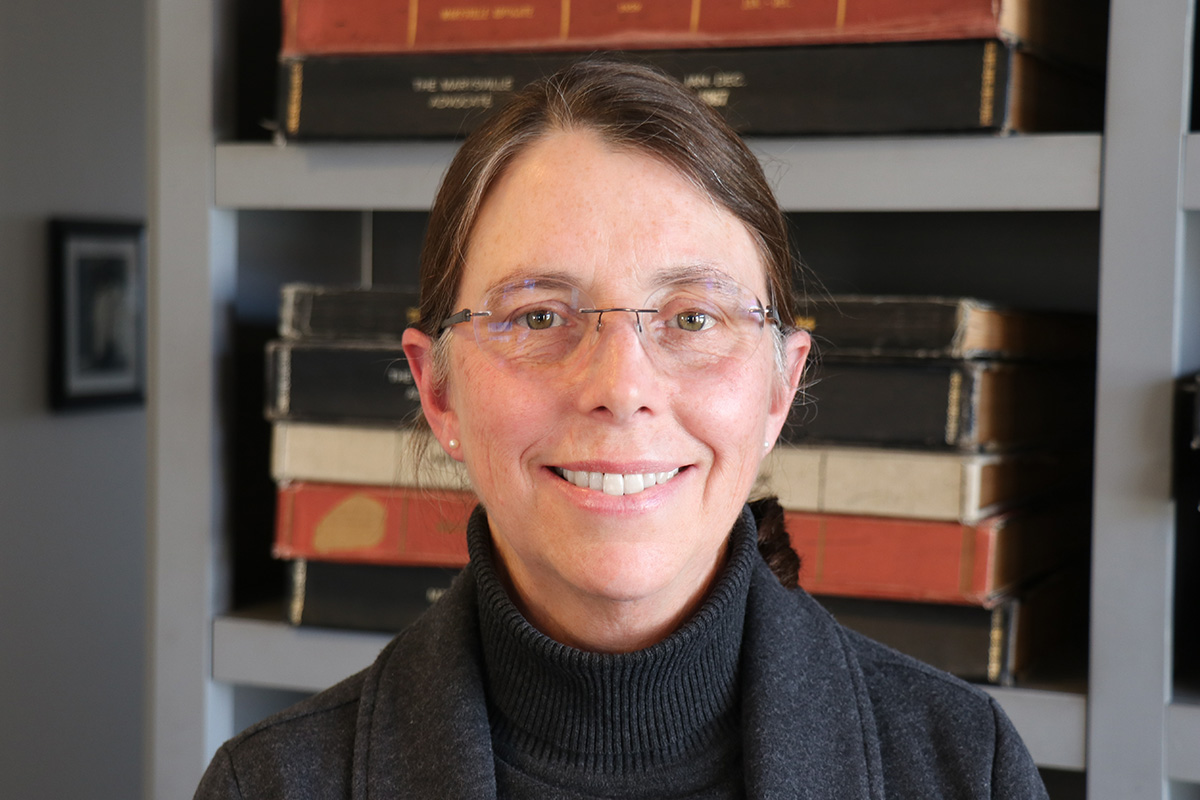
Sarah Kessinger
Sarah Kessinger, who moved from the Statehouse press corps to become the publisher of a local newspaper, The Marysville Advocate, highlighted the ongoing struggle to engage readers who live in a fragmented media environment. She noted that while local sports and community news are “everything” to local readers, maintaining an active, informed citizenry on state policy requires constant innovation.

John Marshall (L)
Mike Shields (R)
In the interview with John Marshall, Dave Ranney, and Mike Shields, all veterans of Harris News Service, the journalists noted that the shared mission among legislators of the past was replaced by strong partisan differences that “crept into almost everything.” They observed that recent policymaking was often more “performance art” than serious policy deliberation.

Leroy Towns
That partisan polarization made the role of the independent press even more important to informed public discourse. Leroy Towns, who served as a journalist before becoming chief of staff for Congressman, then U.S. Senator, Pat Roberts, lamented that the “name of the game now is get elected, get power… there’s a lot less emphasis on doing something.” In that environment, the press role in focusing on the “doing” the actual outcome of policy—became a vital corrective to political theater.
We learn from these interviews that despite the transition from print to digital formats, the decline of local news media, and the rise of partisan “performance art,” the fundamental role of the Kansas press corps in the last quarter of the 20th Century and the first quarter of the 21st, was to ensure that the “small town” of the Statehouse was transparent and accountable to the citizens it served.
________________________________________
Photos in this article by Dave Heinemann, KOHP Board member and volunteer videographer.