

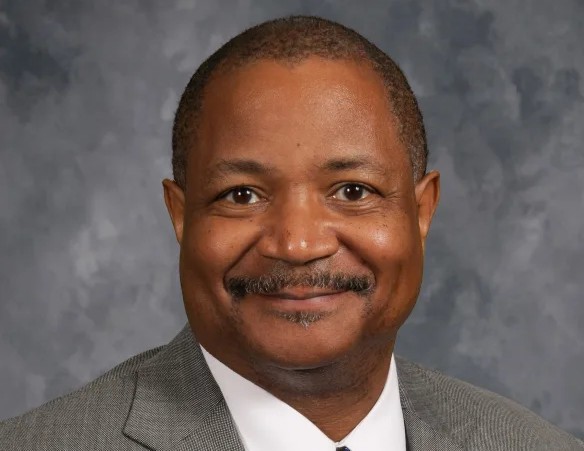
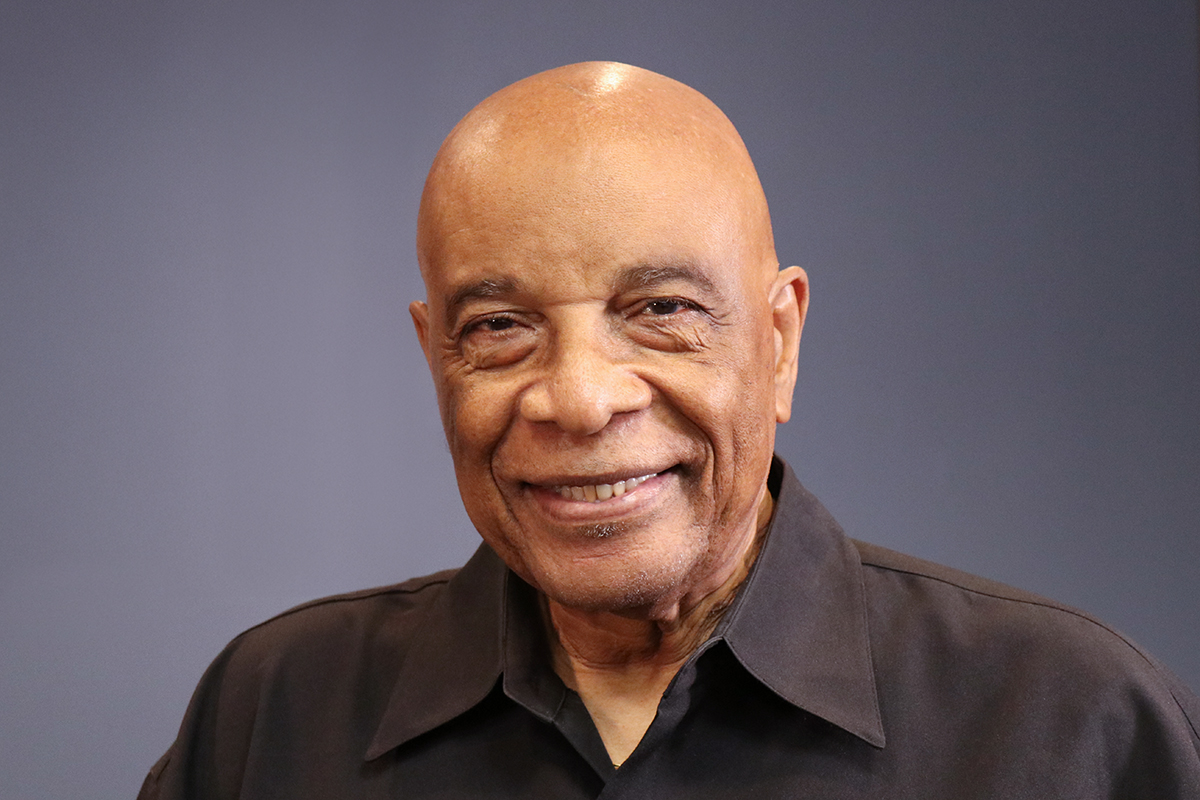
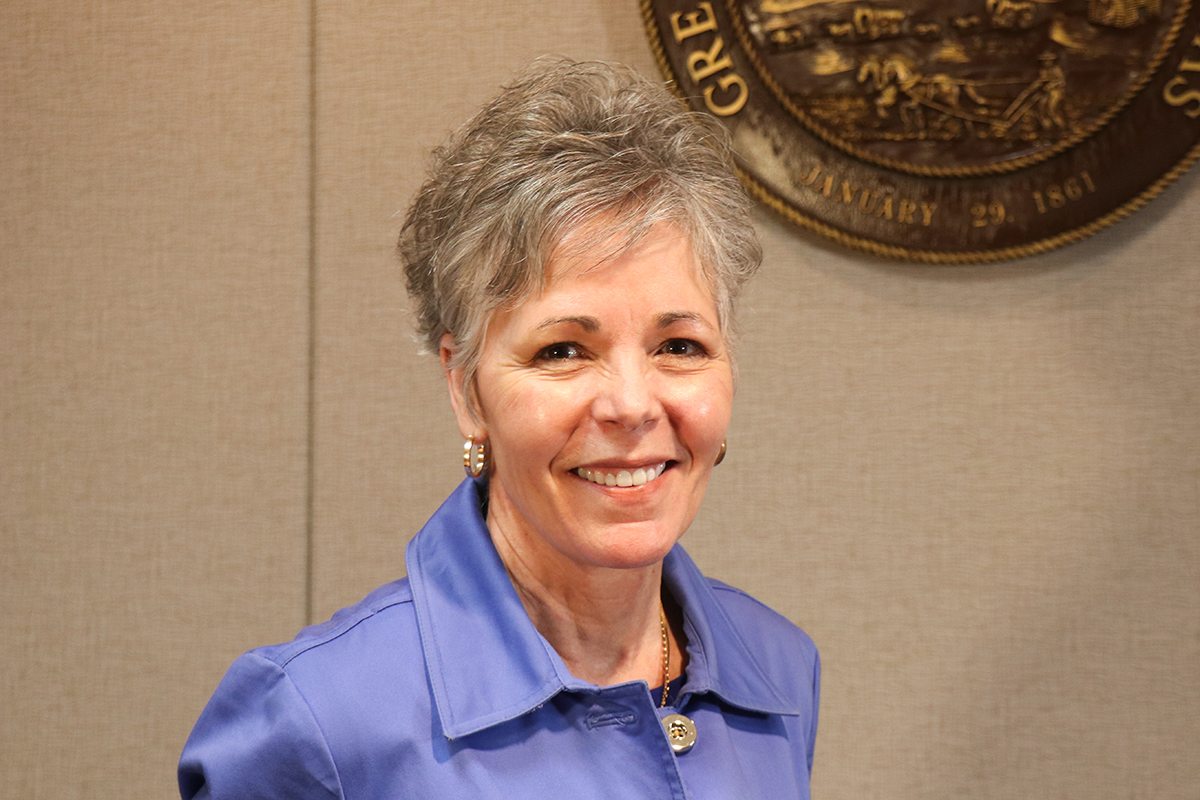

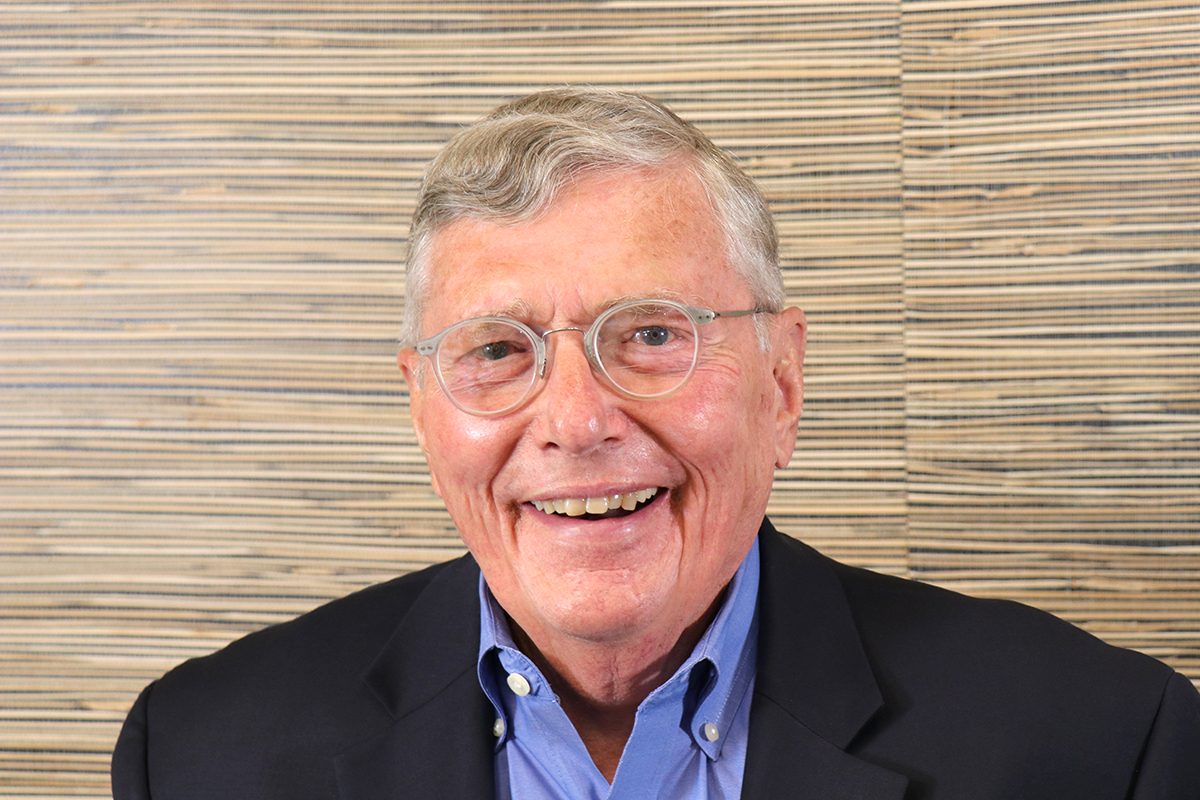
As we find ourselves at the start of a new school year, our minds turn to the role public education plays in the life of our state. In 2025 the Kansas Oral History Project conducted interviews of educators and education policymakers. The interviewer, Mark Tallman, himself a practitioner in the education policy arena for many years, prompted interviewees to discuss their observations and experiences as teachers, administrators, and policy makers. Interviewees were Dr. Steve Abrams, Dr. Ed Berger, Dale Cushinberry, Dale Dennis, Dr. Jerry Farley, Dr. Ed Hammond, Frank Henderson, Connie Hubbell, Dr. Cynthia Lane, Christy Levings, Dr. Sue Peterson, Alan Rupe, Carol Strickland, Dr. Andy Tompkins, and Jack Wempe. The perspectives revealed in the interviews are varied. In this short review of the collection, we’ve highlighted themes regarding governance from a selection of the interviews.
The Foundation
In Kansas, public education is woven into the fabric of self-governance. Article 6, Section 1 of the Kansas Constitution mandates that the legislature “… provide for intellectual, educational, vocational and scientific improvement by establishing and maintaining public schools and other educational institutions.” Public education is therefore not an optional service or economic transaction but the basis for an informed, self-governing citizenry. The interviews comprising the Leaders in Kansas Education collection describe how these interviewees see public education as a mechanism through which skills of critical thinking and civil discourse, as well as the values of mutual respect and social mobility, are maintained and improved upon across generations.
One of the interviewees, former director of and inductee to the National Teachers Hall of Fame Carol Strickland articulated the essential link between classroom instruction and democratic stability, “The teaching profession, the education profession is so important to democracy… It creates a foundation of critical thinking and logic and diversity and acceptance and tolerance.”
Historically, Kansas education grew outward from agrarian roots and one-room schoolhouses into unified school districts designed to broaden student opportunities. From the state’s early settlement through the present, Kansans have recognized that the stability of local communities depends on an educated citizenry. When individuals learn to read, analyze complex information, and communicate across differences of life experiences, they build the skills and knowledge needed to sustain representative institutions. Public schools serve as the first arena where young people gather, deliberate, and develop mutual trust.
Purse Strings
In Kansas, public education is not merely a requirement for young people. The Kansas Constitution establishes an affirmative duty upon the legislature to provide for the finance and maintenance of a public school system. The means of financing the state’s public education institutions, which has changed over time, demonstrates how the state-level governing institutions—the legislative, executive, and judicial branches—interact to implement the constitutional mandate. For decades, elementary and secondary school funding relied upon local property taxes. This arrangement created school resource disparities that reflected differences in the value of property in school districts. In response to those inequities, the basis of school funding was challenged in court in a series of cases spanning the years from 1972 through 2024.
Alan Rupe, who represented plaintiff school districts through decades of school finance litigation, emphasized in his interview that judicial intervention was required to compel the legislature to meet its obligation to finance public education. Reflecting on the checks and balances of Kansas governance, Rupe noted, “The legislature has a positive duty to act. Simply doing nothing isn’t going to cut it… The three branches of government actually work, and although there’s been some challenges and razor thin margins, ultimately, we have improved educational funding and improved the opportunities for our Kansas kids.”
Long-serving Department of Education administrator Dale Dennis observed that progress toward equitable funding depended on bipartisan legislative stewardship. He cited key legislators, including Joe Harder, Don Crumbaker, and Anthony Hensley, who in his opinion recognized that equitable funding was not a political bargaining chip but a core requirement of democratic fairness. As Dennis observed, “It wasn’t about politics. It was about doing what’s right.” By establishing that the Constitution requires both adequacy and equity, Kansas courts affirmed that self-governance cannot tolerate an educational structure where vulnerable or low-income students are systematically left behind.
Multi-Layered Governance
While state-level governance is often in the spotlight, at the heart of the Kansas educational system sits local public education governance—the school board. Elected in non-partisan elections by their communities, local school board members are examples of lay democracy at work. Frank Henderson, former president of the National School Boards Association and long-time member of the Seaman USD 345 Board of Education, articulated the guiding principle of local public service, “It’s our responsibility in partnership with families to ensure that each child is given the individualized, specialized, and tailored opportunity to succeed and reach their God-given potential, regardless of conditions, needs, experiences, characteristics, and gifting.”
The local school board is a piece of a multi-layered education governance system. The various pieces do not always move relative to one another without friction— as might be expected when the pieces perform their roles of checking and balancing. Several interviewees in this collection drew a line from governance to the classroom. Dale Cushinberry, veteran principal at Highland Park High School in Topeka (USD 501), highlighted how educational leadership strengthens social cohesion by building deep personal trust across neighborhoods, “Our target goal as a community is to build a bridge for that student or students, and no one of us is as smart as all of us, and no one of us has all the answers or resources, but collectively when we rise to a higher level of collective purpose, we tend to do a better job.” Cushinberry advocated for a “Ways and Means” mindset in public education—urging educators to focus on student welfare—finding both the ways and the means for all young people to do their best.
Former Kansas City, Kansas Superintendent Dr. Cynthia Lane reflected on her advocacy for high-poverty districts, emphasizing that equal access is a moral and democratic imperative. As Lane described the task of educators, “Our work is to help them unlock their dreams… My motivation frankly throughout my career has been to help individuals discover their own path to opportunity.”
Building Capacity
A thriving democracy requires economically empowered residents who possess the skills and credentials necessary to sustain their own and their communities’ prosperity. Public higher education institutions—particularly community colleges, regional state universities, and the state’s only municipal university, Washburn—play a critical role in providing access to postsecondary education by lowering geographic, financial, and personal barriers to learning.
Dr. Jerry Farley, the former president of Washburn University in Topeka and himself a first-generation college graduate, explained that in his experience the foundational responsibility of educational institutions in a democracy is to transform lives. By equipping first-generation students with technical skills and critical thinking ability, universities empower individuals to become self-reliant, engaged members of society. As Farley commented, “All of this is just connecting what you’re trying to do looking forward to ‘How does it have an impact on individual lives?’ and if you can help them be successful, that’s part of what you are supposed to do.”
Dr. Ed Berger, former president of Hutchinson Community College and state senator, discussed how local community college programs adapt directly to workforce needs while enabling non-traditional learners to achieve economic independence, “Community colleges can get close to the community, listen to the community. The community can tell them what their needs are and then respond to it appropriately… taking that individual, making a tax eater into a taxpayer. That’s important, changing their lives.” Statewide initiatives like 2012 Senate Bill 155, Kansas City’s “Diploma Plus” framework, and the Kansas Blueprint for Literacy reflect a growing consensus that K-12 systems, community colleges, and state universities must act in concert.
Similarly, Dr. Sue Peterson, former Assistant to the President of Kansas State University, noted that public land-grant universities fulfill their democratic purpose by serving as the “university for Kansans”—taking research, agricultural extension, and academic preparation into communities across the state.
Sustaining the Effort
This one perspective on the story of public education in Kansas as encompassed in KOHP interviews illustrates how self-governance involves deliberate institutional nurturing, equitable funding, and ongoing dialogue in many venues. As Carol Strickland reminded us, preserving a community requires prioritizing communication among individuals, “Let’s communicate face to face. Let’s talk about things. I can be on the opposite side of the aisle, but we could still meet for coffee and talk about something.”
Photos in this post by Dave Heinemann, KOHP Board member and videographer