





Leaders in Kansas Education
About this Collection
Leaders in Kansas Education tells the story of a changing educational environment starting in the 1960’s with how public schools are funded to restructuring higher education governance in the 21st Century. Interviews with policy leaders and educators reveal the strategies and methods they used to implement changes to the educational system from K-12 to higher education.
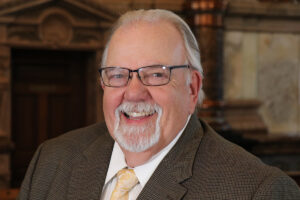
Interview of Steve Abrams, June 26, 2025
Interviewed by Mark Tallman
Steve Abrams grew up loving to read and as an adult found it incomprehensible that others could not learn to read. His involvement as a member of his local board of education was initially focused on the issue of reading. He later championed Career and Technical Education training as another option for students while he served on the State Board of Education and on the Senate Education Committee. The interview has a substantive discussion of some of the issues the state board encountered during Abrams' term: No Child Left Behind, the Nation at Risk Report, Show Morestate assessments, standards for local schools, Quality Performance Accreditation, to name a few. Abrams states that it’s not easy to solve the issue of “wanting education to be successful for the students in the state of Kansas and still be affordable for the citizens of Kansas.” Show Less

Interview of Ed Berger, May 12, 2025
Interviewed by Mark Tallman
This oral history interview of Ed Berger, former State Senator and former President of Hutchinson Community College, focuses on the role of the community college in the educational system of Kansas. Community colleges were chartered in the 1960's in Kansas and required voter approval of a local referendum approved to begin operation. Seward, Barton, and Johnson counties were the last three to charter their respective community colleges in 1969. By 1990 there was a move to change governance of community colleges to the Kansas Board of Regents. That measure was not enacted. Berger's Show Moreinterview focuses on the community aspect of these institutions and how their educational goals change as community needs mature. Distance learning, technical education, and linkages with economic activity of the communities are highlighted in the interview. Berger describes his service in the Kansas Senate as it tried to unwind the "Brownback Tax Experiment" which had led to disruption of state finances. Berger's outlook is best described in this quote: "... Kansans are creative and resilient and... will find a way to adjust to it and still serve its public well..." Show Less
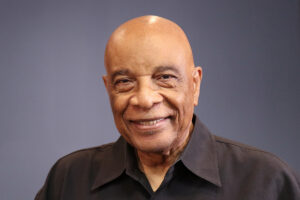
Interview of Dale Cushinberry, May 21, 2025
Interviewed by Mark Tallman
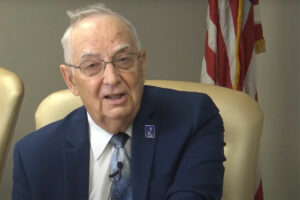
In his interview, Dale Cushinberry describes how the adults in his life provided opportunities for him and led him to a career in education in the Topeka area. He taught elementary school, coached basketball, and counseled students. He moved into school administration as a principal when he spent four years at Highland Park High School as assistant principal. Washburn University offered him a position in the Education department where he served for seven years. Throughout his career, he has tried to also have a positive influence on his students’ lives. Cushinberry states during his Show Moreinterview, that “… our kids are victims of our system failures. Systems that fail around them, whether it be the home front, whether it be our school, whether it be our churches, on and on.” He believes that “It’s our job to create an environment, to create a culture where our kids can meet success.” He created that environment at Highland Park High School as its principal for 16 years. Cushinberry discusses his strategies and his philosophy for working with students and their families.
Highlight -- short excerpt from the interview
Interview of Dale Dennis, August 28, 2020
Interviewed by Andy Tompkins
People interested in the development of education policy in Kansas will find no better resource than this 2020 oral history interview with Dale Dennis, Deputy Commissioner of Education. The interview was conducted by Dr. Andy Tompkins, a former Kansas Commissioner of Education. During the interview, Dennis speaks candidly about policy development, identifying the issues and the legislators who were intrinsically involved. The interview covers the 1972 lawsuit which was the first dealing with issues of equity in school funding. Twenty years later, a 1992 school finance lawsuit again challenged the lack of equalization which rendered the formula unconstitutional. Show MoreDennis explains in detail the process by which the Legislature, Governor Joan Finney, Speaker Marvin Barkis, and others went about addressing the Court's concerns. By 2000 the Legislature had again failed to fully fund the school finance formula and the Montoy lawsuit arose. Another case, Gannon, began in 2010. This time the problem was the adequacy of the funding to meet constitutional requirements. Moving on from school finance lawsuits, the interview covers school consolidation and related issues of local control. Dennis explained why he started offering budget workshops to school administrators and worked to develop software to support school financial operations.. This interview includes a brief discussion of the 1999-2000 legislation that moved state oversight of community colleges and technical schools (later termed technical colleges) from the Kansas Department of Education to the Kansas Board of Regents.
Highlight -- short excerpt from the interview

Interview of Jerry Farley, March 18, 2025
Interviewed by Mark Tallman
Jerry Farley served 25 years as President of Washburn University before retiring in 2024. Farley changed Washburn from a municipal university with a largely off-campus student body to a major Kansas postsecondary educational institution with a thriving on-campus student body. In this 2025 interview, he recalled his most important decision as merging with the local vocational-technical school to create Washburn Tech. The transcript follows as closely as possible the interview by Mark Tallman. For purposes of clarity, some responses were derived from an earlier, written interview provided by Dr. Farley and posted on Lasting Legacy Online .
Interview of Edward Hammond, April 1, 2025
Interviewed by Mark Tallman
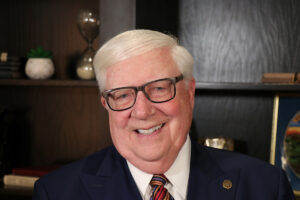
In this 2025 oral history interview, Ed Hammond describes in detail how Fort Hays State University (FHSU) changed and adapted during his nearly 30 years as university president in response to the actions of the Kansas Board of Regents and the Kansas Legislature. During that time Hammond wrote two strategic 10 year plans to accommodate the changing environment for higher education in Kansas. The first plan emphasized "high tech, high touch." The curriculum changed to incorporate technology, even teaching art as graphic design on computers. The goal was for all 1990 graduates to be computer Show Moreliterate. Prior to Hammond becoming president, FHSU had experienced declining enrollments for a decade. FHSU needed to grow to keep up with this change because state funding was based on enrollment. He believed that If you are going to move into an institution and make change, you must select strategies that promote that change. Establishing smaller classes, ("high touch") was one of those strategies, distinguishing FHSU from the other regional universities in Kansas. The next hurdle was responding to changes in how tuition was applied. In 2000, the Kansas Board of Regents (KBOR) changed the formula permitting institutions to keep their tuition revenue. The other change was placing the 19 community colleges, Washburn University, and the technical schools under the oversight of KBOR to improve coordination. Hammond decided to emphasize distance learning and low tuition to meet these changes. While other schools raised tuition, FHSU remained at the low tuition end of the spectrum. The focus at FHSU moved from "high tech, high touch" to "affordable success" using distance learning technology to expand enrollment. Hammond convinced rural telephone carriers to provide free and low-cost internet services, wired and cellular. By 2010 FHSU had more distance learners enrolled than all the other schools combined. The university began recruiting Chinese students in 1999--enrolling 15,000 students in about 10 years. Hammond attributed his success at FHSU to the team of faculty and administrators with whom he worked. Show Less
Interview of Frank Henderson, May 21, 2025
Interviewed by Mark Tallman
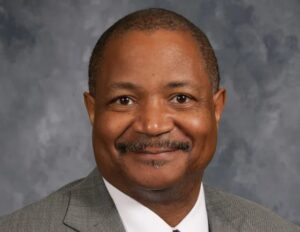
In this 2025 oral history interview, Frank Henderson recounts his journey from a small western Kansas farming community to becoming a prominent leader in public education. He reflects on his service on the local school board, where he helped modernize student opportunities and navigated a contentious community debate regarding the district's namesake. Henderson also discussed his leadership role at the state level with the Kansas Association of School Boards and the national level with the National School Board Association, where he advocated for marginalized students and adequate educational funding. Drawing from his background in social services and the criminal justice Show Moresystem, he emphasized the critical connection between overcoming the opportunity gap and ensuring that every child can succeed. At the time of this interview he was continuing his lifelong passion for education by guiding districts in selecting superintendents who match their community needs. Show Less

Interview of Connie Hubbell, May 21, 2025
Interviewed by Mark Tallman
In this oral history interview, Connie Hubbell recalled her three terms as an elected member of the Kansas State Board of Education (KSBE) and her time as President of the National Association of State Boards of Education. She recalls one of the significant accomplishments while on the KSBE leading it to mandate human sexuality and AIDS education in Kansas public schools. Hubbell also recalled setting the stage for the inclusion of special education students into regular classrooms. That move began under her leadership of the National Association of State Boards of Education. She followed that Show Moreexperience with a run for Kansas Lt. Governor on the ticket with gubernatorial hopeful Fred Kerr. Although they were not successful, three governors subsequently noticed her management skills and offered her positions in their administrations, beginning with Governor Bill Graves who appointed her Secretary of Aging. She retired from the position of Director of Governmental Affairs for the Kansas Department for Aging and Disability Services in 2021. Show Less
Interview of Cynthia (Cindy) Lane, March 25, 2025
Interviewed by Mark Tallman
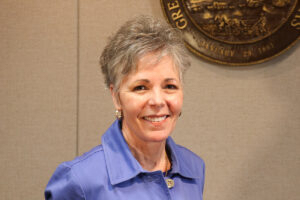
Cindy Lane's 2025 oral history interview focuses on various transformations of Kansas public education. In this interview she recalls her work on education policy, from special education to the Kansas Board of Regent's Blueprint for Literacy. This quote from Dr. Lane sums up the interview: "Most of my career in KCK [Kansas City, Kansas] as a leader was to focus on outcomes that actually transformed kids’ lives, that opportunity piece." The scope of the discussion is wide-ranging, from changes in special education, to court cases on school finance, to the Kansas Board of Regents.
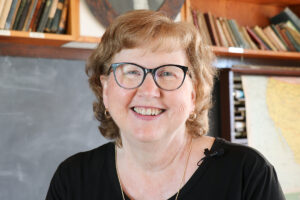
Interview of Christy Levings, June 9, 2025
Interviewed by Mark Tallman
Christy Levings’ interview highlights how schools and educators have adapted to significant changes in education over the past fifty years and how professional organizations such as the Kansas National Education Association (KNEA) and Kansas Association of School Boards (KASB) worked together in making those changes. Levings spent time as a national and state officer in the NEA and worked in forty-two different states. She credits her undergraduate years at Washburn University with instilling in her the need for “learning all the time…being a scholar.” Throughout her professional career, she has been committed to helping teachers and administrators Show Moreimprove their skills and the educational opportunities of their students and to advocating for the teaching profession.
Highlight -- short excerpt from the interview
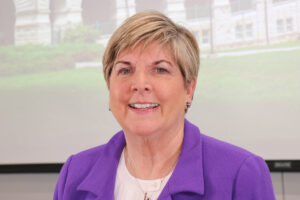
Interview of Sue Peterson, May 13, 2025
Interviewed by Mark Tallman
In this 2025 oral history interview, Sue Peterson reflects on how she became involved in state politics and how her various positions in the executive and legislative branches taught her “the process” it took to get anything accomplished in the Statehouse. She later used these experiences in her role as the Assistant to the President at Kansas State University (KSU) to help the university secure significant opportunities. Those opportunities included KSU’s selection as the location for the National Bio and Agro-Defense Facility and the transformation of the Kansas Technical Institute in Salina into Show Moretarget="_blank">K-State Salina. Peterson shared that her role was “to advocate, and to educate, and…to defend” her institution. Show Less

Interview of Alan Rupe, May 12, 2025
Interviewed by Mark Tallman
Alan Rupe's oral history interview provides an historical perspective on school finance and school finance litigation. Rupe and John Robb represented the plaintiffs in the Montoy and Gannon lawsuits. After trying a lawsuit for the Newton School District, Robb suggested to Rupe that they try a suit against the state of Kansas over adequate and equitable funding of public education. Rupe said, "Count me in!" Since 1989 the two have partnered on school finance cases. In the interview Rupe discusses how earlier case judgments influenced their decision to move the focus of the litigation from Show Morethe equal protection clause to Article 6 Section 6 of the Kansas Constitution and focus on the adequacy of school funding. Rupe details in the interview aspects of the litigation which continued for many years. Toward the end of the interview, Rupe offers this idea: "... one of the lessons that we learned as a result of Montoy is if you declare victory and spike the ball in the end zone and turn your back on the issue, things don’t get better. The legislature and politics will start moving the money away from the schools." Rupe's conclusion is "It’s the language in the constitution that has pushed the results that we’re seeing." Show Less

Interview of Carol Strickland, June 9, 2025
Interviewed by Mark Tallman
In this 2025 oral history interview, Carol Strickland reflected on her career in teaching, her work in higher education, and her leadership of the National Teachers Hall of Fame. She discussed how she was inspired to enter the profession by a supportive fourth-grade teacher and described the crucial mentorship she received during her challenging first year in the classroom, when her principal told that she had to do two things “You have to let the students know that you care about them, and you have to treat them all the same.” Strickland analyzed the profound evolution of classroom demographics, Show Morehighlighting the impact of special education inclusion and growing English Language Learners populations alongside shifting societal pressures on students. She addressed challenges in reading instruction, the critical importance of strong administrative support, and the necessity of collaboration among educators and communities to recruit and retain dedicated staff. Show Less

Interview of Andy Tompkins, January 13, 2025
Interviewed by Mark Tallman
Andy Tompkins has had a leading role in education in Kansas that started in 1970 when he was hired to teach English in Hugoton. That job quickly became Principal and then Superintendent of three different districts until he was tapped in 1996 as Commissioner of Education. Tompkins recounted in this oral history interview the changes that took place in public education in Kansas during his career. Tompkins' interview toucheed on special education, "A Nation at Risk", the movement to improve education, standards and the 1992 School Finance Reform Act. He was able to explain why things Show Morechanged and with what result. Tompkins portrays skilled leadership and a trusted leader committed to improving education for all. Show Less

Interview of Jack Wempe, January 23, 2025
Interviewed by Mark Tallman
This 2025 oral history interview of Jack Wempe focuses on his experiences as a student in a one-room school and a teacher, principal and superintendent in rural Kansas; his legislative activities involving education issues; and his service on the Kansas Board of Regents. Wempe's experience covers the scope of education in Kansas over several decades of critical change. In this interview he describes school unification, changes in funding for public schools, implementation of qualified admissions, and reorganization of higher education with the Board of Regents assuming coordination responsibilities for the nineteen community colleges.
Highlight -- short
Show Moreexcerpt from the interviewAnother oral history interview of Wempe, focusing on his experiences as a state legislator, is part of the Statehouse Conversations collection on this site. Show Less