Refine Your Results

Search Results

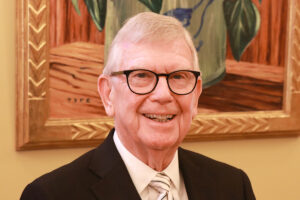
Interview of Bill Graves, December 5, 2022

Interviewed by Mike Matson
Mike Matson's 2022 interview of former Kansas Governor Graves shows the deep respect Matson has for the man he describes as "the last of the centrist, moderate Republican Kansas governors." The interview reveals the values that guided Graves throughout his 8 years in office--to whom much is given, much is expected. It shows how a well-grounded young man dealt with the news that the career for which he had prepared was no longer an option, and how he earned the respect of 73 percent of the state's voters resulting in a second term for Governor. Graves talked Show Moreabout his three most difficult decisions: replacing a US Senator (Dole), concealed carry and abortion restrictions. Graves concludes with a discussion of issues he thinks the Republican party should be embracing in the future. Following the interview, Matson wrote a column which summarized Bill Graves' success. A 2016 interview of Graves by Dr. Michael Smith of Emporia State University is published on this site. Two interviews of Graves conducted by Dr. Bob Beatty of Washburn University in 2004 and 2011 are also posted on this site. Show Less

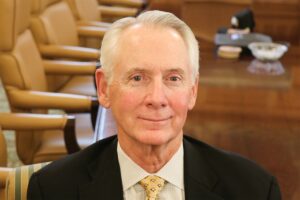
Interview of Bill Graves, September 16, 2016

Interviewed by Michael Smith
Emporia State University Professor Michael Smith interviewed former Governor Bill Graves on the Kansas Wesleyan University campus, Graves’ alma mater, in the fall of 2016 before the November election. The interview covered events from Graves’ years in office as well as his thoughts on the state of Kansas politics in 2016 and the political changes in the Statehouse. This interview delves into some of the political situations Graves faced, particularly in his second term with challenges from fellow Republicans. Taken together, this interview, the 2022 interview of Graves by Mike Matson, and interviews of Show MoreGraves conducted by Dr. Bob Beatty of Washburn University in 2004 and 2011 form a picture of the changing nature of conservatism in Kansas politics and help define the meaning of Traditional Republican.

____________________________

The KOHP Board is grateful to Dr. Smith for providing this interview and permission to publish it as part of the Kansas Governors collection. Show Less
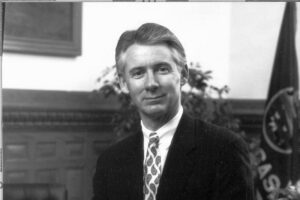
Photo of Bill Graves

Interview of Bill Graves, February 13, 2004

Interviewed by Bob Beatty
This transcript documents an interview of former Kansas Governor Bill Graves, conducted in 2004 by Dr. Bob Beatty of Washburn University. The interview was part of a project by Washburn University to preserve the legacy of Kansas leaders. The Kansas Oral History project is grateful to Dr. Beatty for providing the transcript and granting permission for it to be included the the KOHP Kansas Governors Collection. In the interview, Graves reflects on his "high and tight" campaign slogan which reflected his emphasis on fiscal efficiency and discusses his efforts to balance internal Republican party friction Show Morebetween moderate and conservative factions. Graves describes his commitment to infrastructure investment, the privatization of social services, and the personal joy of adopting his daughter while serving as Governor. The interview is a reflection on the executive mindset, highlighting the importance of surrounding oneself with a talented cabinet and maintaining a calm, pragmatic approach to governance. Considered together, this interview, the 2022 interview of Graves by Mike Matson, the 2016 interview of Graves by Dr. Michael Smith of Emporia State University, and the other interview of Graves conducted by Beatty in 2011 form a picture of the changing nature of conservatism in Kansas politics and help define the meaning of Traditional Republican.

Interviews of former Kansas governors conducted by Dr. Bob Beatty of Washburn University during the early decades of the 21st Century for the Kansas Governors Recorded History and Documentary Project provide a view of the lives, political philosophies, and governing styles of governors who led Kansas from the late 20th to the early 21st Century. Beatty generously granted the Kansas Oral History Project (KOHP) permission to house the transcripts of these interviews conducted with former governors John Anderson, William Avery, John Carlin, Bill Graves, Mike Hayden, Mark Parkinson, and Kathleen Sebelius. These interviews are a significant addition to the Kansas Governors Collection, and the KOHP Board is grateful to Dr. Beatty for making the transcripts available for posting here.

Show Less
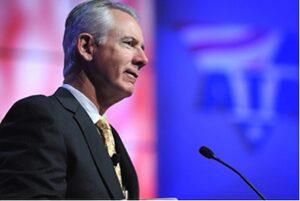
Interview of Bill Graves, July 15, 2011

Interviewed by Bob Beatty
In this 2011 interview, former Governor Bill Graves discusses his political career. The interview was conducted by Dr. Bob Beatty for the Kansas Institute of Politics. Graves describes his path from family-owned trucking business to his unexpected entry into public service, emphasizing how the combination of private-sector values and speech and debate training shaped his leadership style. He reflects on his tenure as Kansas Secretary of State and his subsequent election as a centrist Republican governor, detailing his efforts to navigate the growing ideological divide between moderates and conservatives within his party. Key decisions are highlighted, including development of Show Morehis transportation initiative, the selection of a successor for U.S. Senator Bob Dole, and his approach to budgetary crises. Considered together, this interview, the 2022 interview of Graves by Mike Matson, the 2016 interview of Graves by Dr. Michael Smith of Emporia State University, and the other interview of Graves conducted by Beatty in 2004 form a picture of the changing nature of conservatism in Kansas politics and help define the meaning of Traditional Republican.

Interviews of former Kansas governors conducted by Dr. Bob Beatty of Washburn University during the early decades of the 21st Century for the Kansas Governors Recorded History and Documentary Project provide a view of the lives, political philosophies, and governing styles of governors who led Kansas from the late 20th to the early 21st Century. Beatty generously granted the Kansas Oral History Project (KOHP) permission to house the transcripts of these interviews conducted with former governors John Anderson, William Avery, John Carlin, Bill Graves, Mike Hayden, Mark Parkinson, and Kathleen Sebelius. These interviews are a significant addition to the Kansas Governors Collection, and the KOHP Board is grateful to Dr. Beatty for making the transcripts available for posting here.

Show Less
Interview of Gary Sherrer, October 15, 2021

Interviewed by Mike Matson
Gary Sherrer was a debater and it changed his life. His reflections on growing up in Topeka, winning a debate scholarship to Kansas State Teachers College and then teaching for eight years are the perfect backdrop to his later achievements. His association with the Graves Trucking Company and soon-to-be-Governor Bill Graves paved the way for him to become Bill Graves' Lt. Governor. Sherrer won the respect of many Kansas leaders, including Henry Bubb and Jordan Haines, two preeminent bankers who recruited him to the banking industry as chief marketing officer, and later, lobbyist when multi-bank holding company Show Morelegislation was pending. His debate skills served him well as a lobbyist, enabling the controversial bill to pass by one vote. He developed the Leadership Kansas model to train leaders. He knew how to solve community problems and displayed those skills as Secretary of Commerce for Governor Graves. One of his proudest accomplishments was the STAR bonds project in Wyandotte County, with Mayor Carol Marinovich. The interview is replete with examples of programs he developed or guided to fruition. It is interesting to read all the anecdotes about the political scene. Show Less
Dale Goter

Interview of Dale Goter, January 6, 2026

Interviewed by McLean Jim
In this 2026 oral history interview, Dale Goter looked back at the evolving landscapes of Kansas journalism and state politics. Goter, a veteran journalist who later became the lobbyist for the City of Wichita, offered a unique perspective on how the relationship between the press and elected officials shifted over several decades. He described a "golden age" of Statehouse news coverage when major news organizations maintained fully staffed bureaus in Topeka. That presence allowed for rigorous, daily coverage of the Kansas Legislature, which Goter characterized as essential for maintaining public accountability. He expressed concern over the subsequent decline of coverage, Show Morenoting that the loss of dedicated statehouse reporters left a void sometimes filled by partisan messaging rather than objective reporting. Goter stated that as a journalist, “You’re always going after the power structure because that’s where the power is, and that’s where the abuse of power is.” Journalists are "conditioned to look for controversy. You’re looking for conflict, controversy, and corruption. That puts you at odds with government all of the time. You’re perceived as a liberal because you’re going against government.” Goter shared his thoughts on changes in the Statehouse culture. He points out that there used to be a “level of oratory that took place on the Senate floor, people like Ed Reilly, . . . Frank Gaines, and Tom Rehorn. They could get up. They were stem winders." Goter transitioned from the press gallery to a role as lobbyist for Wichita in 2006. He described the nuances of lobbying for the city from a ‘public good’ perspective not commonly found among the ranks of lobbyists. Goter explained that effective lobbying relies on building long-term relationships and providing credible information to lawmakers, a process that became increasingly difficult due to rising political polarization.

Highlights -- short excerpts from the interview

Show Less

Interview of Anthony Hensley, September 16, 2022

Interviewed by Alan Conroy
Senate Minority Leader Anthony Hensley was first elected to the Kansas House of Representatives in 1976 at the age of 22. He moved to the Senate in 1992, finishing an unexpired term of Senator Nancy Parrish. His interview covers his 44 years in the House and Senate, and almost every issue the legislature dealt with in those years: taxes, reapportionment, school finance and labor issues, to name a few. His story about negotiating with Dick Bond to increase funding for schools is a "must read". Hensley's description of how the Show MoreBrownback tax cuts were enacted after the Senate reconsidered its vote to kill them is a lesson in how parliamentary maneuvering between House and Senate can have unexpected consequences.

Highlights -- short excerpts from the interview

Show Less

Interview of Eber Phelps, July 26, 2024

Interviewed by Chris Courtwright
Eber Phelps' interview covers the 18 years he served in the Kansas Legislature. Phelps paints a picture of the changes in the political culture and environment that occurred during his tenure. He blamed his loss in 2012 on the Brownback tax cuts, and his win in 2016 on the Brownback tax cuts. He lost because he voted against the tax experiment; he defeated Sue Boldra because of the problems the tax experiment caused in the Kansas economy and her insistence that nothing was wrong. The interview covers how Phelps became interested in politics, and the Show Morework he did on education and economic development. His work on the Insurance committee with chairman Bob Tomlinson stands in stark contrast to the current mode of work in the Legislature. The description of how the Mayor and city council found a way to solve a pressing water problem reveals his belief in community engagement. The interview closes with a discussion of how state government changed during his tenure. He noted there were 18 Democratic legislators elected from west of Salina when he was sworn in in 1996 and tax returns were filed on paper. Today, everything is online, and the makeup of the legislature is completely different.

Highlights -- short excerpts from the interview

Show Less
Sheila Frahm, Kansas

Interview of Sheila Frahm, November 13, 2020

Interviewed by Joan Wagnon
In this 2020 oral history interview, former Kansas State Senator Sheila Frahm reflects on her time in elected office from local school board to U.S. Senate. This interview was conducted on Zoom with Frahm at her home in Arizona and the interviewer, Joan Wagnon, in Topeka. Frahm provides a unique point of view on the relationships between Governors and the Legislature. She discusses her decision to leave the legislature and run for Lt. Governor with Bill Graves and her subsequent appointment to fill a U.S. Senate vacancy when Bob Dole decided to run for President. This interview includes a segment Show Moreduring which Frahm talks about several issues in which she was involved: community colleges and out-district tuition and triple-trailers. During the interview Frahm reflects on her identity as a western Kansas legislator and how her up-bringing, shaped others' perceptions of her legislatively. She saw the years during which she served in the State Senate as very productive, citing school finance in 1992 and advances in higher education as two important policies that were enacted. The interview concludes with Frahm's reflections on the civility of the body, the importance of relationships to accomplishing your goals, and advice to prospective candidates. The 2020 interview begins with a discussion of a 1991 oral history interview conducted by Dr. Sara Tucker of Washburn University that covers much of Frahm's background and her interest in education issues.

A 2004 oral history interview of Frahm conducted by Dr. Bob Beatty of Washburn University is also available on this site. Show Less
Go to Top