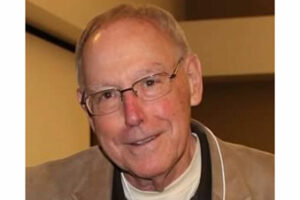
Interview of Kent Glasscock, June 11, 2021

Interviewed by Alan Conroy
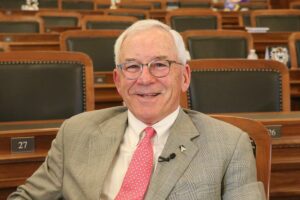
As Majority Leader, and then as Kansas House Speaker, Kent Glasscock found ways to work productively with the conservative wing of the Republican caucus. The first part of the interview describes how Glasscock decided to run for office and his six campaigns. As he moved up in leadership, the interview talks about several situations where his views as a moderate Republican clashed with the growing number of conservatives in the Republican caucus. Finally, Speaker Shallenburger called Glasscock to his office and together they made peace and subsequently worked well together. Glasscock cites the school finance bill that Show Moredealt with a capital outlay for school buildings as one of his best, most long-lasting accomplishments as well as the Confined Animal Feeding legislation. Styling himself as a true "policy wonk", Glasscock's descriptions of legislative antics in passing legislation are really interesting. This interview gives a picture of how the legislature transitioned to conservative control during his 12 years in office. Show Less
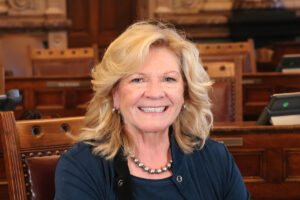
Interview of Jayne Aylward

Interview of Jayne Aylward, June 18, 2021

Interviewed by Alan Conroy
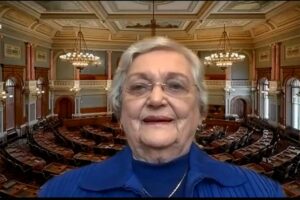
Jayne Aylward's Oral History Interview described her experiences as one of the youngest members of the Kansas House of Representatives. Aylward was elected in 1978 from the 74th District in Saline County, Kansas. She served from 1979 to 1990 when she resigned to become an administrative tax judge with the Kansas Board of Tax Appeals. She later became a Certified Public Accountant specializing in tax matters. At the time of this interview Aylward was a rancher and stockwoman in addition to having a tax practice in Salina. During the interview she discussed her interest in Show Moreagriculture and taxation which came from growing up on her family farm and her participation in 4-H showing cattle. During the 1985-1986 legislative session, she was the Chair of the House Communications, Computers and Technology Committee. She also served on the House Federal and State Affairs Committee and the House Taxation Committee, both of which handled high-profile issues that she discussed in the interview, including reappraisal and classification of property taxes, and a constitutional amendment authorizing the Kansas lottery. Show Less
Interview of Tracy Streeter

Interview of Tracy Streeter, April 30, 2021

Interviewed by Rex Buchanan
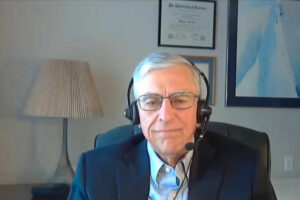
In this 2021 oral history interview, Tracy Streeter reflects on his 14 years as Director of the Kansas Water Office under four governors. As recalled here, the early years of the 21st Century saw the efforts of the Kansas Water Office move from planning and policy-making to implementation. Streeter discussed issues involving water reservoirs that have become an integral part of water management in the state. He also reflected on the number of state agencies involved in development and implementation of water policy in Kansas and the dynamics of the Natural Resources Sub-cabinet under Governor Sebelius Show Moreas well as changes that occurred when the policy planning time horizon was increased dramatically through the water visioning process initiated by Governor Sam Brownback. Show Less

Interview of John Solbach, June 11, 2021

Interviewed by Alan Conroy
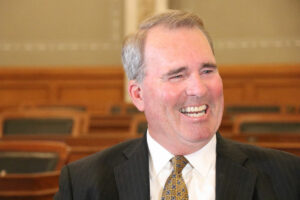
John Solbach served in the Marines, was wounded in combat in Vietnam, returned to Kansas to finish college and law school and ran for the Kansas legislature in 1978. He represented Lawrence/rural Douglas country in the House for 14 years. Solbach's interview is replete with entertaining stories, starting with his Populist ancestors' takeover of the Kansas House in 1890, to stories about how Mike Hayden helped him get a $4,000 appropriation to bring David Eisenhower to Kansas. He teamed up with Wint Winter Jr. to pass a Uniform Conservation Easement Law in spite of Sen. Ross Doyen; Show More he and R.H. Miller stopped a group of rural electric cooperatives from taking the Wolf Creek Nuclear plant out from under the control of the Kansas Corporation Commission. Solbach considers the sentencing guidelines, passed in 1992 while he chaired the House Judiciary Committee as the best legislation of his career. Show Less

Interview of Ron Hein, April 16, 2021

Interviewed by Alan Conroy
Ron Hein, former legislator, lobbyist, and lawyer speaks about his 47 years in and around the Kansas Legislature and his impact on Kansas policy. He ran first for the House in 1974 in a 7-way primary which he won. Two years later he ran for the Senate, winning after extensive door-to-door campaigning against a well-known Senator, Bob Storey. He was just 25 when he was sworn into the Senate in 1975, Hein tells some interesting anecdotes about working with Speaker Pete McGill and Senate President Ross Doyen, particularly in his first years in the legislature. Hein Show Moresponsored or cosponsored 142 pieces of legislation on a wide variety of topics. His interview recounts the difficulty he had getting the Higher Education Loan program passed when he was in the House. Ultimately it failed the first year but passed the second. Hein noted the lack of lawyers in today's legislature is detrimental to the process, as is an increased lack of civility. The interview concludes with Hein discussing his lobbying career and why he felt he needed to leave elected office when T. Boone Pickens approached him to represent Mesa Petroleum. Hein notes that he has been more successful getting legislation passed as a lobbyist than as a legislator. Show Less

Interview of Mike O'Neal, April 16, 2021

Interviewed by Alan Conroy
Former Speaker Mike O'Neal's interview covers his 28 years in the Kansas House and his impact as Chair of the House Judiciary Committee on the Kansas legal system, both criminal and civil. In fact, O'Neal chaired the House Judiciary Committee three different times totaling 13 years and also served as Chairman of the House Education Committee and a redistricting committee in 2002. He has been involved with workers compensation issues and medical malpractice. O'Neal explains his own evolution in thinking as he, and his constituents, became more conservative. He candidly discusses his race for Speaker of the Show MoreHouse and compares the leadership styles of other speakers with whom he served. O'Neal left the House in 2012 after finishing his second term as Speaker to take a position with the Kansas Chamber of Commerce as its chief executive officer. After four years with the Kansas Chamber he retired to open his own legal consulting and governmental relations firm, O'Neal Consulting, LLC. Show Less
Ardena Matlack

Interview of Ardena Matlack, April 8, 2021

Interviewed by Joan Wagnon
Ardena Matlack described the Kansas House of Representatives in the 1970’s when few women were in the Kansas Legislature. During her second term she experienced being in the majority as a Democrat—something that seldom occurred in Kansas. While in the majority, she served on the Federal and State Affairs committee as Vice-Chair, and moved up to chair the committee the second year of her term. The committee dealt with the Equal Rights Amendment (ERA), abortion, liquor, and other controversial issues. She also served on the House Judiciary Committee. Her discussion of gerrymandering shows the Show Moredifficulty of dealing with redistricting that led to her husband losing his Senate seat and encouraging her to run for the House. She also dealt with environmental and water issues, particularly in Sedgwick County. Matlack worked with Treasurer Joan Finney to get the first Unclaimed Property law passed. Show Less
John Peck, Kansas

Interview of John Peck, February 5, 2021

Interviewed by Rex Buchanan
In this 2021 interview, John Peck, Emeritus professor of Law at the University of Kansas, recalls the early days of his career entering into the field of water law. His interview provides insight into the important elements of water law in Kansas and how they developed. Peck reflects on the effectiveness of Kansas laws and regulations governing water use. Peck also identifies continuing questions about existing water law and related practices. From his role as an active observer of the legal and regulatory culture that has developed around water in Kansas, Peck presents a unique perspective. Show More Show Less
Kansas House Speaker Robin Jennison

Interview of Robin Jennison, October 4, 2019

Interviewed by Jim McLean
Jim McLean’s interview of Robin Jennison is lengthy but full of interesting stories and anecdotes about what went on in the legislature in the last decade of the 20th Century. McLean teases out both the politics and policy from Jennison’s experiences in the House with the 1992 school finance bill and his Republican alternative. Jennison shares his philosophy on how to fund schools, lower property taxes, leadership races and his rapid rise to Speaker in the 1999-2000 sessions. The strategy he used to pass the 1999 transportation bill out of the House is clever. There is Show Morean anecdote about replacing carpet in the Judicial Center and what it took to get that appropriation passed. Jennison describes his role as Secretary of Wildlife and Parks and working under Governor Brownback. Show Less
John Strickler, Kansas

Interview of John Strickler, May 22, 2019

Interviewed by Rex Buchanan
During John Strickler's 2019 oral history interview, he recalled meeting and becoming friends with newly-elected State Representative Mike Hayden. Later, from 1987 to 1989, Strickler served as Special Assistant to Governor Hayden on environmental matters. During the 1989 legislative session, Strickler assisted Hayden in his efforts to secure funding for implementation of the State Water Plan. He describes in some detail the debateed among the various interests over whether water plan funding should come from the State General Fund or from water user fees. Strickler observed the dynamics of the governor's office, legislature, and various interests in Show Morethe passage of the Water Plan funding. He noted that subsequent governors and the legislature have not maintained funding levels as originally proposed. Strickler discussed the difficulty of managing water resources in Kansas and elsewhere and the problems of implementing environmental education. Show Less
Go to Top