Interview of Christy Levings, June 9, 2025

Interviewed by Mark Tallman
Christy Levings’ interview highlights how schools and educators have adapted to significant changes in education over the past fifty years and how professional organizations such as the Kansas National Education Association (KNEA) and Kansas Association of School Boards (KASB) worked together in making those changes. Levings spent time as a national and state officer in the NEA and worked in forty-two different states. She credits her undergraduate years at Washburn University with instilling in her the need for “learning all the time…being a scholar.” Throughout her professional career, she has been committed to helping teachers and administrators Show Moreimprove their skills and the educational opportunities of their students and to advocating for the teaching profession.

Highlight -- short excerpt from the interview
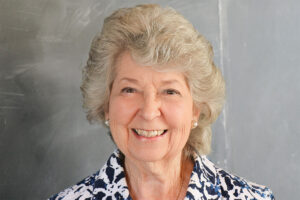
Interview of Carol Strickland, June 9, 2025

Interviewed by Mark Tallman
In Carol Strickland’s first teaching job her principal told that she had to do two things “You have to let the students know that you care about them, and you have to treat them all the same.” That advice set her up for success. She also had mentors, veteran teachers who helped her organize, who gave her the structure she needed in her classes. She noted that there is not one program that works for everyone because “children learn differently”. In the interview she gives examples of including special education children in regular classrooms, teaching immigrant children Show Morewho need English instruction, and the changes that technology brought to teaching. There was a discussion of how to teach children to read as well as how to train teachers. Strickland makes a case for recognizing teachers through the National Teacher Hall of Fame. She ends the interview asking, “How do we make school a ‘joyous’ experience again?” Show Less

Interview of Connie Hubbell, May 21, 2025

Interviewed by Mark Tallman
Connie Hubbell is well-known in state government circles as an effective advocate for education, mental health, and health care for seniors. In this oral history interview, she recalls her service on the State Board of Education -- for three terms -- and her time as President of the National Association of State Boards of Education. She recalls one of the significant accomplishments while on the Kansas state board leading it to mandate human sexuality AIDS education in Kansas public schools. Hubbell also recalls setting the stage for the inclusion of special education students into regular classrooms. Show MoreThat move began under her leadership of the National Association of State Boards of Education. She followed that experience with a run for Kansas Lt. Governor on the ticket with gubernatorial hopeful Fred Kerr. Although they were not successful, three governors subsequently noticed her management skills and offered her positions in their administrations, beginning with Governor Graves who appointed her Secretary of Aging. She retired from the position of Director of Governmental Affairs for the Kansas Department for Aging and Disability Services in 2021. Show Less

Interview of Dale Cushinberry, May 21, 2025

Interviewed by Mark Tallman
In his interview, Dale Cushinberry describes how the adults in his life provided opportunities for him and led him to a career in education in the Topeka area. He taught elementary school, coached basketball, and counseled students. He moved into school administration as a principal when he spent four years at Highland Park High School as assistant principal. Washburn University offered him a position in the Education department where he served for seven years. Throughout his career, he has tried to also have a positive influence on his students’ lives. Cushinberry states during his Show Moreinterview, that “… our kids are victims of our system failures. Systems that fail around them, whether it be the home front, whether it be our school, whether it be our churches, on and on.” He believes that “It’s our job to create an environment, to create a culture where our kids can meet success.” He created that environment at Highland Park High School as its principal for 16 years. Cushinberry discusses his strategies and his philosophy for working with students and their families.

Highlight -- short excerpt from the interview

Interview of Frank Henderson, May 21, 2025

Interviewed by Mark Tallman
At the time when a group of high school students discovered that Fred Seaman, the namesake of Unified School District 345 was the Exalted Cyclops of the Ku Klux Klan in the 1920's, Frank Henderson was President of the Seaman School Board. In this oral history interview, he describes the process the board went through to investigate and analyze the students' recommendations to change the district name. At the end of the process, the name remained, but Fred Seaman's photo and memorabilia were removed from the school buildings and placed in the museum. He said the outcome didn't Show Moresatisfy anyone but it was unanimous. Henderson described many challenging situations at the local, state and national levels as he served on various state and national boards of education. Henderson's observations highlights major issues in education that affected school boards and local communities. The interview reflects Henderson's view that "Every Student Matters." He believes, "we, as fellow humans, have the responsibility to see the value in every person and do what we can to ...help that person fulfill their potential." Show Less

Interview of Alan Rupe, May 12, 2025

Interviewed by Mark Tallman
Alan Rupe's oral history interview provides an historical perspective on school finance and school finance litigation. Rupe and John Robb represented the plaintiffs in the Montoy and Gannon lawsuits. After trying a lawsuit for the Newton School District, Robb suggested to Rupe that they try a suit against the state of Kansas over adequate and equitable funding of public education. Rupe said, "Count me in!" Since 1989 the two have partnered on school finance cases. In the interview Rupe discusses how earlier case judgments influenced their decision to move the focus of the litigation from Show Morethe equal protection clause to Article 6 Section 6 of the Kansas Constitution and focus on the adequacy of school funding. Rupe details in the interview aspects of the litigation which continued for many years. Toward the end of the interview, Rupe offers this idea: "... one of the lessons that we learned as a result of Montoy is if you declare victory and spike the ball in the end zone and turn your back on the issue, things don’t get better. The legislature and politics will start moving the money away from the schools." Rupe's conclusion is "It’s the language in the constitution that has pushed the results that we’re seeing." Show Less

Interview of Sue Peterson, May 13, 2025

Interviewed by Mark Tallman
Sue Peterson reflects on how she became involved in state politics and how her various positions in the executive and legislative branches taught her “the process” it took to get anything accomplished in the Statehouse. She later used these experiences in her role as the Assistant to the President at Kansas State University (KSU) to help that institution secure significant opportunities. Those opportunities included KSU’s selection as the location for the National Bio and Agro-Defense Facility and the transformation of the Kansas Technical Institute in Salina into K-State Salina. This interview includes stories about people and the programs Show Morethey championed. Peterson shares that her role was “to advocate, and to educate, and…to defend” her institution. Show Less

Interview of Ed Berger, May 12, 2025

Interviewed by Mark Tallman
This oral history interview of Ed Berger, former State Senator and former President of Hutchinson Community College, focuses on the role of the community college in the educational system of Kansas. Community colleges were chartered in the 1960's in Kansas and required voter approval of a local referendum approved to begin operation. Seward, Barton, and Johnson counties were the last three to charter their respective community colleges in 1969. By 1990 there was a move to change governance of community colleges to the Kansas Board of Regents. That measure was not enacted. Berger's Show Moreinterview focuses on the community aspect of these institutions and how their educational goals change as community needs mature. Distance learning, technical education, and linkages with economic activity of the communities are highlighted in the interview. Berger describes his service in the Kansas Senate as it tried to unwind the "Brownback Tax Experiment" which had led to disruption of state finances. Berger's outlook is best described in this quote: "... Kansans are creative and resilient and... will find a way to adjust to it and still serve its public well..." Show Less

Interview of Evelyn Wilson, April 21, 2025

Interviewed by Richard Ross
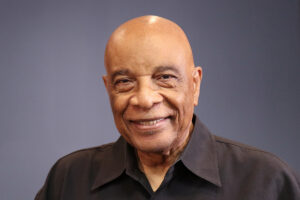
Evelyn Wilson’s 2025 oral history interview provides an explanation of the role of the Kansas Supreme Court. Wilson described how Supreme Court Justices are selected in Kansas and explained the importance of the judicial branch remaining separate from the other two branches of government, emphasizing that each branch was designed to be completely separate. She said there is always a method to make the law better, to change the law, if you work within the process that was designed by the writers of the U.S. Constitution. Her closing admonition, “… we all have a job to do, Show Moreand that job is so important.” It’s to vote. “The Supreme Law is the people’s law, not a king. As long as we protect the republic, that will remain the case. And if we don’t protect the republic, it might not be.”

Highlight -- short excerpt from the interview
Show Less

Interview of Patrick (Pat) Hubbell, April 9, 2025

Interviewed by Mike Lennen
Long-time lobbyist, Pat Hubbell described in this 2025 oral history interview, how lobbyists work, how they interact with legislators and other advocates, and the importance of this "at the rail" dynamic of the Kansas Legislature. Hubbell's chief clients were railroads but he had others. He worked in the 1970's with Kansas US Senators and Representatives in Washington. particularly while the Railroad Revitalization and Regulatory Reform Act of 1976 (4-R Act) was being worked in Congress. At that time, several railroad companies were going bankrupt, and many believed a loss would have been devastating to Show MoreKansas farmers. Railroads have historically played a key role in transporting Kansas agricultural products. During his interview Hubbell said that the railroads were advocating for fair taxation. They wanted to be treated as a competitor in the transportation sector rather than as a monopoly. “Railroads offer a list of opportunities for people locating businesses in Kansas to have rail service.” Hubbell described his philosophy on lobbying: “we try to find an answer that everybody can agree to. . . Just the fact that you have a lobbyist doesn’t mean you ought to be taking a bill every session to the legislature.”

Highlights -- short excerpts from the interview

Show Less
Go to Top