
Interview of Foster Chisholm, December 5, 2025
Interviewed by Joan Wagnon
Foster Chisholm, in retirement after a 25 year career working in the Topeka Post Office, went to work as Doorman for the Kansas House of Representatives. In his 2025 oral history interview he describes growing up in North Topeka, attending segregated schools, and being discouraged by his high school counselor from going to college. Chisholm worked for 35 years at the VA Hospital and at the Post Office in Topeka. After he retired, a friend told him about an opening for a Doorman in the Kansas House of Representatives. He got the job and after 3 years became the first Black Sergeant-At-Arms in the Kansas Capitol. Chisholm describes his nonpartisan role in assisting the Legislature as it did its business. He also has a few funny stories about what happened during those 15 years. His biography really showcases his commitment to improving his Topeka community with his volunteerism. A short excerpt highlights his comments about segregated schools; it also appears in the Diversity Collection. The photograph of the armed doormen triggered a conversation off camera about the Legislative Uprising of 1893 and their role, and also the most famous Kansas doorman, Boston Corbett. Materials about both the legislative uprising and Corbett appear in Resources for Educators/History.
African-American; Brown v. Board; Discrimination; House of Representatives Kansas; Racial discrimination; School desegregation; Segregated schools; Volunteerism
Foster L. Chisholm is a life-long resident of Topeka. He has 2 adult children, 2 grandchildren and 5 great grandchildren. Mr. Chisholm is a retiree of the US Postal Service and most recently as Sergeant-At-Arms for the Kansas House of Representatives after 12 years of service. Chisholm is active in his church locally and district-wide. He serves on several boards and volunteers for several community organizations. He has held leadership positions in the Prison Ministry at the Shawnee County Youth Correctional Facility, the Brown Foundation for Educational Equity, East Topeka Action Program and East Topeka North NIA. Mr. Chisholm was recognized as Lay Person of the Year, received the Sons of Thunder Award, Reuther Award for Meals on Wheel, the Government Outstanding Corporate Citizen Award and the Fannie Lou Hamer Award.
Joan Wagnon: Good afternoon. I’m Joan Wagnon, and I am a member of the Kansas Oral History board, and I have the pleasure this afternoon of interviewing someone I’ve known for a number of years, Mr. Foster Chisholm. Welcome, Foster.
Foster Chisholm: Thank you.
Joan: I want to tell you a little bit about the Kansas Oral History Project before we get started. The Kansas Oral History Project was started in about 2010 by a group of people that were concerned that there were histories being lost because they weren’t written down somewhere about people who were involved in public policy. So, we started collecting oral histories, first of legislators and then of other people in state government that were involved in the creation of public policy. You can find all of our interviews on our website, ksoralhistory.org.
Let me talk a little bit about Foster, if I may. Foster Chisholm has been a member of the Topeka community for a number of years. Just how many, Foster?
Foster: All my life.
Joan: All your life?
Foster: Yes, born and reared right here.
Joan: Born and reared in this town.
Foster: Yes.
Joan: One of the things I thought was interesting about you was that you went to McKinley Elementary School, which was also another interview that we did of Mrs. Carolyn Campbell. So, I’m interested to see if your reactions and remembrances of McKinley match hers. So, tell me a little bit about McKinley.
Foster: Well, of course, McKinley was a segregated school. I like to tell people it was a beautiful school, a beautiful building, well maintained. The grounds were wonderful. I could always remember going back to school after the summer vacation and those floors were so slick you’d almost slide on them, but they were very well maintained.
We had wonderful teachers, and they were very interested in the students. They made sure that we were prepared for junior high school. Back in that day, if you were not prepared, they would hold you back. So, I went to Curtis Junior High School, but the students at McKinley were prepared for junior high school.
Joan: That’s good to know. I think we’re roughly the same age, and I attended a segregated school also and had the impression that maybe our Black schools were not as well maintained, and teachers were not “up to snuff”, but I think that’s not the case.
Foster: In a lot of places, that was the case. I think Topeka was unique because most of the elementary schools that were segregated in Topeka were very good buildings. In a lot of other places, they were not.
Joan: And good teachers?
Foster: And good teachers, very well.
Joan: So, you went from McKinley to Curtis.
Foster: Yes.
Joan: Where did you go to high school?
Foster: Topeka High.
Joan: Tell me about that experience.
Foster: Topeka High was integrated on the bigger picture, but it was segregated on a smaller scale. I say that because the teachers at Topeka High School at that time were not really interested in Black students achieving much. The one thing I remember very clearly is my high school counselor telling me I didn’t need to have higher education. She said that maybe I could go to a barber school or a trade school, something like that. That’s how they treated Black students back in that day.
Joan: And you were not interested in going to barber school.
Foster: I was not interested in going to barber school, no.
Joan: What did you do post-graduation from Topeka High?
Foster: I didn’t go to college. Like I said, she didn’t instruct me, but she said that wasn’t a good idea. So, I did not go to college. My first job was with the Veterans’ Administration Hospital.
Joan: The VA Hospital.
Foster: The VA Hospital.
Joan: What did you do there?
Foster: I was a nursing assistant.
Joan: What kind of training did you have to have for that, or did they train you?
Foster: They did in-house training.
Joan: Were you there very long?
Foster: I was there ten years, and then I transferred to the post office. My reason for leaving the VA and going to the post office, a very unique situation. There was a job that came up that I thought I was qualified for. So, I put in my application for the job. The personnel manager said that I was qualified but he changed the standards on the job because there was another guy that he had made that job specifically for, so he changed the standards of that job so this guy could make it. I thought, “Well, I don’t think I want to be here very long.” So, I transferred to the post office.
Joan: I’m trying to think of what year was that that you graduated from high school.
Foster: ’57.
Joan: So, at that time, there was beginning to be a recognition that we needed to treat all people the same, especially in employment matters. So, the post office would have been under federal regulations. I guess the VA might have been.
Foster: The VA was also.
Joan: But they just did what they wanted to?
Foster: It was the house managers that made those decisions.
Joan: So, you didn’t have the protections that you would have there. Did you feel that that recommendation from the guidance counselor kept you from doing something you might have done?
Foster: I think I paid too much attention to it. I really—and I fault myself for that, but I think that was my fault. I paid too much attention to what she said.
Joan: Yes. How long did you stay at the post office?
Foster: I was at the post office for 25 years.
Joan: With federal retirement, you were able to—
Foster: Right. Thirty-five years—
Joan: To retire from the federal government. So, if you’re retired, you’ve got a pension. You’ve got a good career of being in the community. What enticed you to come to work for the Kansas legislature as a sergeant-at-arms?
Foster: I didn’t come immediately from the post office. I did a lot of volunteer work for some volunteer organizations after I retired. But there was a young man who was working here as a doorman and the position came up, and he said he thought that I would be a good person for that position. So, he mentioned my name to the sergeant-at-arms, and I came in and had an interview, and the rest is history.
Joan: How many years did you stand outside the Chamber, guarding that door?
Foster: I was out there for three years. I was sergeant-at-arms for 12.
Joan: That’s a good, long stint.
Foster: Yes.
Joan: Okay. Before we get into what goes on in the legislature and what’s the role of the sergeant-at-arms, tell me a little bit about your life in the community. Where were you volunteering? Did you go to church? Tell me about your family.
Foster: Yes. I love to talk about my church. I went to St. Mark’s African Methodist Episcopal Church, and that was a spin-off of the Methodist Church. In Philadelphia, there were ex-slaves who went to the Methodist Church, and they allowed the Black people to go there. But on one particular Sunday, the Black congregants were at the altar praying, and there were some White people that wanted to come down. So, the stewards of the church came down and asked those Black people to get up from the altar so those White people could come down.
The founder of our church, his name was Richard Allen. He told those White stewards that he would get up and would not bother them anymore. He went out and started the Free African Society, and that eventually became the African Methodist Episcopal Church, and we’ve been in existence now for over 200 years.
Joan: And the church here in Topeka is what, named what?
Foster: St. Mark’s—there are two African Methodist Episcopal Churches in Topeka. One is St. John. The other is St. Mark’s.
Joan: St. John is right here near the Capitol.
Foster: Right on 7th and Topeka Boulevard.
Joan: And St. Mark’s is in North Topeka?
Foster: Yes.
Joan: And it’s just over the river.
Foster: Yes, very close to the river. It’s on the 800 block on Northwest Harrison Street.
Joan: Right. Good, you remember the name of the street. There were some very famous people that were associated with St. Mark’s.
Foster: Oliver Brown was the pastor at St. Mark’s when I was a teenager there. I knew him and Linda very well.
Joan: And in later life, I met Linda. Didn’t she play the piano there?
Foster: She played the piano for forty years at St. Mark’s.
Joan: She worked for us at the YWCA when I was there. That was the relationship. Were you aware of any of the segregation activities that Oliver Brown was involved in at that time? Were you aware that he had filed the most famous lawsuit [Brown v Board of Education] in the Supreme Courts annals?
Foster: Not really. I was like ten or twelve years old. I was not really involved in that. Our parents were. They were the ones who knew what was going on, but as a ten-year-old kid, we didn’t get involved. We didn’t pay a lot of attention to that.
Joan: Yes. Let’s switch gears now and tell me a little bit about why you decided to come and work for the Kansas legislature, and what is the duty of the sergeant-at-arms?
Foster: Well, at first, I really didn’t know much about it. I just came because there was an opening and I had some time. I thought, “That sounds good. It’s only a few months out of the year,” just while the session is in. I thought I could do that.
After I got here, I was really, really interested. I think it was a wonderful opportunity, and I really appreciated the fact that I was able to do that. The main job of the doorman here at the Statehouse was to keep the decorum in the House and to make sure that the people who come into the House are those who are qualified to do so.
Joan: There was a story that WIBW ran I think in 2019, and I’ve got a copy of it here. It quotes you as saying something about the sergeant-at arms no longer has to carry a musket. What was that about?
Foster: Back in the day, the sergeant-at-arms, they carried guns. They really carried weapons. There were confrontations, really some serious confrontations with people trying to get in the House. You might remember the one story about they broke down the door even, but the sergeants-at-arms were there to protect that. We don’t have to do that anymore. We have the Capitol police and the Statehouse police to take care of those types of things.
Joan: Where were you stationed in the House?
Foster: I was the first desk as you come in the door.
Joan: Point to it. Can you show us where that is?
Foster: Sure. The desk right there with the monitor. That was my desk.
Joan: When the House was not in session, you were stationed outside at the doors.
Foster: I was always inside at my desk. But when the House was not in session, the doorman are not necessarily there. They’re really there to protect the House when it’s in session because when it’s out of session, people can come in and go. It’s the People’s House. They get a chance to come in and out.
Joan: But sergeant-at-arms is involved with making sure that—what exactly are you involved with? What did you do from that desk back there?
Foster: My main job was to make sure that other people didn’t come into the House that were not supposed to be in here. We just couldn’t have people running in and out of the House. So, they had to be credentialed to come in the House. So that was my main job.
While the people were in the House, our other job was to make sure that they didn’t just go rampant. We had to make sure that we kept the decorum in the House, that the people were where they were supposed to be, mainly doing what they were supposed to be doing.
Joan: So, you observed a number of sessions of the Kansas legislature as the House of Representatives. You never worked in the Senate.
Foster: No.
Joan: So, you were always in this Chamber in the House [of Representatives]. What kind of memories do you have about things that happened on debates that you might have heard or issues that may have come up?
Foster: Some of the language got salty.
Joan: Really?
Foster: Yes. The Speaker of the House on more than one occasion would have to reprimand one of the representatives. But it was passion, and I understand that. If you don’t have some passion, then why would you be here?
Joan: Passions and beliefs, yes.
Foster: Yes.
Joan: Our videographer, David Heinemann, who’s with us today, David, how many years did you serve in this House? Was it 20?
David Heinemann: Twenty-seven.
Joan: Twenty-seven. So, he saw a lot of salty language, I bet, as well as a lot of interesting debates.
Foster: Yes.
Joan: Did you ever participate in any way with people that were involved in some of the issues? Did you pass out the bills?
Foster: Yes. Anything that was put on a desk, anything that was put on a desk, one of the doormen had to do that. We could not let—even if you were a member and you had something that you wanted to distribute, you could not do that.
Joan: So, I couldn’t walk over and hand to the person sitting here.
Foster: Well, now, just one individual. But if you wanted to distribute something, then you could not do that.
Joan: So, you helped us with that.
Foster: Yes, very much.
Joan: Do you have any funny stories that came about when you were in here?
Foster: The funniest story that I can think of is the president of the Senate came over. And one of my doormen out there did not recognize her.
Joan: Her.
Foster: Yes, what was her name?
Joan: Susan Wagle.
Foster: Yes, he did not recognize her, and he was not going to let her in. He told her, “You’re not coming in here.” So, I had to go out there and explain to him that “She’s the president of the Senate. She can come into the House.”
Joan: She was the first woman president of the Senate actually, and we have interviewed her. That’s funny.
Foster: But she wanted to come in, and he was not going to let her do that.
Joan: Somewhere in this community, I came across you and became acquainted with you when attending Democratic functions, and you became a Democrat.
Foster: Yes.
Joan: And you were actively involved with the Kansas Democratic Party. Why did you become a Democrat?
Foster: I was more aligned to their policies and politics than I with the Republicans.
Joan: Was that a problem for you working for a mostly Republican legislature?
Foster: While I was sergeant-at-arms? No. That was nonpartisan. I didn’t have any partisan obligations whatsoever. I was just here to do my duty.
Now, when I left here, that was a different story, but here I was nonpartisan.
Joan: During the Call of the House, explain what the Call of the House is about.
Foster: The Call of the House –none of the members can leave. They have to be in their seat.
Joan: Did they try to sneak out?
Foster: Oh, talking about a funny story, there was one representative, as soon as it was Call of the House, he would get up and head for the door. He was quick, too. He would get out of here because he didn’t want to be in here and not be able to leave. You had to have permission to leave the House when it was Call of the House.
Joan: My recollection is you had to raise your hand. It was kind of like, “Teacher, may I go to the bathroom?”
Foster: Absolutely. If you wanted to go to the restroom, you had to raise your hand and be excused.
Joan: They were very strict about all of those things.
Foster: Yes, very much so.
Joan: And you’re still doing this or have you quit?
Foster: I retired last session.
Joan: And why did you retire?
Foster: I am eighty-six years old. I thought, “Well, you know, maybe I’ll do some other things.” So, I’ve been traveling with my daughters. It’s been fun.
Joan: Playing with all those grandkids. Those great-grandkids.
Foster: Great-grandkids, yes.
Joan: Well, I think you’ve given us some insight about what the sergeant-at-arms does. I also know that you volunteer for lots of community activities because I see you down at the Topeka Performing Arts Center.
Foster: Yes. That’s the one I enjoy. I really enjoy doing that one, especially the young people. We do a lot of things for young people, not just those evening performances that a lot of the public sees, but we do a lot of things for young people, and I really enjoy that.
Joan: Yes. The only other question that I had was, if you were the Speaker of the House and were a member of this body, is there anything you would change about its process?
Foster: Good question. I hadn’t really thought of that. I really don’t think so. I kind of like the way that the House is run. Everybody knows what they’re supposed to be doing. They know when they’re supposed to do it, and as long as everyone follows the rules, then the House runs smoothly. It’s when people get out of their lane that causes disruption, but otherwise, I think it runs very well.
Joan: You were here for fifteen years.
Foster: Yes.
Joan: In that fifteen years, have you seen the legislature change very much?
Foster: I think it’s become more partisan. When I first came here, even though they were disagreeing, they were not disagreeable. But I think now it’s almost like, “I don’t like you,” not that I don’t like your policies, it’s just “I don’t like you.” That wasn’t the way it was when I first came here.
Joan: So, there has been a noticeable change.
Foster: Oh, definitely.
Joan: What would you say to young people about the importance of following Kansas policy issues?
Foster: I would think, first of all, young people, I think young people really need to be involved in the government. It affects them whether they realize it or not. Your vote is the only thing that you have that can make a difference. I would say, “Get involved in whatever party you enjoy and vote.”
Joan: I know that two of your contemporaries, Ben Scott and Carolyn Campbell, were both interviewed by us. Actually, Ben Scott ran for the legislature and served one or two terms and then came back as a doorman.
Foster: Yes.
Joan: Have you ever had a desire to run for public office?
Foster: I have not.
Joan: If you were a younger man, would you have?
Foster: If I had been younger, I may have considered it, yes. But to know what I know now, I don’t think so.
Joan: Okay. Do you have any final words for us on your life experiences as being a member of the staff for the Kansas legislature or just being a member of the community?
Foster: Not really. Again I enjoyed my time here at the House. It was very educational. I learned things that had I not been here, I would not have known. So, I really appreciate that. And I enjoyed my time in the community. Like you said, I volunteered with several organizations, and it’s always been something that I desired to do, and I enjoyed it.
Joan: Good. Thank you for your community service.
Foster: Thank you.
Joan: Thank you for keeping the legislature safe.
Foster: Thank you.
Joan: It’s nice to have a conversation with you.
Foster: Thank you. I very much appreciate it.
Joan: Sure.
[End of File]
Democrat
Postal Worker, US Postal Service 1967-1992
Sergeant-At-Arms, House of Representatives Kansas 2009-2024
Kansas Statehouse, Topeka
 Download transcript
 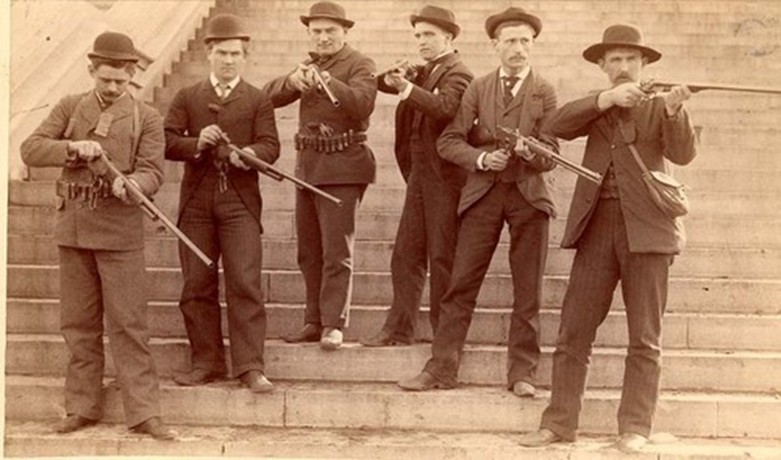 Guards During Populist War