
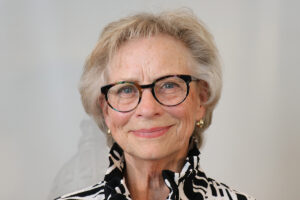
Interview of Tom Bell, March 6, 2026

Interviewed by Robert St. Peter
Tom Bell served as CEO of the Kansas Hospital Association from 2012 - 2020 when he retired. As the leader of the trade association representing Kansas hospitals, he provided education and advocacy for the 120 hospitals that were his association's members. Bell describes his work mainly as advocating for hospitals in the Kansas Legislature and with the Kansas Congressional Delegation on federal issues. During his interview he identifies several big state issues that impacted his members: Certificate of Need, scope of practice, rural hospitals, medicaid expansion and reimbursements (DRG's). The passage of the Critical Access Hospital Show Morelegislation saved a lot of hospitals and helped solve some problems. Bell said he was constantly looking for ways to balance the competing interests of all the parts of the health care system. He also noted the COVID pandemic had huge, negative impacts that are still being felt. The interview looks at the advantages or disadvantage of being a non-profit hospital vs a for-profit model. It also discussed the need for a state health planning agency to set policy. In response to the question, what are the "top issues that you think we as a state need to be addressing right now for the well-being of hospitals... and the community", Bell indicated workforce was at the top of the list as well as reimbursement and how to help the community access the best level of health care. He concluded the interview by saying, "...what's good for the hospital ought to be what's good for a particular community." Show Less

Interview of Maynard Oliverius, March 6, 2026

Interviewed by Robert St. Peter
Maynard Oliverius lays out in clear terms the policy choices the federal government made that shaped the health care system in the country today. Starting in 1946 with the Hill-Burton Act that paid for new hospital facilities, then the creation in 1965 of Medicare and Medicaid to ensure that seniors had a way to pay for health care and medical research, he tracks federal changes through the Affordable Care Act and Medicaid Expansion. He also notes that Kansas was leading other states in health rankings in the early 1990's, but now has fallen significantly behind other states' efforts Show Moreto improve the health of their residents. Access to health care has become a major problem for many Kansans. The interview also touches on the growth of Stormont Vail under his leadership and how it is now a major medical center serving northeast Kansas and is a locally owned, locally operated nonprofit organization. Oliverius concludes by offering his opinion that ideally the country needs to move to a single payer system in order to provide access for all - he describes it as "medicare for all." He expressed concern about the current direction of health policy nationally. Show Less

Interview of Gianfranco Pezzino, January 23, 2026

Interviewed by Robert St. Peter
This interview with Dr. Gianfranco Pezzino is the second in the Healthy Kansans series and sets the stage for understanding the concern that Kansas has slipped considerably in the nationwide rankings of health in the states over the last 30 years. His explanation of how the rankings work and why they are important is clear and understandable. Pezzino stated, "In the end, I became more and more convinced that the important thing was not the numbers. It was the communication that we could build around those numbers." His discussion of the social determinants of health is Show Moreimportant to understanding the rankings. He recalls a controversy covered by the local newspaper that quoted the county commissioner saying, "What does education have to do with health.?" He used that as a opportunity to begin a community conversation about those linkages. As an epidemiologist, Dr. Pezzino has played many roles in health policy in Kansas - from the local health officer to state policy maker. He recounts the stresses of being the county health officer during COVID and comments that the "social contract has been broken." He comments that there is still value in providing accurate data as a public health person but now a lot of the authority has been moved from public health officers to local elected officials. That has created a tension between individual rights and the social good. Show Less

Interview of Foster Chisholm, December 5, 2025

Interviewed by Joan Wagnon
Foster Chisholm, in retirement after a 25 year career working in the Topeka Post Office, went to work as Doorman for the Kansas House of Representatives. In his 2025 oral history interview he describes growing up in North Topeka, attending segregated schools, and being discouraged by his high school counselor from going to college. Chisholm worked for 35 years at the VA Hospital and at the Post Office in Topeka. After he retired, a friend told him about an opening for a Doorman in the Kansas House of Representatives. He got the job and after Show More3 years became the first Black Sergeant-At-Arms in the Kansas Capitol. Chisholm describes his nonpartisan role in assisting the Legislature as it did its business. He also has a few funny stories about what happened during those 15 years. His biography really showcases his commitment to improving his Topeka community with his volunteerism. A short excerpt highlights his comments about segregated schools; it also appears in the Diversity Collection. The photograph of the armed doormen triggered a conversation off camera about the Legislative Uprising of 1893 and their role, and also the most famous Kansas doorman, Boston Corbett. Materials about both the legislative uprising and Corbett appear in Resources for Educators/History. Show Less

Interview of Connie Hubbell, May 21, 2025

Interviewed by Mark Tallman
Connie Hubbell is well-known in state government circles as an effective advocate for education, mental health, and health care for seniors. In this oral history interview, she recalls her service on the State Board of Education -- for three terms -- and her time as President of the National Association of State Boards of Education. She recalls one of the significant accomplishments while on the Kansas state board leading it to mandate human sexuality AIDS education in Kansas public schools. Hubbell also recalls setting the stage for the inclusion of special education students into regular classrooms. Show MoreThat move began under her leadership of the National Association of State Boards of Education. She followed that experience with a run for Kansas Lt. Governor on the ticket with gubernatorial hopeful Fred Kerr. Although they were not successful, three governors subsequently noticed her management skills and offered her positions in their administrations, beginning with Governor Graves who appointed her Secretary of Aging. She retired from the position of Director of Governmental Affairs for the Kansas Department for Aging and Disability Services in 2021. Show Less

Interview of Dale Cushinberry, May 21, 2025

Interviewed by Mark Tallman
In his interview, Dale Cushinberry describes how the adults in his life provided opportunities for him and led him to a career in education in the Topeka area. He taught elementary school, coached basketball, and counseled students. He moved into school administration as a principal when he spent four years at Highland Park High School as assistant principal. Washburn University offered him a position in the Education department where he served for seven years. Throughout his career, he has tried to also have a positive influence on his students’ lives. Cushinberry states during his Show Moreinterview, that “… our kids are victims of our system failures. Systems that fail around them, whether it be the home front, whether it be our school, whether it be our churches, on and on.” He believes that “It’s our job to create an environment, to create a culture where our kids can meet success.” He created that environment at Highland Park High School as its principal for 16 years. Cushinberry discusses his strategies and his philosophy for working with students and their families.

Highlight -- short excerpt from the interview

Interview of Frank Henderson, May 21, 2025

Interviewed by Mark Tallman
At the time when a group of high school students discovered that Fred Seaman, the namesake of Unified School District 345 was the Exalted Cyclops of the Ku Klux Klan in the 1920's, Frank Henderson was President of the Seaman School Board. In this oral history interview, he describes the process the board went through to investigate and analyze the students' recommendations to change the district name. At the end of the process, the name remained, but Fred Seaman's photo and memorabilia were removed from the school buildings and placed in the museum. He said the outcome didn't Show Moresatisfy anyone but it was unanimous. Henderson described many challenging situations at the local, state and national levels as he served on various state and national boards of education. Henderson's observations highlights major issues in education that affected school boards and local communities. The interview reflects Henderson's view that "Every Student Matters." He believes, "we, as fellow humans, have the responsibility to see the value in every person and do what we can to ...help that person fulfill their potential." Show Less

Interview of Evelyn Wilson, April 21, 2025

Interviewed by Richard Ross
Evelyn Wilson’s interview provides an excellent explanation of the unique role of the Kansas Supreme Court. Wilson provided a thorough explanation of how Supreme Court Justices are selected in Kansas and explained the importance of the judicial branch remaining separate from the other two branches of government and emphasizing that each branch was designed to be completely separate. The role of the Judiciary is to interpret the law. She believes there is always a method to make the law better, to change the law, if you work within the process that was designed by the writers of Show Morethe U.S. Constitution. Her closing admonition, “… we all have a job to do, and that job is so important.” It’s to vote. “The Supreme Law is the people’s law, not a king. As long as we protect the republic, that will remain the case. And if we don’t protect the republic, it might not be.” She also shares her personal health struggles and deep commitment to the responsibilities of her position that led her to the decision to retire.

Highlight -- short excerpt from the interview

Show Less

Interview of Patrick (Pat) Hubbell, April 9, 2025

Interviewed by Mike Lennen
Long-time legislative lobbyist, Pat Hubbell describes in this oral history interview, how lobbyists work, how they interact with legislators and other advocates, and talks about the importance of this "at the rail" part of the Kansas Legislature. His chief lobbying duties were on behalf of the railroads; Hubbell also had other clients. He worked in the 1970's with Kansas Senators and Representatives in Washington. particularly while the 4-R Act was being developed. The railroad industry plays an important role in transporting Kansas agricultural products. At that time, several railroad companies were going bankrupt, and a Show Moreloss would have been devastating to Kansas farmers. He emphasized that the railroads were lobbying for fair taxation. They wanted to be treated as a competitive business model rather than as a monopoly. “Railroads offer a list of opportunities for people locating businesses in Kansas to have rail service.” Hubbell described his philosophy on lobbying: “we try to find an answer that everybody can agree to. . . Just the fact that you have a lobbyist doesn’t mean you ought to be taking a bill every session to the legislature.” Show Less
Go to Top