
Interview of Foster Chisholm, December 5, 2025

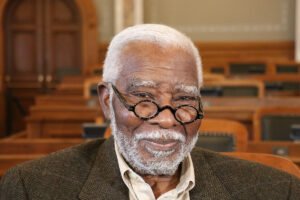
This four minute excerpt from Foster Chisholm's interview, which is a part of the "Statehouse Conversations" collection, discusses school segregation in Topeka. Chisholm's experiences were remarkably similar to those described in Carolyn Campbell's interview. He also talks about experiencing discrimination at the VA Hospital in Topeka when he was passed over for a job.

Interview of Foster Chisholm, December 5, 2025

Interviewed by Joan Wagnon
Foster Chisholm, in retirement after a 25 year career working in the Topeka Post Office, went to work as Doorman for the Kansas House of Representatives. In his 2025 oral history interview he describes growing up in North Topeka, attending segregated schools, and being discouraged by his high school counselor from going to college. Chisholm worked for 35 years at the VA Hospital and at the Post Office in Topeka. After he retired, a friend told him about an opening for a Doorman in the Kansas House of Representatives. He got the job and after Show More3 years became the first Black Sergeant-At-Arms in the Kansas Capitol. Chisholm describes his nonpartisan role in assisting the Legislature as it did its business. He also has a few funny stories about what happened during those 15 years. His biography really showcases his commitment to improving his Topeka community with his volunteerism. A short excerpt highlights what he said about segregated schools. Show Less

Interview of Christy Levings, June 9, 2025

Interviewed by Mark Tallman
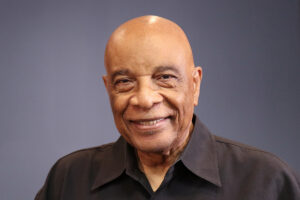
Christy Levings’ interview highlights how schools and educators have adapted to significant changes in education over the past fifty years and how professional organizations such as the Kansas National Education Association (KNEA) and Kansas Association of School Boards (KASB) worked together in making those changes. Levings spent time as a national and state officer in the NEA and worked in forty-two different states. She credits her undergraduate years at Washburn University with instilling in her the need for “learning all the time…being a scholar.” Throughout her professional career, she has been committed to helping teachers and administrators Show Moreimprove their skills and the educational opportunities of their students and to advocating for the teaching profession.

Highlight -- short excerpt from the interview

Interview of Connie Hubbell, May 21, 2025

Interviewed by Mark Tallman
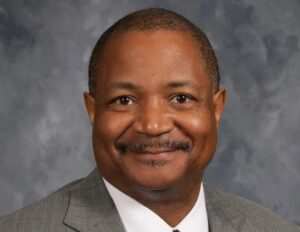
Connie Hubbell is well-known in state government circles as an effective advocate for education, mental health, and health care for seniors. In this oral history interview, she recalls her service on the State Board of Education -- for three terms -- and her time as President of the National Association of State Boards of Education. She recalls one of the significant accomplishments while on the Kansas state board leading it to mandate human sexuality AIDS education in Kansas public schools. Hubbell also recalls setting the stage for the inclusion of special education students into regular classrooms. Show MoreThat move began under her leadership of the National Association of State Boards of Education. She followed that experience with a run for Kansas Lt. Governor on the ticket with gubernatorial hopeful Fred Kerr. Although they were not successful, three governors subsequently noticed her management skills and offered her positions in their administrations, beginning with Governor Graves who appointed her Secretary of Aging. She retired from the position of Director of Governmental Affairs for the Kansas Department for Aging and Disability Services in 2021. Show Less

Interview of Frank Henderson, May 21, 2025

Interviewed by Mark Tallman
At the time when a group of high school students discovered that Fred Seaman, the namesake of Unified School District 345 was the Exalted Cyclops of the Ku Klux Klan in the 1920's, Frank Henderson was President of the Seaman School Board. In this oral history interview, he describes the process the board went through to investigate and analyze the students' recommendations to change the district name. At the end of the process, the name remained, but Fred Seaman's photo and memorabilia were removed from the school buildings and placed in the museum. He said the outcome didn't Show Moresatisfy anyone but it was unanimous. Henderson described many challenging situations at the local, state and national levels as he served on various state and national boards of education. Henderson's observations highlights major issues in education that affected school boards and local communities. The interview reflects Henderson's view that "Every Student Matters." He believes, "we, as fellow humans, have the responsibility to see the value in every person and do what we can to ...help that person fulfill their potential." Show Less

Interview of Evelyn Wilson, April 21, 2025

Interviewed by Richard Ross
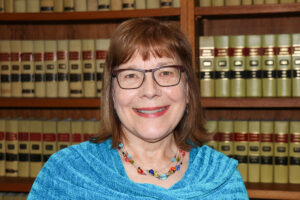
Evelyn Wilson’s interview provides an excellent explanation of the unique role of the Kansas Supreme Court. Wilson provided a thorough explanation of how Supreme Court Justices are selected in Kansas and explained the importance of the judicial branch remaining separate from the other two branches of government and emphasizing that each branch was designed to be completely separate. The role of the Judiciary is to interpret the law. She believes there is always a method to make the law better, to change the law, if you work within the process that was designed by the writers of Show Morethe U.S. Constitution. Her closing admonition, “… we all have a job to do, and that job is so important.” It’s to vote. “The Supreme Law is the people’s law, not a king. As long as we protect the republic, that will remain the case. And if we don’t protect the republic, it might not be.” She also shares her personal health struggles and deep commitment to the responsibilities of her position that led her to the decision to retire.

Highlight -- short excerpt from the interview

Show Less

Interview of Patrick (Pat) Hubbell, April 9, 2025

Interviewed by Mike Lennen
Long-time legislative lobbyist, Pat Hubbell describes in this oral history interview, how lobbyists work, how they interact with legislators and other advocates, and talks about the importance of this "at the rail" part of the Kansas Legislature. His chief lobbying duties were on behalf of the railroads; Hubbell also had other clients. He worked in the 1970's with Kansas Senators and Representatives in Washington. particularly while the 4-R Act was being developed. The railroad industry plays an important role in transporting Kansas agricultural products. At that time, several railroad companies were going bankrupt, and a Show Moreloss would have been devastating to Kansas farmers. He emphasized that the railroads were lobbying for fair taxation. They wanted to be treated as a competitive business model rather than as a monopoly. “Railroads offer a list of opportunities for people locating businesses in Kansas to have rail service.” Hubbell described his philosophy on lobbying: “we try to find an answer that everybody can agree to. . . Just the fact that you have a lobbyist doesn’t mean you ought to be taking a bill every session to the legislature.” Show Less

Interview of Jerry Farley, March 18, 2025

Interviewed by Mark Tallman
Dr. Jerry Farley served 25 years as President of Washburn University before retiring in 2024. Known for wearing a bow tie on campus, Farley changed Washburn from a municipal university with a largely off-campus student body to a major Kansas institution receiving state aid and with a thriving on-campus student contingent. He recalls his most important decision as merging with the local vocational-technical school to create Washburn Tech. The transcript below follows as closely as possible the original interview.  In some cases, responses to questions were derived from an earlier, written interview provided by Dr. Farley and Show Moreposted on Lasting Legacy Online . Show Less

Interview of Andy Tompkins, January 13, 2025

Interviewed by Mark Tallman
Andy Tompkins has had a leading role in education in Kansas that started in 1970 when he was hired to teach English in Hugoton. That job quickly became Principal and then Superintendent of three different districts until he was tapped in 1996 as Commissioner of Education. Tompkins recounted in this oral history interview the changes that took place in public education in Kansas during his career. Tompkins' interview toucheed on special education, "A Nation at Risk", the movement to improve education, standards and the 1992 School Finance Reform Act. He was able to explain why things Show Morechanged and with what result. Tompkins portrays skilled leadership and a trusted leader committed to improving education for all. Show Less

Interview of Sam Brownback, December 2, 2024

Interviewed by Rex Buchanan
Sam Brownback reviews his service to Kansas beginning with his time as Kansas Secretary of Agriculture and extending through his terms as Governor. Brownback credits his upbringing on a farm in Linn County for development of his views on conservation and resource management. He recalled dealing with the farm crisis and water issues, particularly those involving the Ogallala Aquifer, during his tenure as Secretary of Agriculture. He described carrying his concern for water into his terms as Governor as a vision focused on long-term sustainability for the Ogallala. He also recalled using extensive public consultations to further policy Show Morechanges such as helping to eliminate the "use it or lose it" mentality in the approach to groundwater usage. Brownback described himself as a strong advocate for wind power, supporting development of wind farms, particularly in the central and western regions of the state. He also described extending the protection of the Flint Hills from wind farm development. In the interview, Brownback highlighted his pragmatic approach to policymaking and relationships developed during his public service career.

Highlights -- short excerpts from the interview

Go to Top