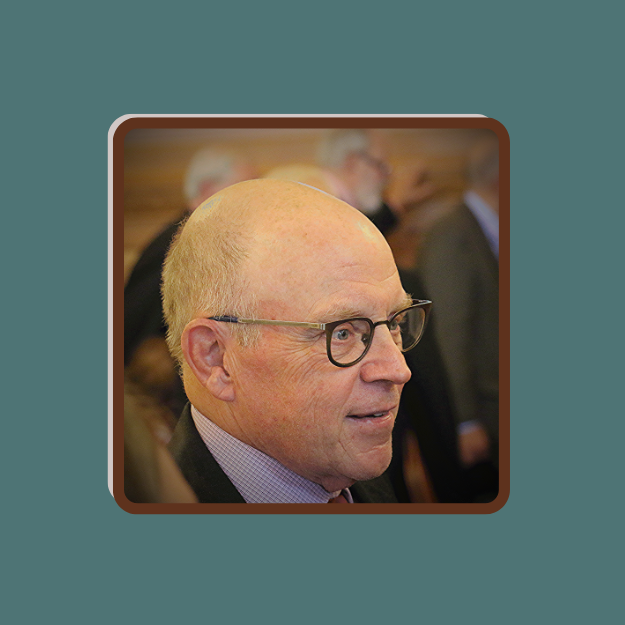
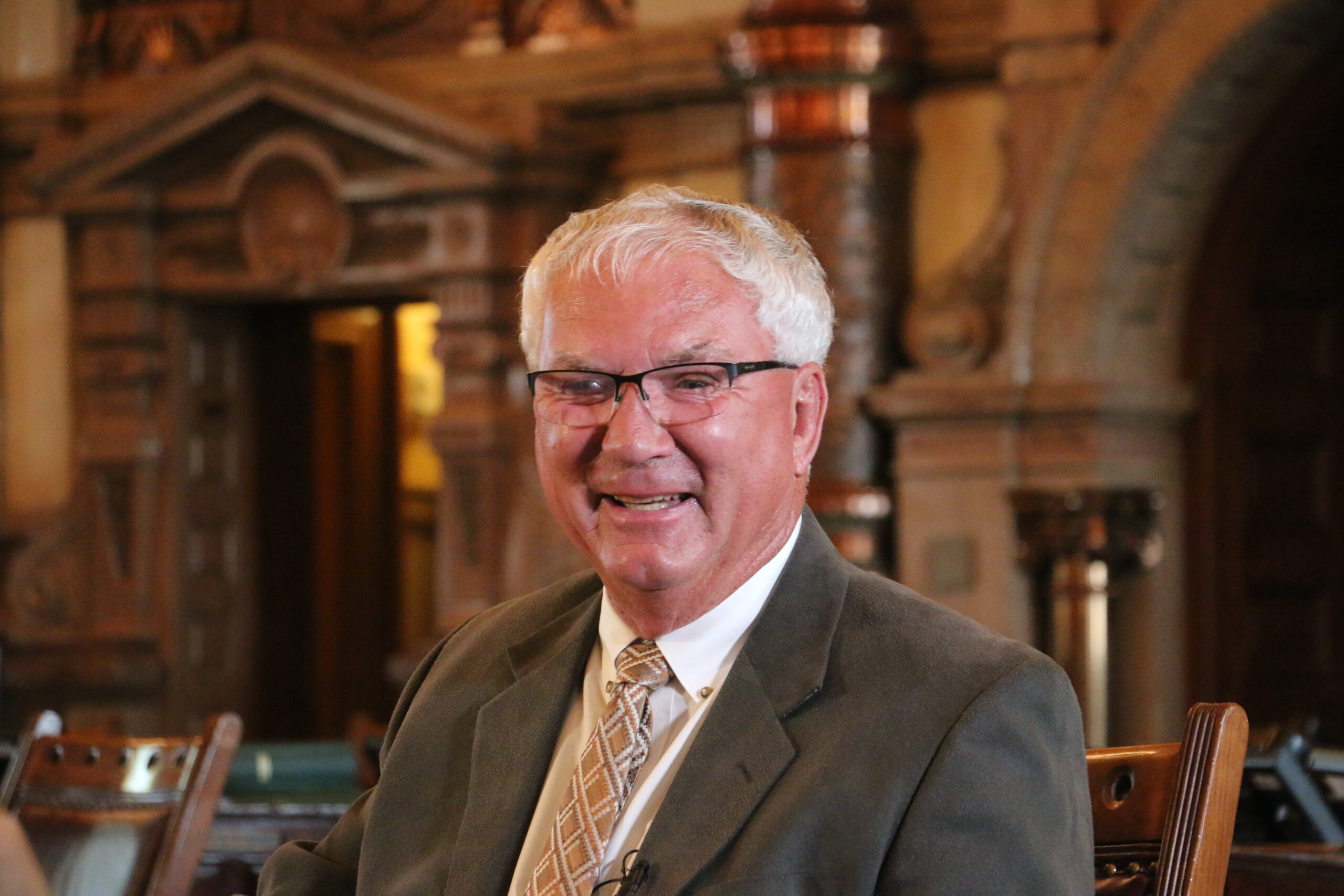

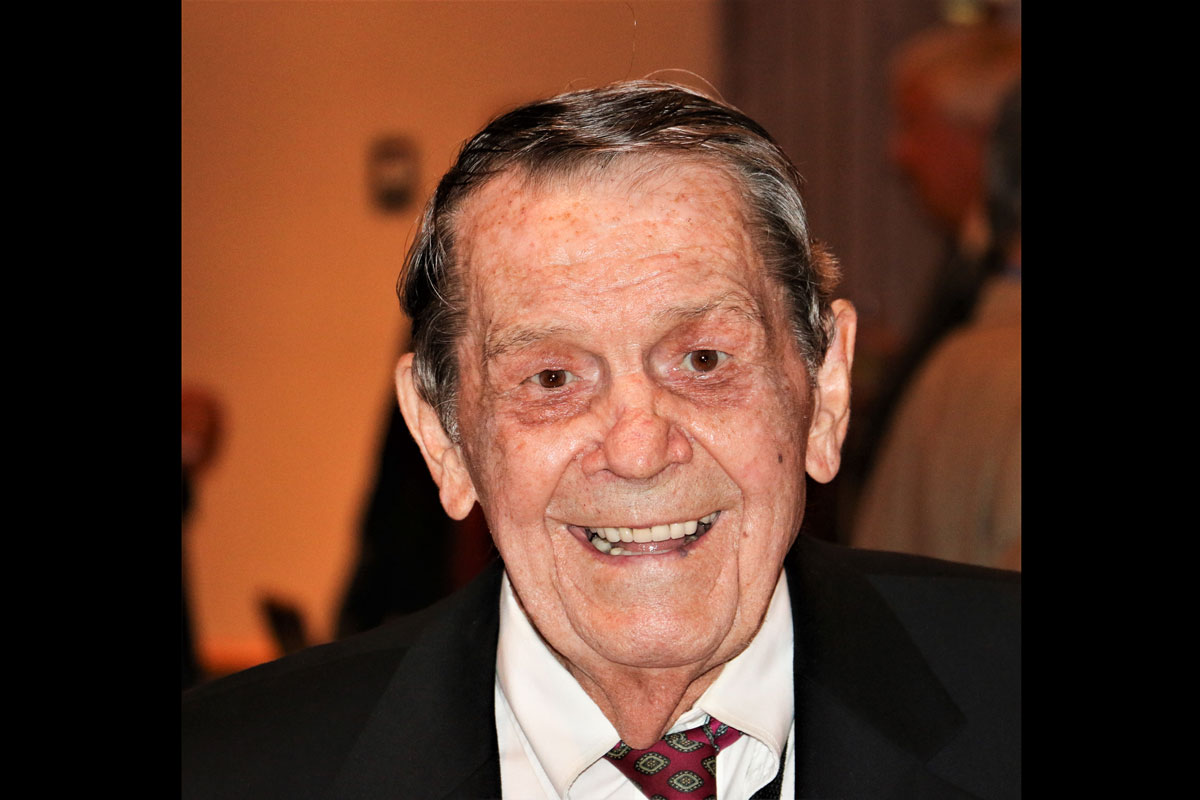
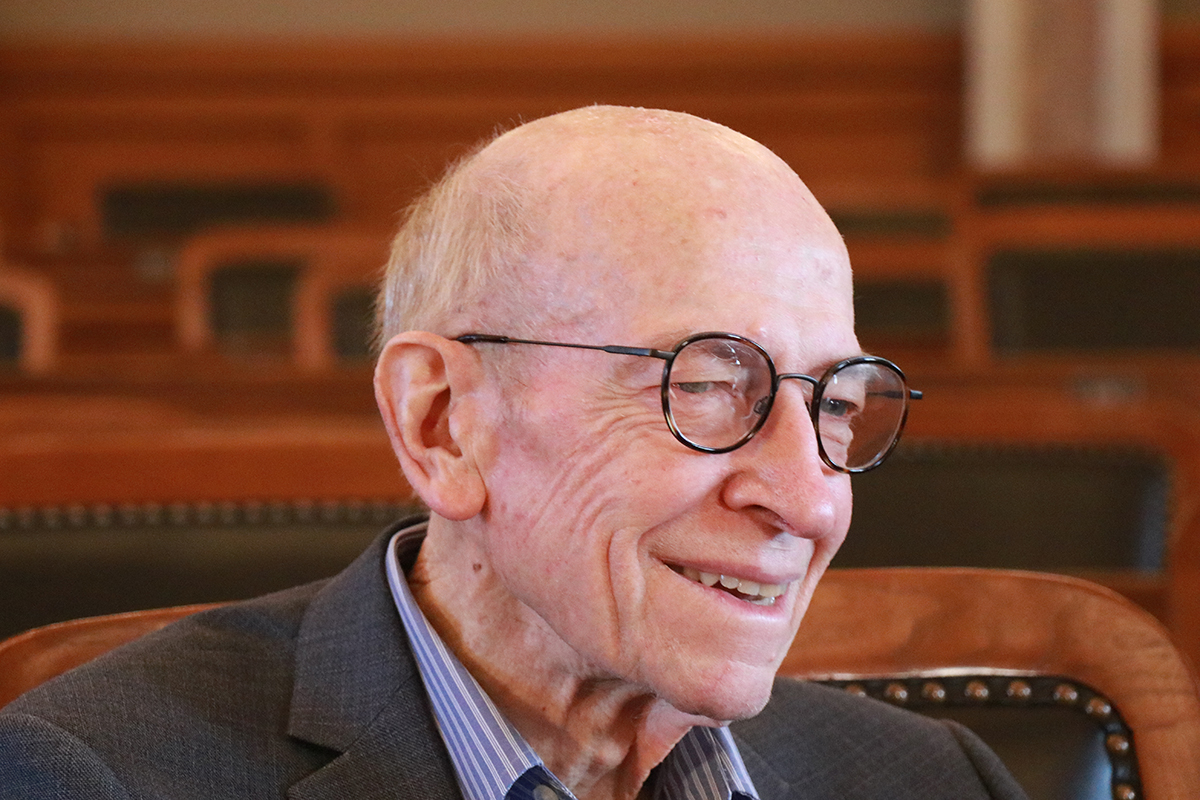


Burdett Loomis, photo by Dave Heinemann
The 10th anniversary of the founding of the Kansas Oral History Project, Inc. in February 2026 inspired us to look back to the start of this effort to preserve and share the voices of Kansans. In this newsletter we review the “Loomis interviews” which planted the seeds for the Kansas Oral History Project. The interviews were conducted by Burdett (Bird) Loomis under the auspices of the University of Kansas and the Shawnee County Historical Society supported by a grant from the Kansas Humanities Council (predecessor to Humanities Kansas). Loomis subsequently gifted the interview transcripts to the newly-formed Kansas Oral History Project and thus began the Statehouse Conversations collection.
As described by Ramon Powers, former Executive Director of the Kansas State Historical Society and founding member of the Board who initially envisioned this project, “Those first interviews by Burdett Loomis were the direct result of an encounter I had with him at an event in Lawrence. I believe it was in 2011. We were standing together at the edge of a crowd at an outdoor event, and I told him Joan Wagnon, David Heinemann, and I had been trying to develop an oral history program focusing on political leaders. Burdett said. ‘Hmm. . . Let me think about that.’ I do not recall if his response was immediate or the next day. However, he said that he would be willing to go to the Kansas Humanities Council to get a grant. And he did.”
Powers noted that the interviews spanned two years because of Loomis’s responsibilities at the University of Kansas where he was a member of the Political Science Department faculty, saying, “However, we were on our way. Joan and David have done the heavy lifting from those early days.”

Ramon Powers, photo by Dave Heinemann

Dave Heinemann, courtesy of Dave Heinemann
Heinemann was the first interviewee. Loomis started that interview recognizing its position in the collection, “So, this is the inaugural legislative – state legislative interview for our Kansas State Legislature Project. The first interviewee, committee member and guinea pig, Dave Heinemann.” Heinemann reflected on the scene, “…as we sat across from each other at his kitchen table on the morning of July 10, 2014. Little did I realize that my life would soon be forever changed as the oral history project expanded, and I was fortunate to be recruited as their volunteer videographer. I’ve now spent over a decade in what I call the ‘catbird’s seat’ working to record the ‘rest of the story’ from our many friends, most of whom I was privileged to work with, some over a half century ago. Great stories about how things really got done.”
This short retrospective of the interviews conducted in 2014 and 2015 highlights a few of the many issues described to Loomis: urban-rural power shift, school finance, tax restructuring, infrastructure improvement, and the changing culture of the legislature during the decades of the 1960s, 1970s, and 1980s. Several interviewees recalled that conflicts were often resolved through a brand of pragmatic bipartisanship that some looked back upon at the time of their interview as a lost art. The interviewees describe a period defined by structural transitions in the legislature and increasing tension.

Jim Maag, photo by Dave Heinemann
The Rural-Urban Power Shift
A source of structural friction was the transition from a county basis to a population basis for legislative representation following the US Supreme Court’s decision in Baker v. Carr. The change threatened the long-standing dominance of what Jim Maag (Dodge City) referred to as the rural “short-grass boys.” The tensions were sometimes personal. Ralph Skoog (Topeka) recalled how Senator Ross Doyen (Concordia) tried “… to talk me into not supporting this whole idea [of equal representation] …that we people in the cities actually ought to have some votes, too. … It was discouraging to Ross that I’d think that way.”
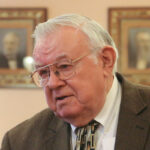
Ralph Skoog, photo by Dave Heinemann
The resolution of this fundamental conflict over the basis for representation did not come about through compromise but rather following a series of state and federal court decisions and special legislative sessions. Jack Euler (Troy) noted that while rural legislators began to lose their hold on the legislature, the transition was slow, taking twenty years for the urban centers to fully realize their influence. Rural interests remained influential by retaining senior committee chairmanships. This lag was partially offset by the creation of an urban coalition in the late 1960s that included members of both parties who strategized on legislation, such as gas tax formulas, that they felt unfairly favored rural districts. Dave Heinemann (Garden City) and Jim Maag were included in the urban coalition, but their constituents’ interests spanned the urban-rural divide. From Maag’s perspective, the gas tax issue was “… really what got it rolling. But the people who were involved in the urban coalition ultimately wind up in leadership positions later on, in the 1970s, so things were really beginning to change, but the rural boys still had a pretty dominant position.” Maag was Speaker Pro Tem in 1975-1976 and Heinemann held the same position 1985-1988.

Jack Euler, photo by Dave Heinemann
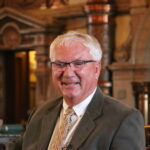
Fred Kerr, photo by Dave Heinemann
School Finance
School finance was cited as a constant struggle, characterized by the need to achieve a balance between a fair level of taxation and adequate funding of education. The perception of unfairness arose from the disparity in the property tax base between wealthy and poor districts across the state. Fred Kerr (Pratt), a key architect of the 1992 school finance formula, described the issue as “a balance between the tax and then satisfying the courts and supplying public schools with the amount of money per student and balancing districts according to wealth.”
Dave Heinemann discussed the 1992 school finance overhaul from a practical, legislative standpoint, noting that it required a multifaceted tax approach that would have been blocked by modern “no tax” pledges. He illustrated the extreme disparities the plan sought to address by comparing two of his local districts:
“The Holcomb School District, which had IBP [Iowa Beef Processors] … the Holcomb school mil levy would have decreased to less than twenty mils. … [Whereas] the Garden City school district [had] all of the children who belonged to the workers at the IBP beef plant” and faced a much higher levy of eighty mils.”
The legislature was faced with these dilemmas because it was reacting to the accumulation of inequities in school funding highlighted in state Supreme Court decisions based on the Kansas Constitution’s requirement that the state provide an adequate education to all students. Fred Kerr noted that the complexity of the school funding formula, often criticized during legislative debates, was a necessary response to addressing multiple concerns. The success of the 1992 legislation was its longevity. Kerr observed that it remained in place for many years because it was seen as fair to the people and adequate for education.
Tax Reform and the “Ballot Box” Resolution
Tax issues, particularly property reappraisal and classification, were described by Fred Kerr as “huge… highly debated, controversial.” Reappraisal was especially volatile because appraised valuations had been outdated for decades. Resolution of one contentious issue, classifying types of property for tax purposes, was resolved by a constitutional amendment. Placing the classification issue on the ballot as an amendment allowed the legislature to eliminate one potential obstacle by bypassing the governor and referring the issue directly to the voters.
That did not resolve the controversy. When Governor Mike Hayden oversaw its implementation, the resulting change in tax rates led to significant public backlash. Kerr noted that “… reappraisal hurt Mike Hayden when he ran for reelection… probably unfairly hurt him because it really wasn’t his fault; it had to be done.”
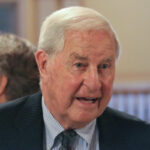
Bob Storey, photo courtesy of Topeka Capital-Journal
Infrastructure and Energy
Contentious infrastructure debates sometimes centered on how to fund massive projects without alienating specific constituencies. Bob Storey (Topeka) recalled the controversy over raising the diesel tax to fund highways, “We caught all kinds of hell on that one. From the truckers.” Similarly, the construction of the Wolf Creek Nuclear Power Plant created controversy that led to changes in how new energy facilities were treated under the law. Bill Bunten (Topeka) observed major changes in the scope of state services and the size of the state budget during his years in the legislature beginning in 1962, “The prisons and highways and school finance and the university system and welfare system—all of those things changed from when I was initially in the legislature until, at the end, it was big business …”
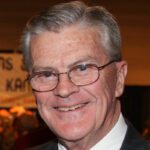
Bill Bunten, photo by Dave Heinemann
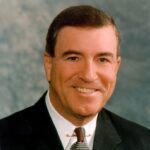
Mike Johnston, photo courtesy of Mike Johnston
A series of highway financing disputes were resolved through the 1989 highway bill, which Mike Johnston (Parsons) credited to Hayden’s leadership, saying Hayden “hasn’t gotten credit he deserved for the passage of the Comprehensive Highway Program in ’89.” Regarding Wolf Creek, Heinemann, as House Energy Committee Chair, helped resolve the conflict over whether and how much of the nuclear plant’s construction cost would be added to ratepayers’ bills by crafting legislation that “…basically gave guidance to the Kansas Corporation Commission as to what they could allow or not allow to be put into the rate base, and the timing of it, which basically gave them the authority to meet with people with the expertise rather than to just purely legislate it.”
Social Issues and the Rise of Polarization
While several Loomis interviewees recalled a time when legislators worked across the aisle to solve problems, social issues began to fracture legislative collegiality beginning in the early 1970s. Bob Storey remembered the “first brush” with abortion legislation in 1971, which was so contentious that protesters “stormed the statehouse” and hit a committee chairman in the head with a placard. Storey noted that the legislature resolved this by passing a bill that was “not the one they wanted… we passed the one we could live with” where doctors made the decisions. Storey noted that the chairman who carried the bill was defeated in the subsequent election, attributing that outcome to the abortion bill.
Dave Heinemann observed that the US Supreme Court decision in Roe v. Wade eventually “…energized a group of persons to get involved in the political process, … .” He also observed that “… once you got that black-and-white issue and you get people involved, then I think some of the other social issues or other issues people want to talk about start getting involved and make it more difficult for people to bridge gaps.”
By the early 1990s, the emergence of the “rebel” group, a precursor to the Tea Party, further complicated the quest to resolve issues. Rochelle Chronister (Neodesha) described the rebels as men who were passionate and often at odds with leadership that was traditionally pro-choice. She noted that the legislature “…was no longer a congenial place to be. …there were people who were always trying to disrupt.” Bill Bunten noted that near the end of his service the social conservatives “… were gathering some steam in my last couple of years there, and I don’t quarrel with their ideology. It’s up to them whether they want something or they don’t, but they were intractable in being willing to see if we could find some middle ground.”
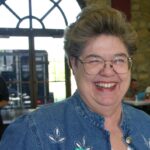
Rochelle Chronister, photo by Dave Heinemann
The Role of Pragmatism
A recurring theme in the Loomis interviews is that contentious issues were historically resolved through personal relationships and a shared commitment to the institution. Dave Heinemann emphasized the importance of relationships, noting that “… true change comes from learning the people, learning how they operate, how they think and how do you work with them. And it was a lot easier back in those days.”
Even leaders with solid personal relationships could fall out with one another. Jim Maag, Bob Storey, Fred Kerr, and Jack Euler all commented on the animosity between Governor Bob Bennett and Senator Norman Gaar (Westwood), attributing it to changing dynamics of the Senate that soured a previously amicable relationship. Among the minority party legislators, pragmatism was key to getting things done. Minority Leader Mike Johnston and Governor John Carlin were what Johnston described as “…kind of moderate, pragmatic people. That’s kind of how we viewed the world. We need to find a way forward, and you do that through compromise.”
A Sound Foundation
The Loomis interviews both formed the foundation for the Kansas Oral History Project and offer a perspective on an era where relationships and pragmatic compromise were the important elements of public policy formation in Kansas. From the structural shift to population-based representation to recurring debates over school finance, tax policy, and infrastructure development, these nine former legislators described to Bird a time when, as Fred Kerr noted, “Republicans and the Democrats worked together to solve whatever the problems were of the day.” Several of the interviewees expressed a sense of loss as they witnessed the decline of cross-party camaraderie. Their recollections heard together comprise a saga of representation built on trust, honesty, and respect. In the years since its incorporation, the Project has built upon these interviews to ensure that the lessons learned remain accessible to future generations of Kansans.