Refine Your Results
History2026-02-22T14:13:58-06:00

History

About this Resource

History is necessary for making sense of the present. We need it for identity, as a way of understanding our personal past. Genealogists say families need history to understand how we are connected to each other, and what our ancestors experienced. Nations use history as the basis for law and government; for example, Americans’ very rights are established in the U.S. Constitution, an historical document. Though most of us understand history as a record of the written word, this approach often omits many important developments. Written history tells us what was recorded on a given day but not why, or how people of the time reacted, or what the biases the person or persons doing the recording may have had. Oral history allows us to fill in the gaps by focusing attention on people’s memories and lived experiences. History, then, is part of the larger package of social studies needed for active civic engagement.
Desegregating Topeka Public Schools – 45 years after Brown v. Board

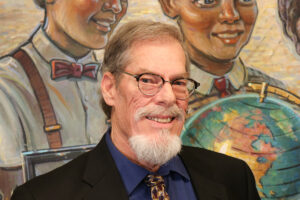
In this 13-minute short video, taken from a longer oral history interview, Ben Scott - minister, NAACP official, former legislator, school board member--talks first about his experiences growing up in Liberty, Texas attending segregated schools. (Scott moved to Topeka to attend Washburn University.) In this clip, Scott describes how, after he became a member of the Topeka Public Schools Board of Education, the Board attempted to comply with a federal court order to desegregate schools. This clip could be used in conjunction with the lesson plan on Understanding Segregation. The full content of Show MoreScott's interview and transcript is in the KOHP collection, Diverse Voices in Public Policy. The interviewer is Joan Wagnon. There is more information about the court case in the Biography of The Honorable Richard Dean Rogers, Senior United States District Judge, a history prepared 1994-1995 by Homer Socolofsky, United States District Court, District of Kansas, 1995. Printed in U.SA. by Mennonite Press. Pertinent sections appear on pp. 106-107 and also pp. 111-113. Show Less

Frank Carlson Study Guide

Frank Carlson, Kansas Native Son, former state legislator, Congressman, Governor, and U.S. Senator was the subject of an interview with Eunice Rolfs, his daughter, in order to gain information about her father and the times in which he lived. There is a study guide attached that is based on the interview transcript and other materials provided by the Carlson Library in Concordia, KS. The material is intended for use in middle school Kansas History classes.

Study Guide for Brown v. Board of Education Mural
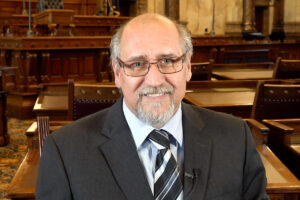
In 2018, Kansas artist Michael Young created the Brown v. Board of Education mural, which is located on the third floor of the Kansas Capitol. The painting depicts the legacy of the 1954 landmark U.S. Supreme Court desegregation case that had its roots in Topeka. In 2025 The Kansas Oral History Project interviewed Michael Young in front of a live audience at the Statehouse. Creating this study guide for students was a suggestion of the audience. Many of the materials for students are found under Resources for Educators, History which is one of the five areas designated by Show Morethe state Board of Education. Students should watch the full Kansas Oral History interview of the artist by Linda Jeffrey which is available in the collection, Notable Kansans. In addition, two other interviews in the Diversity collection (Ben Scott and Carolyn Wims Campbell) deal with segregation of schools and similar topics. Show Less
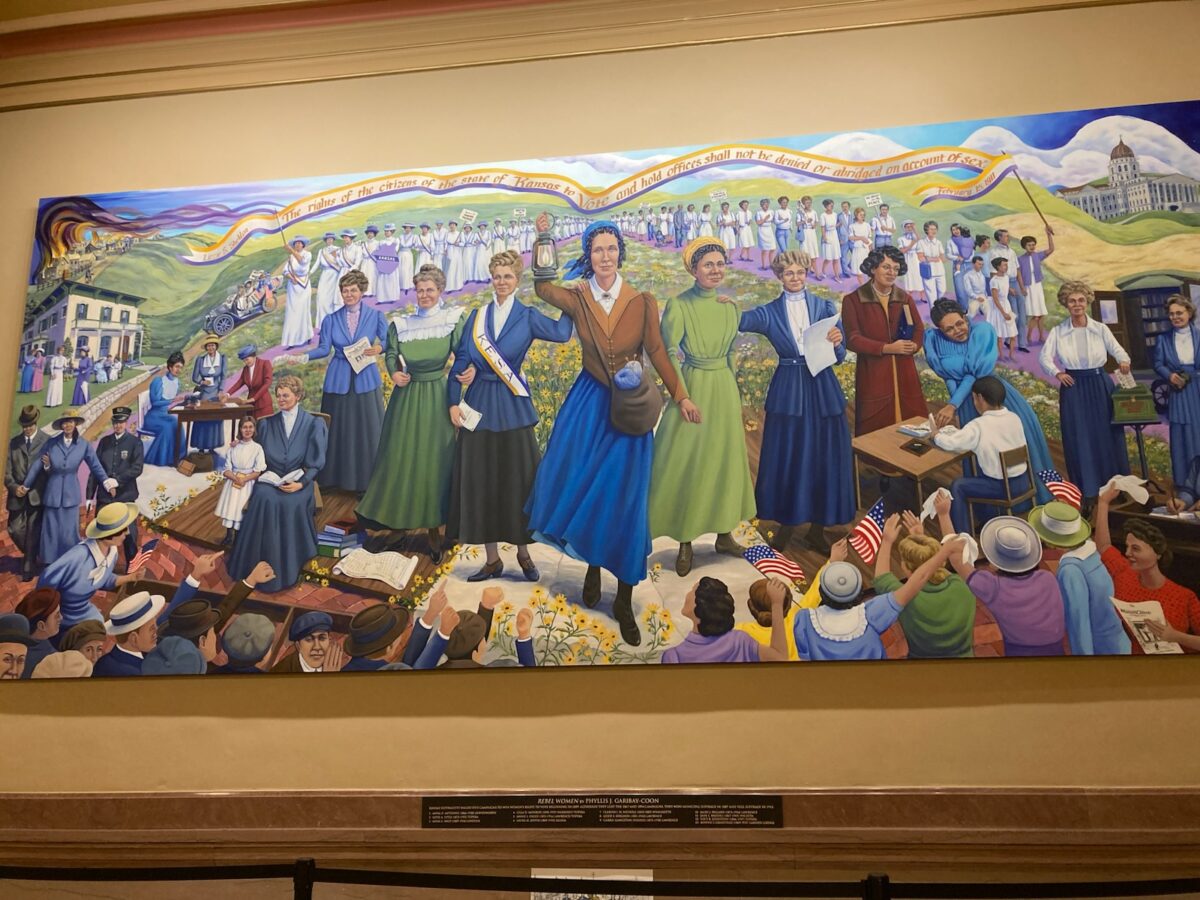
Rebel Women

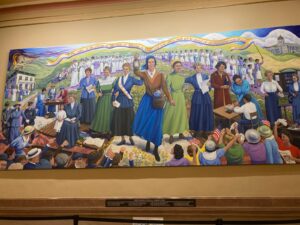
Study Guide for Rebel Women Mural in Capital.
This student Study Guide explores Compelling Questions and helps students learn more about the artist and her work. The full KANSAS ORAL HISTORY INTERVIEW of the artist, Phyllis Garibay-Coon by interviewer Linda Utoff is available under Notable Kansans.

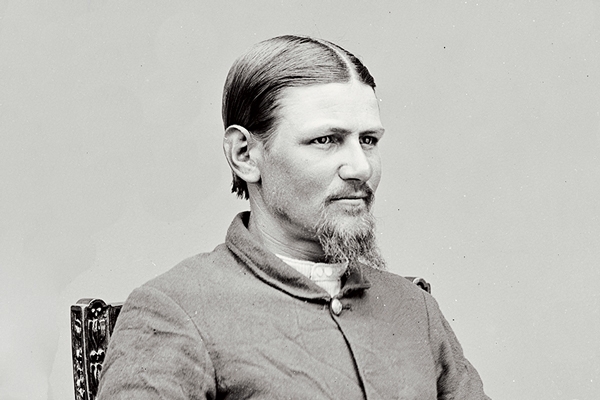
The Very Strange Life of Boston Corbett, as told by Bill Jensen, April 12, 2015 in the Washingtonian

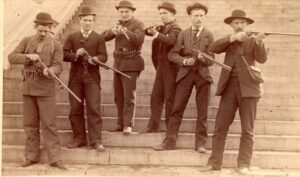
Boston Corbett achieved notoriety by shooting John Wilkes Booth after Booth killed President Lincoln. Booth had been cornered by soldiers who had orders to take Booth alive, but Corbett defied orders and pulled the the trigger, killing him. Much later Corbett moved to Kansas and achieved notoriety again as a Doorman in the House of Representatives. By 1878 Corbett decided to "go west" to Cloud County, Kansas where he homesteaded 80 acres, living in a "one-room hovel with a wooden floor and rocked walls." In 1886 he was hired as an assistant doorkeeper at the Kansas Show MoreLegislature in Topeka, at the urging of a veterans organization. One day after some sort of dispute, he brandished his gun in the Statehouse and Kansas officials shut him away in a mental hospital in Topeka. Corbett escaped on May 26, 1988. There were many rumors of what happened to Corbett, but none were substantiated. The full article by Bill Jensen is found online here.

washingtonian.com/2015/04/12/the-man-who-killed-john-wilkes-booth/

Show Less

Why Oral History is Important

Dr. Jim Leiker, historian at Johnson County Community College, prepared this short introduction about the importance of using oral histories to fill in the gaps in the historical record. The complete transcript of his remarks follows the video.

Why Railroads Are Important to Kansas

The railroad industry was suddenly in danger of collapsing in the 1970's because some its lines, such as the Rock Island, Penn Central and others were in bankruptcy. Kansas agriculture would be harmed without rail service to ship its products. Kansas Senators Dole and Pearson, later joined by Rep. Slattery and Senator Kassebaum worked to create a method of deregulation in the form of the 4-R Act. Pat Hubbell, a lobbyist with the railroad industry described in this 17 minute excerpt how "he was on a mission" to save the industry because of its importance Show Moreand the need to transport Kansas coal and agricultural products. He recalls passenger trains of the past that have disappeared and mergers that have left Kansas with only two major railroads, the Union Pacific and the Burlington Northern Santa Fe. The Study Guide that is attached raises questions for students to consider. Show Less
Go to Top