
Individuals have Rights, Responsibilities
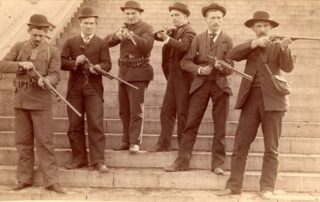
The Legislative War of 1893
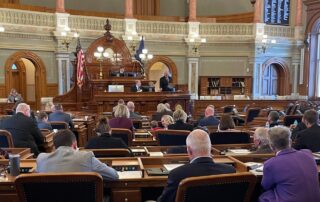
After 30 years of Republican Party domination in Kansas, the Populist Party was swept into office in the 1892 election. In addition to controlling the state Senate, Populists managed to place a Governor in the Statehouse and win five congressional seats. Both the Populists and the Republicans claimed control of the House, the Populists asserting that the Republican elections were illegal. Rather than compromise, the floor leaders of each party called the House to order--in the same room. The Republicans passed a resolution accusing the Clerk of the Populist House of disturbing the peace. The Show MoreSergeant-at- Arms arrested the clerk, thus starting the "legislative war." Both parties enlisted sergeants-at-arms and guards and the Governor called the militia. On February 15, 1893 the Republicans marched to the Statehouse and smashed the locked doors. Armed hostilities continued for two days. On February 25th, 1893 the Kansas Supreme Court held that the Republican House was the legal body and the conflict ended. Show Less
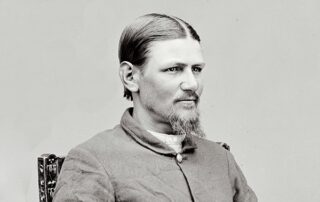
The Very Strange Life of Boston Corbett, as told by Bill Jensen, April 12, 2015 in the Washingtonian
Boston Corbett achieved notoriety by shooting John Wilkes Booth after Booth killed President Lincoln. Booth had been cornered by soldiers who had orders to take Booth alive, but Corbett defied orders and pulled the the trigger, killing him. Much later Corbett moved to Kansas and achieved notoriety again as a Doorman in the House of Representatives. By 1878 Corbett decided to "go west" to Cloud County, Kansas where he homesteaded 80 acres, living in a "one-room hovel with a wooden floor and rocked walls." In 1886 he was hired as an assistant doorkeeper at the Kansas Show MoreLegislature in Topeka, at the urging of a veterans organization. One day after some sort of dispute, he brandished his gun in the Statehouse and Kansas officials shut him away in a mental hospital in Topeka. Corbett escaped on May 26, 1988. There were many rumors of what happened to Corbett, but none were substantiated. The full article by Bill Jensen is found online here.
washingtonian.com/2015/04/12/the-man-who-killed-john-wilkes-booth/
Show Less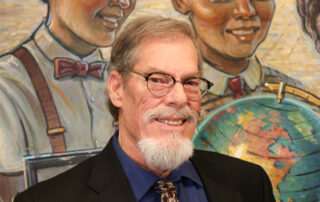
Study Guide for Brown v. Board of Education Mural
In 2018, Kansas artist Michael Young created the Brown v. Board of Education mural, which is located on the third floor of the Kansas Capitol. The painting depicts the legacy of the 1954 landmark U.S. Supreme Court desegregation case that had its roots in Topeka.
In 2025 The Kansas Oral History Project interviewed Michael Young in front of a live audience at the Statehouse. Creating this study guide for students was a suggestion of the audience. Many of the materials for students are found under Resources for Educators, History which is one of the five areas designated by Show Morethe state Board of Education.
Students should watch the full Kansas Oral History interview of the artist by Linda Jeffrey which is available in the collection, Notable Kansans. In addition, two other interviews in the Diversity collection (Ben Scott and Carolyn Wims Campbell) deal with segregation of schools and similar topics. Show Less
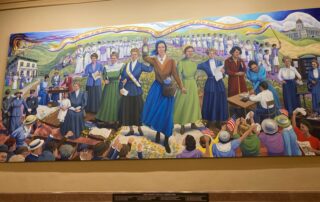
Study Guide for Rebel Women Mural in Capital.
This student Study Guide explores Compelling Questions and helps students learn more about the artist and her work. The full KANSAS ORAL HISTORY INTERVIEW of the artist, Phyllis Garibay-Coon by interviewer Linda Utoff is available under Notable Kansans.
Lessons in Leadership from Kansas Leaders
Interesting short clips from oral history interviews that address various aspects of leadership from public officials in Kansas.
Leadership Challenges