
Topic: education policy

Interview of Eugene Anderson, April 21, 2022
Interviewed by Frances Jackson
Senator Anderson's interview covers his 20 year career in Kansas politics, serving in both House and Senate and later, in the administration of Governor Joan Finney and as a Wichita business man and author. Anderson describes growing up in Georgia and the values he learned in his segregated community - work hard, never quit, build relationships and make your community better. His issue when he went to the legislature was making the schools better. Anderson describes his friendship with Governor Joan Finney, going back to when she was State Treasurer and how he asked her not to Show Moreinvest in the apartheid government in South Africa. Later, she appointed him Director of Aviation and he was able to work with other state directors to support the Kansas aviation industry on product liability legislation. Throughout the interview Anderson reveals his philosophy of effective governance. Show Less

Interview of Melody McCray-Miller, April 21, 2022
Interviewed by Frances Jackson
Melody McCray-Miller describes her job as speaking truth to issues that were relevant at that time, and representing a group of people who were marginalized. Rep. Miller was not the "status quo." She doesn't consider herself a "politician" but instead, a public servant. Her concept of public policy or public service was influenced by the fact that she is a Black woman who was raised in a Black family. She is the daughter of Billy Q. McCray, the first African American Commissioner in Sedgwick County who also served as a state Senator. Show More One of her mentors described her as "tough as leather." Miller was in business with her husband, and also taught school prior to running for office. She detailed how she handled conflicts or incidents of racial discrimination by "pushing forward." The latter part of the interview deals with a variety of legislative issues McCray-Miller initiated or followed. Those issues ranged from early childhood education, to payday lending, juvenile justice and health policy. Show Less

Interview of Kathleen Sebelius, October 28, 2022
Interviewed by Joan Wagnon and Duane Goossen
Sebelius ran for the legislature to "go home." Her kids were ages 2 and 5 and she was eager to get out of a demanding job to spend more time at home--better work-life balance. She discussed the changes in the culture of the legislature and state government she experienced over the 30 plus years she served in public office. When both US Senate seats came open in 1996, a fissure was created in the Republican party when Brownback challenged Sheila Frahm for one of the seats. She notes the insurance industry was very partisan and tilted Show Moretoward the industry side. The discussion of budget issues with Goossen and Sebelius show their creativity in solving problems, even though her experience as governor was bookended by recessions. School finance also posed some unique challenges because the Great Recession got in the way of the court's mandates. Phill Kline, the Attorney General was urging Republicans to do nothing. The BEST teams they created were important in solving the budget crisis. The interview concludes with some discussion of her selections of Lt. Governors and her experiences at HHS and her activities after leaving government service. Show Less

Interview of Bruce Larkin, April 12, 2024
Interviewed by Chris Courtwright
Larkin's interview focuses extensively on his involvement with tax issues during his 20-year tenure in the legislature, and after, at the Board of Tax Appeals (BOTA). He tells lots of funny stories in the interview, particularly about legislative strategy. Larkin got interested in the legislature because of the American Agriculture movement in the mid-1980's. He joined the Department of Revenue's Use Value Advisory Group at a time when appraising farm ground was difficult. Larkin was a small family farmer who farmed ground that his great grandfather had bought in 1878. Larkin was also interested in education; Show Moreparticularly how small rural communities were faring under the school finance formula. But his consistent interest was in taxation. He was involved in almost every tax issue that surfaced during his 20-year involvement with the legislature, and afterward, as a staff member at the Kansas Department of Revenue or on the Court of Tax Appeal as a judge or as Chief Judge. His discussion of issues surrounding classification and appraisal is very informative. He described changes in the use value appraisal of agricultural land.
Interviews with many of the people mentioned in this interview can be found on this website by using the Search box, or by going to the Statehouse Conversations Collection. Show Less
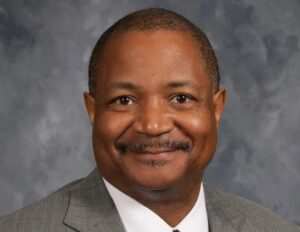
Interview of Frank Henderson, May 21, 2025
Interviewed by Mark Tallman
At the time when a group of high school students discovered that Fred Seaman, the namesake of District 345 was the Exalted Cyclops of the Ku Klux Klan in the 1920's, Frank Henderson was President of the Seaman School Board. His interview describes the process the board went through to investigate and analyze the students' recommendations to change the district name. At the end of the process, the name stayed, but Fred Seaman's photo and memorabilia were removed from the school buildings and placed in the museum. They aligned the district with the community, not Fred Seaman's Show Moreviews. He said the outcome didn't satisfy anyone but it was unanimous. Henderson's interview describes many challenging situations at the local, state and national level as he served on various state and national boards of education. Henderson and Tallman's exchange highlights major issues in education that affected school boards and local communities. The interview reflects Henderson's view that "Every Student Matters." He believes, "we, as fellow humans, have the responsibility to see the value in every person and do what we can to ...help that person fulfill their potential." Show Less