
Topic: EACH PEACH Program
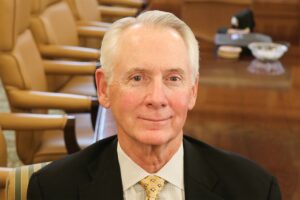
Interview of Bill Graves, September 16, 2016
Interviewed by Michael Smith
Emporia State University Professor Michael Smith interviewed former Governor Bill Graves on the Kansas Wesleyan University campus, Graves’ alma mater, in the fall of 2016 before the November elections. The interview covered events from Graves’ years in office as well as his thoughts on the state of Kansas politics in 2016 and the political changes in the Statehouse. This interview, compared to the 2022 interview by Mike Matson delves a little more deeply into some of the political situations Graves faced, particularly in his second term with challenges from Republicans. Taken together, these interviews Show Moreform an excellent picture of the changing nature of conservatism in Kansas politics and help define the meaning of Traditional Republican. Show Less
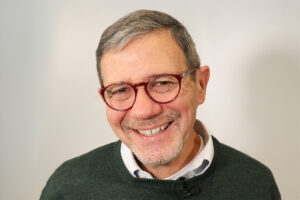
Interview of Gianfranco Pezzino, January 23, 2026
Interviewed by Robert St. Peter
This interview with Dr. Gianfranco Pezzino is the second in the Healthy Kansans series and sets the stage for understanding the concern that Kansas has slipped considerably in the nationwide rankings of health in the states over the last 30 years. His explanation of how the rankings work and why they are important is clear and understandable. Pezzino stated, "In the end, I became more and more convinced that the important thing was not the numbers. It was the communication that we could build around those numbers." His discussion of the social determinants of health is Show Moreimportant to understanding the rankings. He recalls a controversy covered by the local newspaper that quoted the county commissioner saying, "What does education have to do with health.?" He used that as a opportunity to begin a community conversation about those linkages. As an epidemiologist, Dr. Pezzino has played many roles in health policy in Kansas - from the local health officer to state policy maker. He recounts the stresses of being the county health officer during COVID and comments that the "social contract has been broken." He comments that there is still value in providing accurate data as a public health person but now a lot of the authority has been moved from public health officers to local elected officials. That has created a tension between individual rights and the social good. Show Less
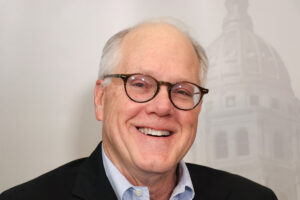
Interview of Robert St.Peter, January 23, 2026
Interviewed by Jim McLean
This is the opening interview for the series, Healthy Kansans. Since Bob St. Peter will be interviewing all the rest of the participants in this series, Jim McLean wanted to use this interview to establish his expertise. St. Peter was the first President and CEO of the Kansas Health Institute; he stayed for 24 years, developing and expanding their services in Kansas. Prior to that he had extensive experience in Washington DC with health policy [see his biography]. For this series of interviews, St. Peter defines health in the broadest terms and points out Show Morewhy the health rankings are valuable information for policy makers. The Kansas Health Foundation which created KHI really wanted the KHI to look at a broad set of issues that influenced how healthy we are as a city, as a county, as a state, and how education or housing, transportation influenced a person's health. St. Peter pointed out that health in Kansas isn't getting worse. People in Kansas are living longer, generally experiencing lower rates of cardiovascular disease, stroke, etc. So, it is not that our collective health is getting worse; it is that our relative standing compared to other states is getting worse. Other states are doing better, faster than Kansas in improving the health outcomes for their citizens that Kansas should be working on as well. Show Less
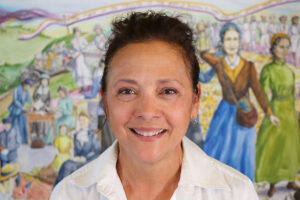
Interview of Phyllis Garibay-Coon, May 13, 2025
Interviewed by Linda Utoff
Phyllis Garibay-Coon, the artist who created Rebel Women, the most recent mural installed in the Kansas Statehouse, describes her journey as an artist including the importance of the support she found in the Manhattan, KS community. Garibay-Coon is the first woman to have her mural installed in the Statehouse. She is interviewed by Linda Uthoff, League of Women Voters of Manhattan/Riley County. During the interview, conducted a few months after the mural was unveiled on the 2025 anniversary of Kansas becoming a state, Garibay-Coon describes the Kansas suffragists who are the most prominent figures in Show Morethe painting. She also describes how the state and local historical societies and families of those suffragists contributed to how she imagined the mural. Garibay-Coon credits the League of Women Voters of Kansas, the AAUW of Kansas, and generous individual donors who made this public art possible.
Highlights -- short excerpts from the interview