
Topic: Kansas Board of Regents (KBOR)

Interview of Andy Tompkins, January 13, 2025
Interviewed by Mark Tallman
Andy Tompkins has had a leading role in education in Kansas that started in 1970 when he was hired to teach English in Hugoton. That job quickly became Principal and then Superintendent of three different districts until he was tapped in 1996 as Commissioner of Education. Tompkins recounted in this oral history interview the changes that took place in public education in Kansas during his career. Tompkins' interview toucheed on special education, "A Nation at Risk", the movement to improve education, standards and the 1992 School Finance Reform Act. He was able to explain why things Show Morechanged and with what result. Tompkins portrays skilled leadership and a trusted leader committed to improving education for all. Show Less

Interview of Jack Wempe, January 23, 2025
Interviewed by Mark Tallman
This oral history interview of Jack Wempe focuses on his experiences first as a student in a one-room school, next as a teacher, principal and superintendent in rural Kansas, then his legislative activities involving education issues, and finally, his service on the Kansas Board of Regents. Wempe's experience covers the scope of education in Kansas over several decades of critical change. His interview covers school unification, changes in funding public schools, qualified admissions, and reorganization of higher education with the Board of Regents assuming coordination of the nineteen community colleges. Difficult Changes
Highlight -- short excerpt from the interview
Another interview of Wempe is included in the Statehouse Conversations collection on this site. Show Less
Interview of Cynthia (Cindy) Lane, March 25, 2025
Interviewed by Mark Tallman
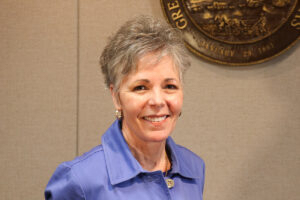
Cindy Lane's leadership has helped transform Kansas education to benefit Kansas children. This interview shows the impact she had on education policy, from special education to the Kansas Board of Regent's newest endeavor, the Blueprint for Literacy. This quote from Dr. Lane sums up the interview: "Most of my career in KCK as a leader was to focus on outcomes that actually transformed kids’ lives, that opportunity piece." From changes in special education , to court cases on school finance, to the Kansas Board of Regents, she is still working to transform kids' lives.
Interview of Edward Hammond, April 1, 2025
Interviewed by Mark Tallman
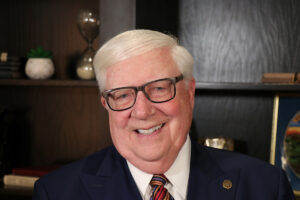
Hammond's interview describes in detail how Fort Hays State University changed and adapted during his 30 year tenure in response to actions of the Kansas Board of Regents and the Kansas Legislature. During that time Dr. Hammond wrote two strategic 10 year plans to accommodate the changing environment for higher education in Kansas. The first plan emphasized "high tech, high touch." The curriculum changed to incorporate technology, even teaching art as graphic design on computers. The goal was for all 1990 graduates to be computer literate, They put computer labs in all the dorms. Show More FHSU had declining enrollments in the 10 years prior to Hammond's presidency. Hammond believed If you are going to move into an institution and make change, select strategies that promote the change. Smaller classes, (high touch) created a distinction with the other schools. The next hurdle was responding to changes in how tuition is applied. In 2000 KBOR changed the formula and now institutions can keep whatever they bring in from tuition. The other change was adding 19 community colleges, Washburn University and the technical schools under the regents' control. The regents emphasized access and serving as many Kansans as they could. FHSU then needed to grow to keep up with this change because funding was based on enrollment. Hammond decided to emphasize distance learning and low tuition to meet these changes. While other schools raised tuition, FHSU decided to be at the low tuition end with a quality product. FHSU moved from "high tech, high touch" to "affordable success" using the distance learning technology to expand their enrollment. Hammond convinced rural telephone carriers to provide mostly free internet services, wired and cellular. By 2010 they had more distance learning than all the other schools combined. They began recruiting Chinese students in 1999--achieving 15,000 students in about 10 years. The China program helped lower the costs for Kansas students. Hammond attributes his success at FHSU to the team of faculty and admininstrators. FHSU is still serving 50% of the high school students despite the loss of population in the western part of the state. The goal is still to grow the university in ways that add value, such as allowing Colorado students to attend as in-state student. Show Less

Interview of Ed Berger, May 12, 2025
Interviewed by Mark Tallman
This oral history interview of Ed Berger, former State Senator and former President of Hutchinson Community College, focuses on the role of the community college in the educational system of Kansas. Community colleges were chartered in the 1960's in Kansas and required voter approval of a local referendum approved to begin operation. Seward, Barton, and Johnson counties were the last three to charter their respective community colleges in 1969. By 1990 there was a move to change governance of community colleges to the Kansas Board of Regents. That measure was not enacted. Berger's Show Moreinterview focuses on the community aspect of these institutions and how their educational goals change as community needs mature. Distance learning, technical education, and linkages with economic activity of the communities are highlighted in the interview. Berger describes his service in the Kansas Senate as it tried to unwind the "Brownback Tax Experiment" which had led to disruption of state finances. Berger's outlook is best described in this quote: "... Kansans are creative and resilient and... will find a way to adjust to it and still serve its public well..." Show Less

Interview of Jill Docking, April 1, 2026
Interviewed by Chris Courtwright
This very thorough and comprehensive interview of Jill Docking, took place on the third floor of the reconfigured Docking State Office Building in Topeka under the portrait of her father-in-law, Governor Robert Docking. The interviewer, Chris Courtright, takes her through a number of significant milestones in Kansas political history, having married into one of Kansas' most prominent political families. She has run for office herself, in 1996 for the U.S. Senate, and again in 2014 as the Lt. Governor candidate with Paul Davis at the head of the ticket. She was a tireless advocate for higher education Show Moreas a member of the Kansas Board of Regents. She serves on numerous boards such as the Kansas Health Foundation and promotes health, financial fitness and philanthropy. The stories she tells are entertaining, but they also illuminate important events in Kansas history. As the interview moves to its conclusion, Docking talks about gaps in the health care system and comments on the divisiveness in our political system as being "a cancer in this country." She sees the number of people running for public office as a positive swing and she is still engaged, supporting numerous candidates. She is still working, and not retiring!
Highlights -- short excerpts from the interview